
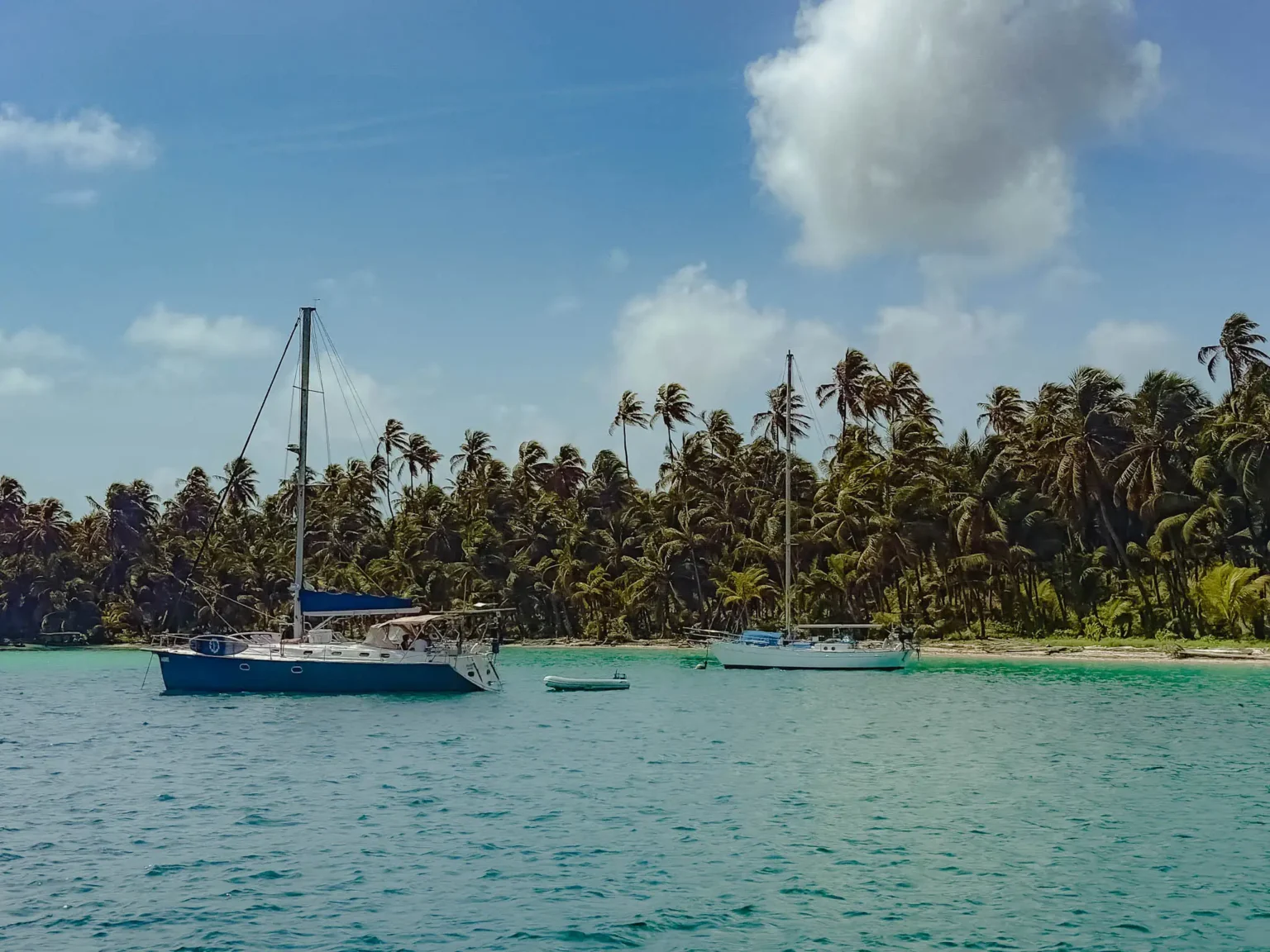
Sailing the San Blas Islands is one of those rare travel experiences that delivers exactly what it promises.
Most people who visit San Blas do so on a day trip from Panama City or by staying in a basic cabin on one of the islands. A multi-day sailing trip offers something better than either. You sleep on the water in your own cabin, wake up to a different island every morning, and spend your days moving through one of the last genuinely undeveloped coastlines in the Caribbean at whatever pace feels right. There are no luxury resorts in San Blas, but a well-chosen sailboat is comfortably the nicest accommodation the archipelago has to offer.
What sets a sailing trip apart is not just where you sleep but how much of the archipelago you actually see. Island-based stays are beautiful but fixed. A sailing trip lets you cover ground, find anchorages with no one else around, and experience San Blas the way it rewards most: slowly, from the water, with nowhere you have to be.
This guide covers everything you need to know before you book: what life on board actually looks like, what a trip costs, how to choose the right boat, what to pack, and when to go. It draws on my own four-day catamaran trip through the archipelago.
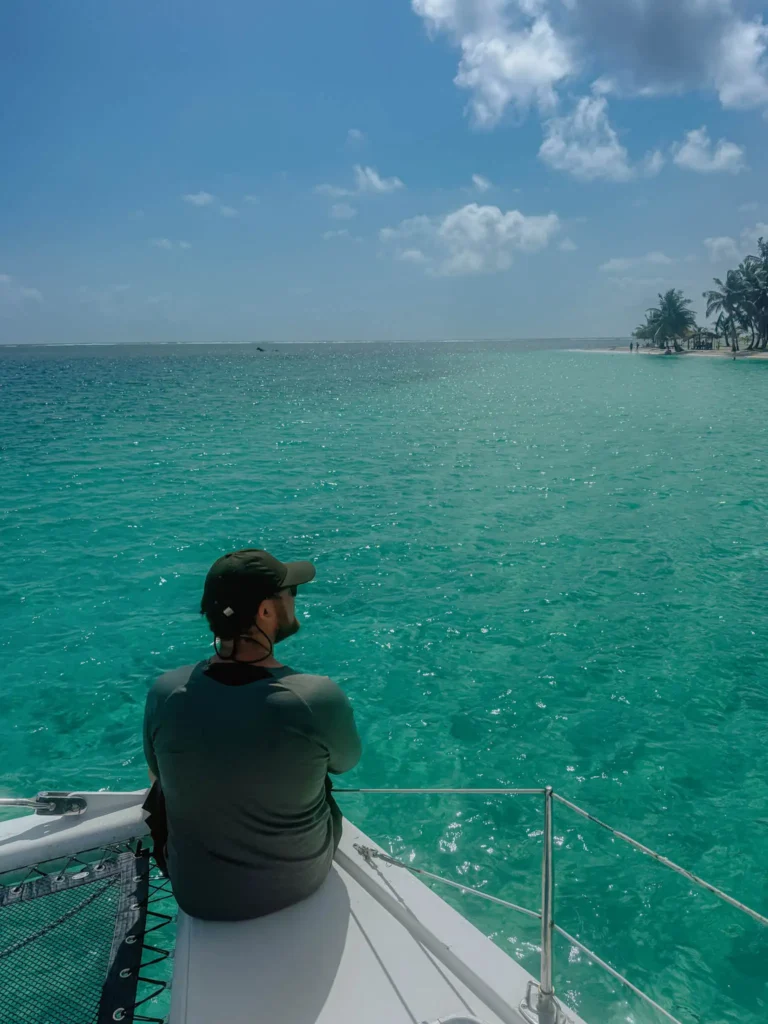
The experience
Worth noting upfront: this guide covers archipelago-based island-hopping trips. The Cartagena-to-Panama passage is a separate (and notoriously rougher) category. See the FAQ at the bottom if you need the distinction.
Most San Blas sailing trips run between four and seven days and operate entirely within the archipelago, departing from and returning to the Caribbean coast of Panama. The structure is loose: the captain selects anchorages based on wind, weather, and passenger preferences, and the group moves between islands on a schedule that prioritizes the experience over the clock.
Days have a recognizable rhythm. Mornings are early. The best light is before 9am and the captain often wants to be underway before the wind picks up. Afternoons are long and unstructured. You swim, snorkel, read, or take the dinghy to shore. Evenings are on the boat, usually with dinner cooked by the crew and whatever conversation develops between passengers.
The typical group size on a catamaran is six to ten passengers. Smaller boats run with four to six. The difference matters: a boat with ten strangers has a different social texture than a boat with five. When you book, ask how many passengers are confirmed for your dates, not just the maximum capacity. You can also reserve a boat privately for your own group so no strangers are added to your trip.
The vessel
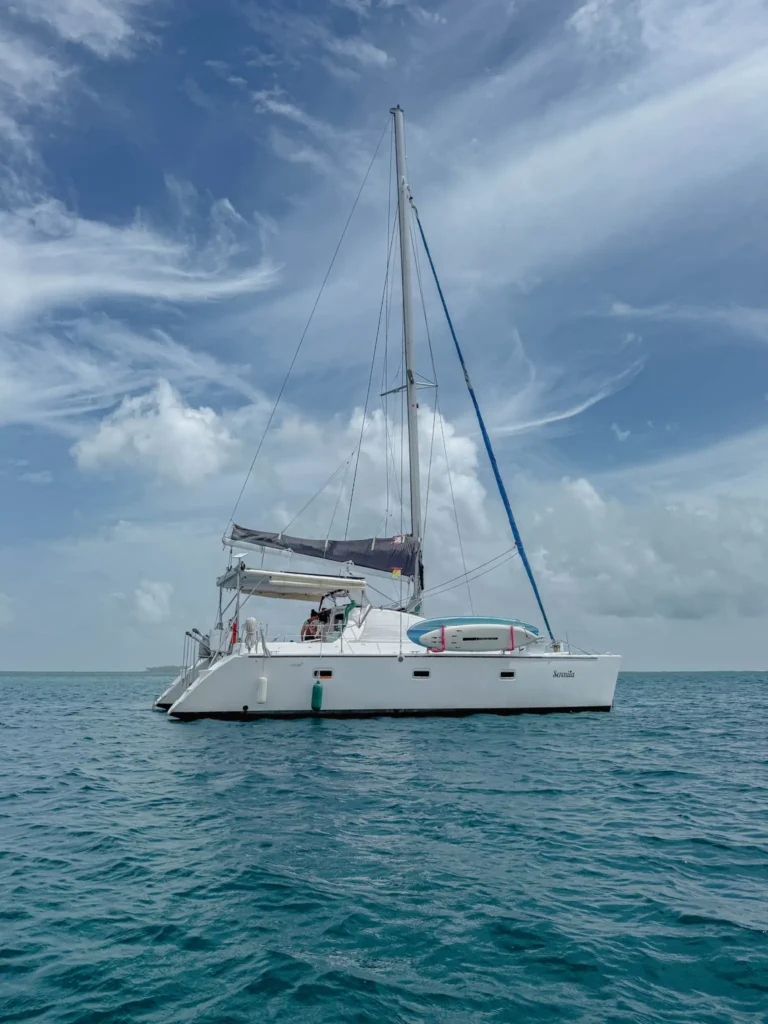
San Blas sailing trips run on two types of vessels: monohull sailing boats and catamarans. The type of boat you end up on is largely a function of your budget.
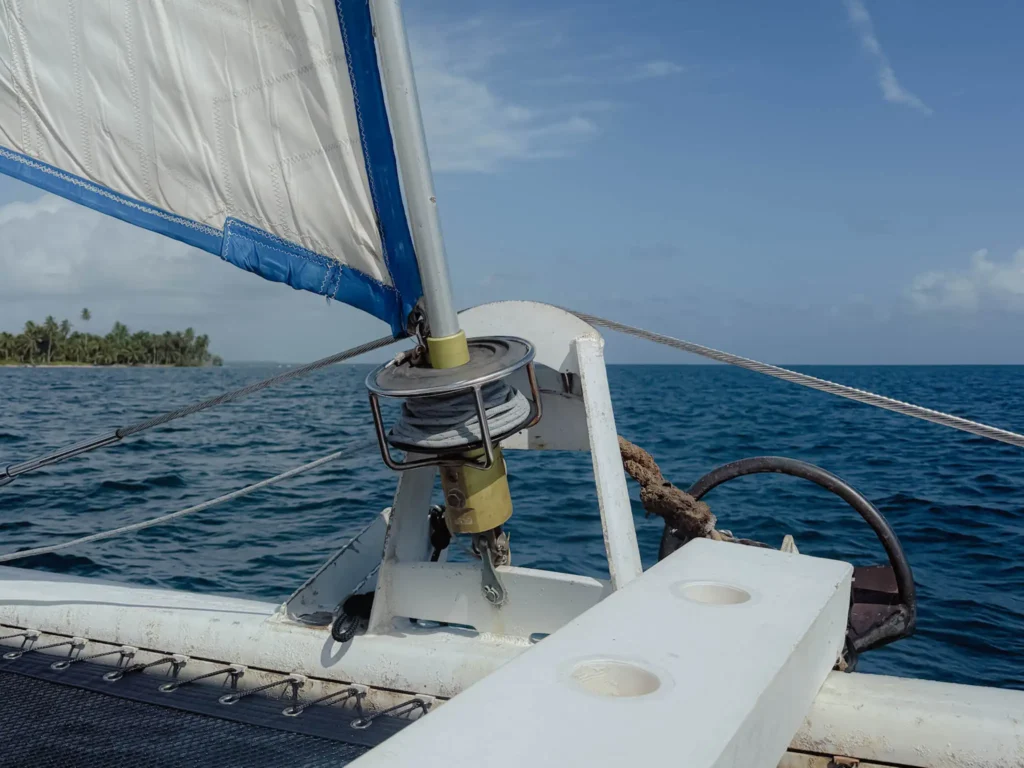
Catamarans are the more common choice for multi-day trips. They offer more deck space than monohulls, a more stable ride in a swell, larger cabin layouts, and typically the better on-board amenities: multiple bathrooms, working wifi, and charging points. Monohulls are smaller and less expensive, and they can be a perfectly good option for travelers comfortable with tighter conditions, but they fill up faster and feel cramped sooner.
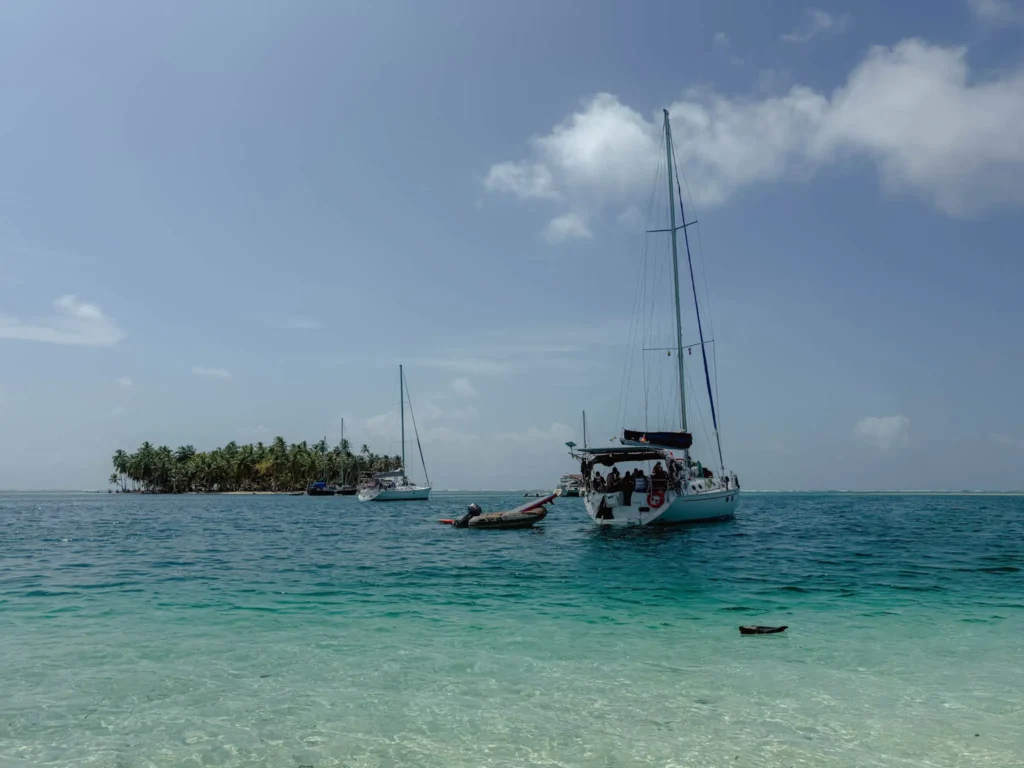
Across both boat types, there are two ways to book: join a group trip where your operator fills the remaining cabins with other travelers, or reserve the entire boat. Group trips are the more affordable option, but the experience depends heavily on how full the boat gets. A catamaran designed for ten passengers carrying ten passengers feels significantly more crowded than the same boat with six. If you are traveling with a group of friends or family, reserving the whole boat and splitting the cost is often the smarter call, and you get full control over the pace of the trip, the anchorages you stop at, and who you spend four days in close quarters with.
The quality range within both categories is wide. On the more basic end you have older vessels with shared bathrooms, limited fresh water, and no climate control. On the higher end you get multiple bathrooms, air conditioning, working wifi, and charging points. Neither end is objectively better; it depends on how much physical comfort affects your enjoyment of the trip. What matters is that you know which tier you are booking before you pay a deposit.
Those four questions will tell you more about your actual experience than the marketing copy will.
The cost
Pricing for a San Blas sailing trip is in line with what you would expect for a multi-day chartered experience in the Caribbean. As a rough guide based on current operator pricing across the archipelago:
Confirm exactly what is included before you pay a deposit.
Typically included:
→ Meals (three per day)
→ Snorkeling gear
→ Dinghy transfers between boat and islands
→ Guna entry fees for visited islands
→ Bedding and towels
Typically excluded
→ Alcohol beyond a basic allowance
→ Road transfer from Panama City to Carti
→ Crew tips
→ Travel insurance
For travelers on a tighter budget, the wet season (May to November) typically runs 10 to 20 percent below dry season pricing and group trips are less likely to fill to capacity.
On board
The cabins are functional. On my trip the beds were comfortable, the boat was clean, and the crew kept shared spaces organized. The quarters are genuinely tight. Ventilation is the main variable: a boat with good hatches and a breeze sleeps well, while a boat anchored in still air on a hot night is harder going. Ask about ventilation when you book, particularly if you are traveling outside the dry season when humidity is higher. Higher-end boats with air conditioning are worth paying extra for if a good night's sleep on the water matters to you.
The shared bathroom situation is the adjustment most people underestimate. On a catamaran with six to ten passengers the heads are compact, the showers involve limited fresh water, and you will develop an efficient routine quickly. Cold showers are standard on basic boats, though higher-end vessels may offer hot water. Most boats have a swim platform off the back where you can rinse off in the sea after swimming, which helps considerably.
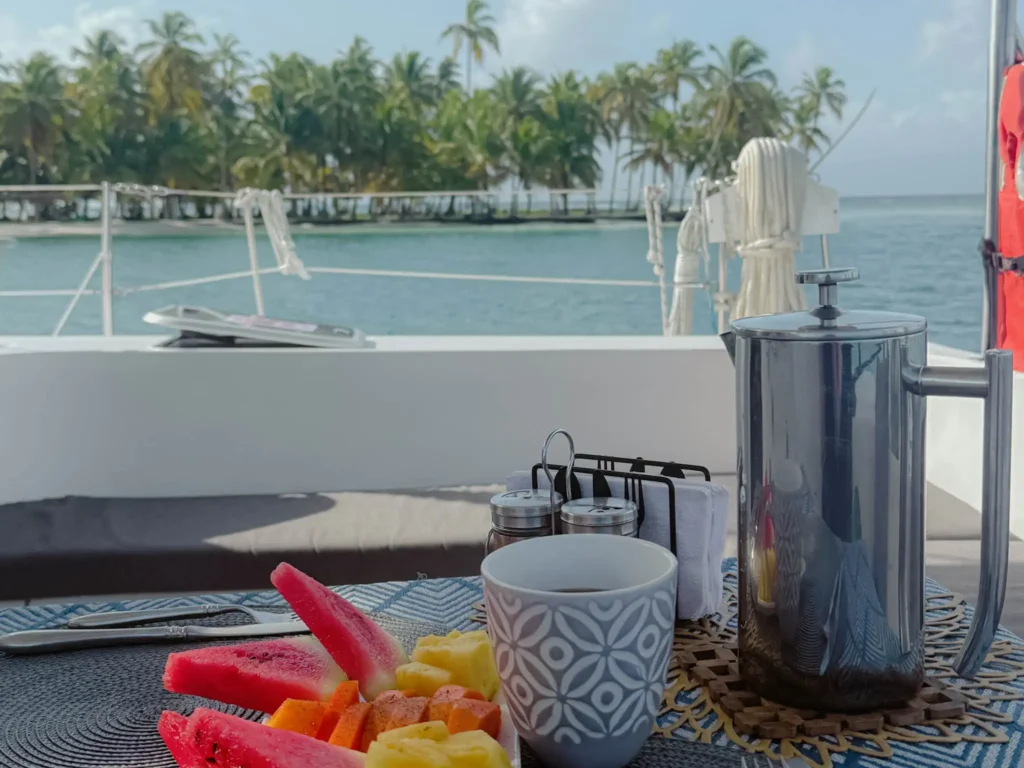
The deck is where you actually live. On a good catamaran the deck has enough seating for everyone, shade from the boom, and enough space to spread out without being on top of each other. That outdoor communal space is what makes the sailing trip work socially. The cabin is where you sleep. The deck is where you spend your days.
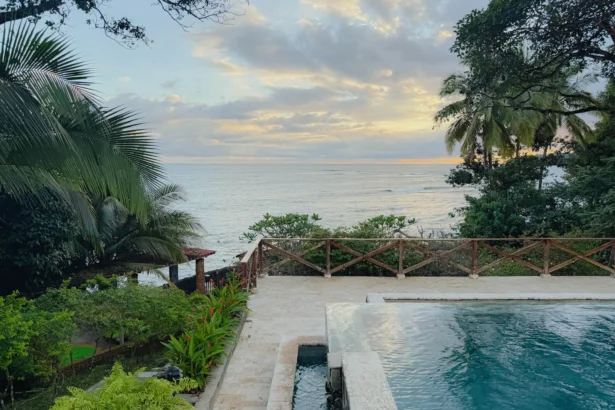
What makes all of this work is the setting. You wake up, look out of your porthole, and there is nothing between you and a palm-covered island in water the color of a swimming pool. The conditions feel entirely different when that is the view.
The galley
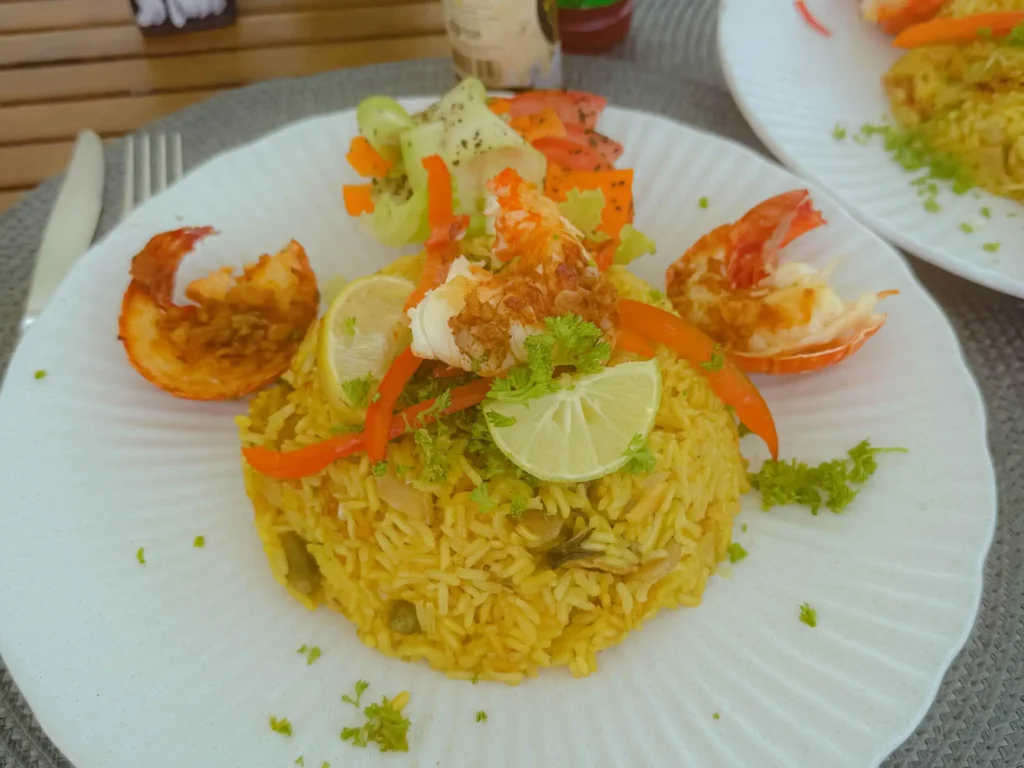
One of the genuine surprises of a San Blas sailing trip is how good the food is. Meals are cooked by the crew on board using fresh local seafood, and "local" here is not a marketing term. Guna fishermen come alongside the boat and sell their catch directly, which means what ends up on your plate that evening was in the water that morning. When lobster is available, it appears on the menu. When it is not, fresh fish fills the gap. Rice, beans, and tropical fruit round out most meals. For more on what to eat across Panama generally, our Panama food guide covers the regional specialties worth seeking out.
On many boats, drinks are included within reason as part of the trip cost. If you want something specific or prefer to bring your own, that works too. You can also purchase drinks with cash at some of the island stops. Confirm what is and is not included when you book rather than assuming.
The level of cooking varies by boat and crew, and reading recent reviews specifically for food comments is a reliable indicator of overall effort and quality. Across the range of San Blas operators, the access to fresh seafood gives even a basic cook a significant advantage over a landlocked kitchen.
Dietary restrictions need to be communicated clearly at booking, in writing rather than just verbally. Vegetarian is generally manageable with advance notice. Vegan is harder. Allergies should be stated clearly and confirmed as acknowledged.
Know before you go
Less of a concern than most first-timers expect, at least on an archipelago-based trip. The San Blas Islands sit behind a barrier of reefs and shallow water that keeps open ocean swell out of most anchorages. On my trip the water was genuinely flat throughout, calm enough that seasickness never came up at all.
Sailing between islands is mostly protected. Short hops between anchorages rarely involve conditions rough enough to cause problems for people who have never had seasickness on other trips. Even people who consider themselves prone to motion sickness often find San Blas manageable.
The exception is any open-water leg. If your trip includes a crossing to or from the mainland, or if weather pushes you outside the sheltered zone, conditions change. The Cartagena crossing is in a different category entirely.
If you have any concern about seasickness, take medication on the morning of any open-water segments and keep your eyes on the horizon rather than a book or screen. For most of an island-hopping trip, you are unlikely to need it.
Planning
The San Blas Islands divide neatly into two seasons, and the difference between them matters for a sailing trip.
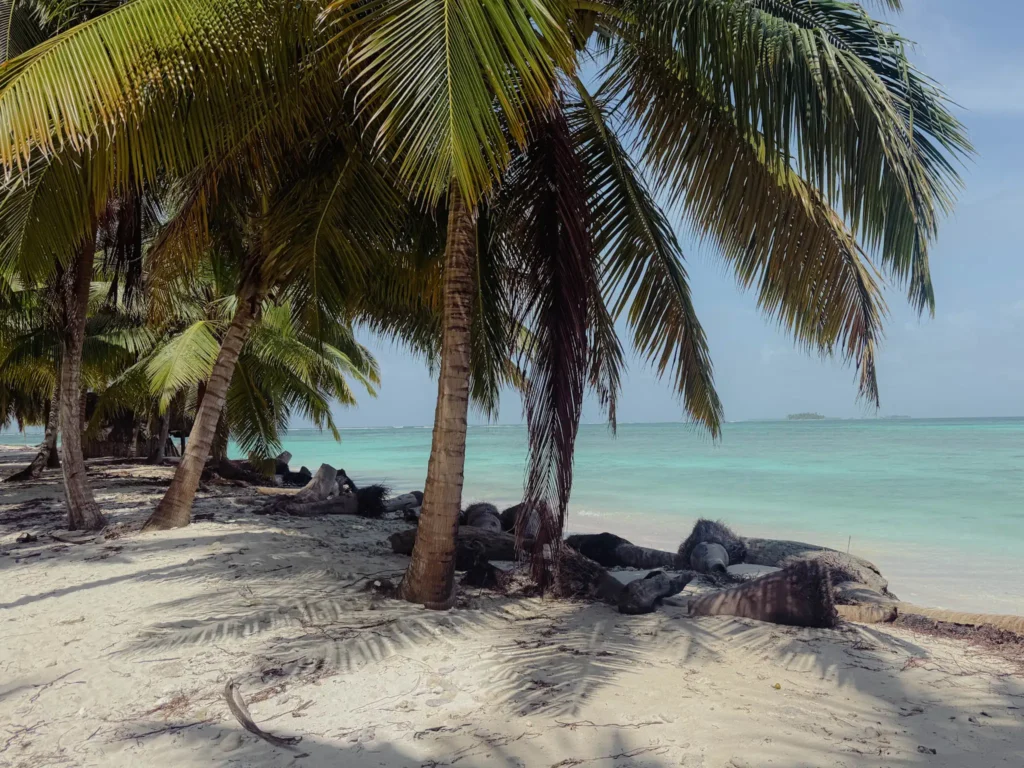
The dry season runs from December through April. This is the best time to sail San Blas. Trade winds are consistent and reliable, which makes for pleasant sailing conditions between anchorages. The water is clear, genuinely clear, the kind that makes snorkeling feel like swimming in an aquarium. Skies are mostly sunny. The islands are at their most photogenic. This is also the busiest period, and the most popular anchorages can feel crowded relative to the rest of the year. Book well in advance if you are traveling between January and March.
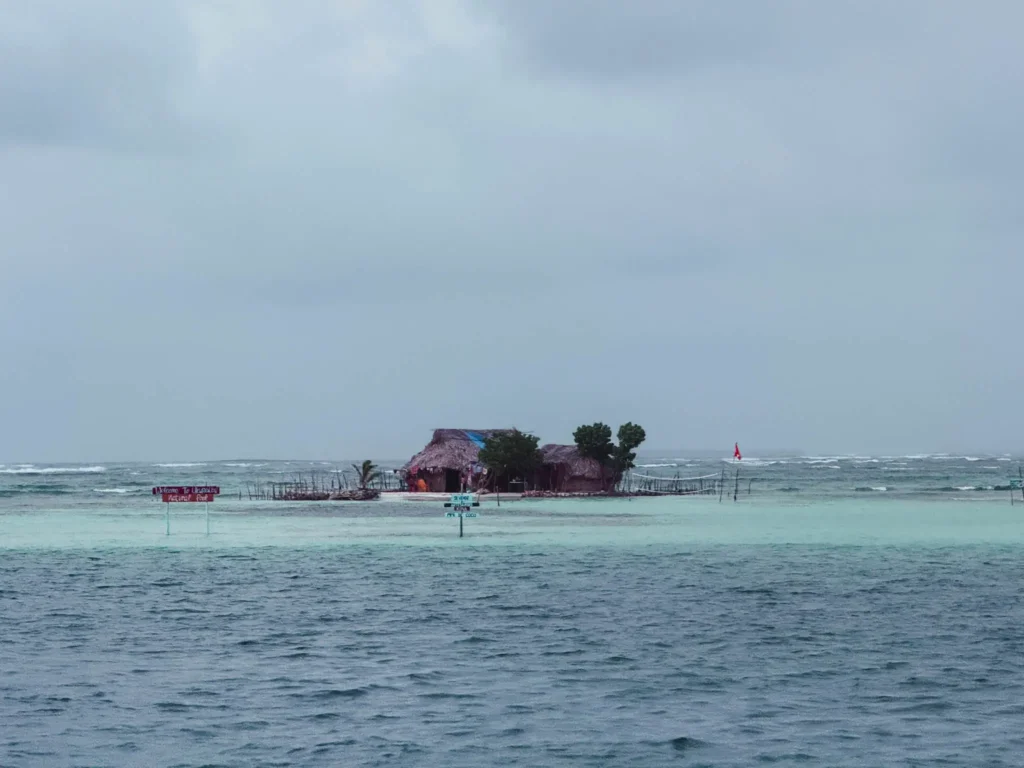
The rainy season runs from May through November. Sailing is still possible and some travelers prefer it for the lower prices and quieter islands. The wind is less consistent, which means more motoring and less sailing. The bigger consideration for most people is water visibility: rainfall and runoff from the mainland cloud the water significantly, which affects snorkeling quality. If seeing the reefs clearly matters to you, the wet season is not the right time. If the islands themselves are what you are coming for, the wet season is a legitimate option. For perspective, every photo throughout this article was taken in August. Smaller wet season crowds also mean shared boats are less likely to fill up, giving you more room on board.
Two shoulder months worth noting: November and late April can offer a reasonable middle ground, drier than peak wet season and less crowded than peak dry season, but conditions vary year to year and there are no guarantees.
The dry season is the right choice for most first-time visitors who want the full San Blas experience. If budget is the deciding factor and you can be flexible on snorkeling conditions, the wet season is workable.
The archipelago
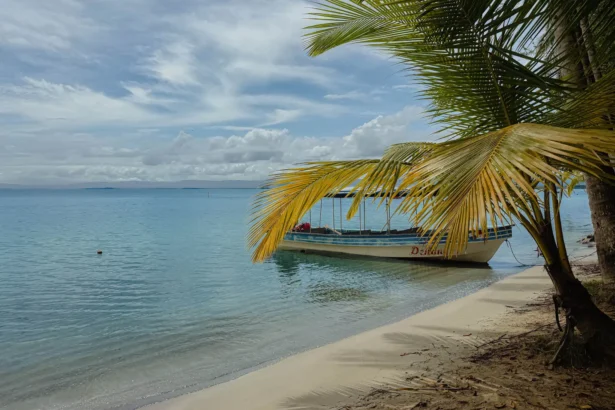
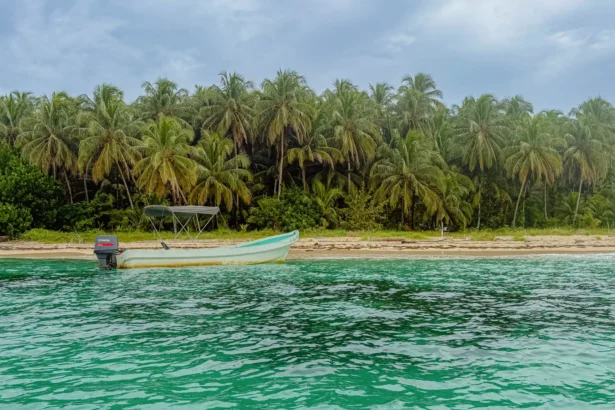
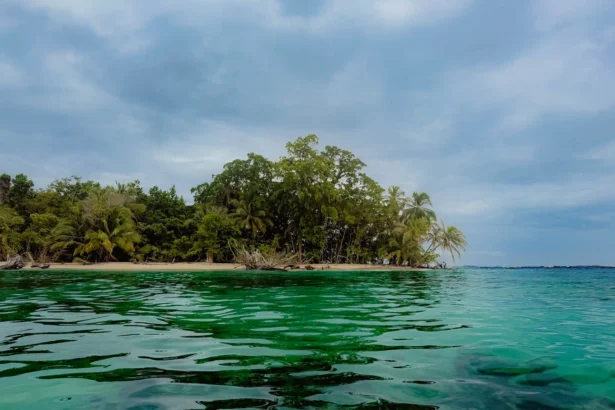
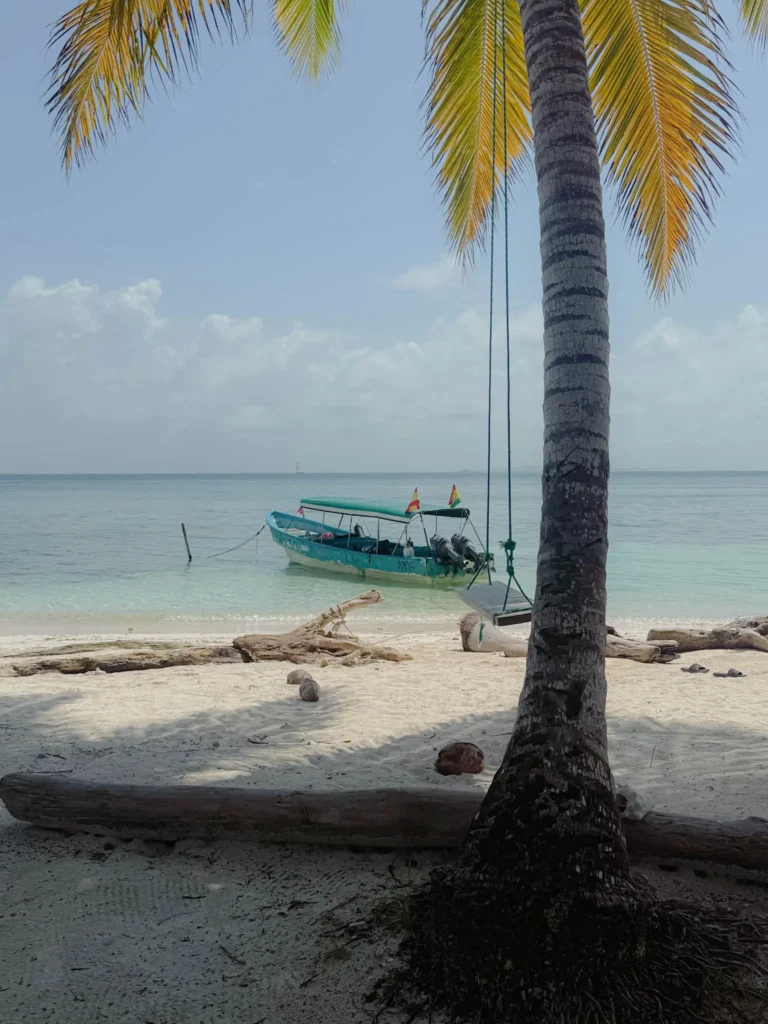
The photos are real. I half-expected San Blas to be one of those places that looks better on social media than in person. It is not. The islands are exactly what they appear to be: small, mostly flat, ringed by white sand that drops straight into water clear enough to see the bottom in twenty feet. The coconut palms lean out over the water at angles that look almost deliberately composed. Some islands are no larger than a beach volleyball court. Others have small Guna settlements on them that have been inhabited for generations.
Arriving by sailboat makes the visual impact sharper. You anchor offshore, take the dinghy to the beach, and step out onto sand with no buildings, no sun loungers, and no background music. The contrast with Panama City, which you probably left two days earlier, is genuinely startling.
The snorkeling sits within this experience rather than separate from it. Equipment was provided on the catamaran I sailed on, and the reefs around San Blas are healthy enough to reward time in the water. On my trip we saw a wide variety of reef fish and came face to face with a large nurse shark resting on the sand in the shallows, the kind of encounter that gets retold for the rest of the trip. The water is also clear enough to see rays swimming around the boat day and night from the deck. For more on the wildlife you might encounter across the country, our animals in Panama guide covers what to watch for. One important caveat: visibility is seasonal. During the dry season the water is clear and snorkeling is excellent. During the rainy season, runoff from the mainland reduces visibility. If underwater clarity matters to you, plan your trip in the dry months. Another area of Panama to look into if you are interested in diving is in Santa Catalina.
The islands also vary in character. Some are postcard-perfect and uninhabited. Others are working islands, fishing communities and Guna family settlements that are interesting to visit but not what you would put on a brochure cover. A good operator will include a mix, and that variety is part of what makes the trip feel genuine rather than curated.
On my trip we bought molas (the hand-stitched textile panels that are the Guna's most celebrated craft form) directly from vendors on the islands. We also ended up playing beach volleyball with local residents and bought coconuts from a Guna family on the beach. None of it was arranged. All of it was real. That informality is one of the things that distinguishes San Blas from most Caribbean destinations.
Booking
This is the most consequential decision you will make for this trip. The quality gap between operators in San Blas is significant, and not just in terms of boat condition. Crew attitude, island itinerary, and how honest they are upfront about what to expect all vary.
There are two ways to book, and each has real trade-offs.
Booking direct
Going directly to the boat operator will get you the best price. You cut out the middleman and negotiate directly with the captain or owner. The challenge is finding them. Direct operators are harder to locate because they rarely have polished websites or strong Google presences, and without a third party in the loop you carry more of the coordination risk yourself if something goes wrong.
Booking through an agency
Booking through a San Blas sailing agency costs a little more but takes a significant amount of friction out of the process. A good agency has relationships with most of the boats operating in the archipelago, knows their current availability and pricing, and handles the logistics of getting you from Panama City to your boat. That last piece is more involved than it sounds. Transportation to the archipelago, coordination at the embarkation point, and the handoff to the boat are all managed through the agency. For first-time visitors especially, that layer of support is worth the additional cost. Ulu I Travel by Boat is a reputable agency that can provide availability, charter pricing, and support for organizing your transfer.
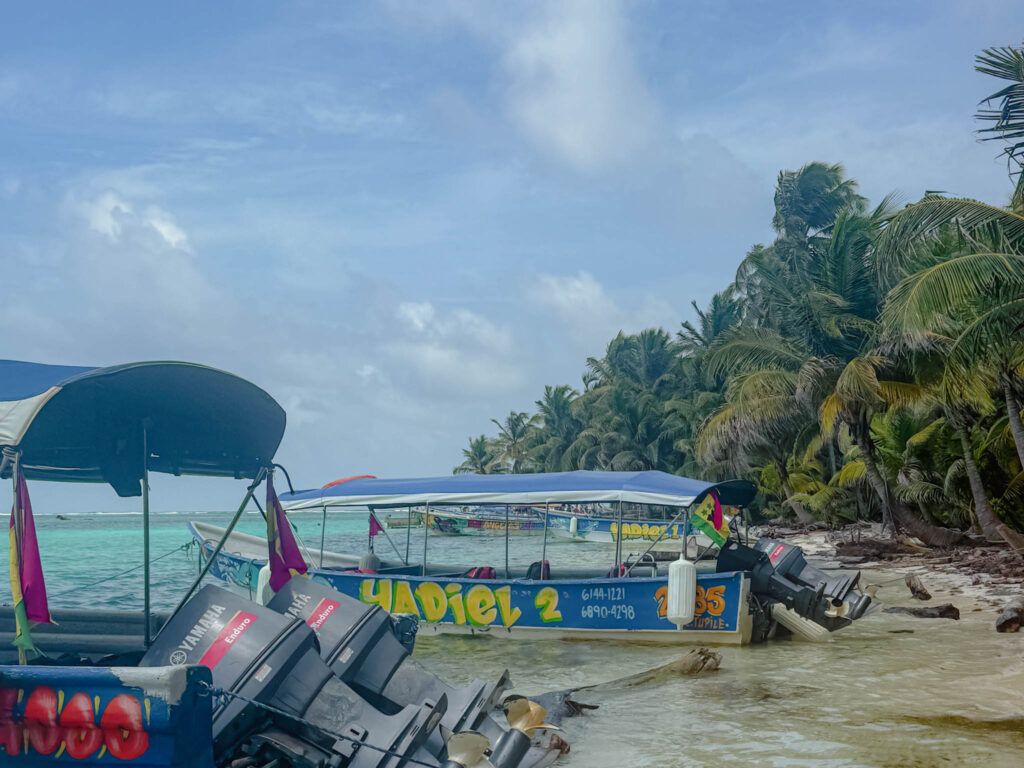
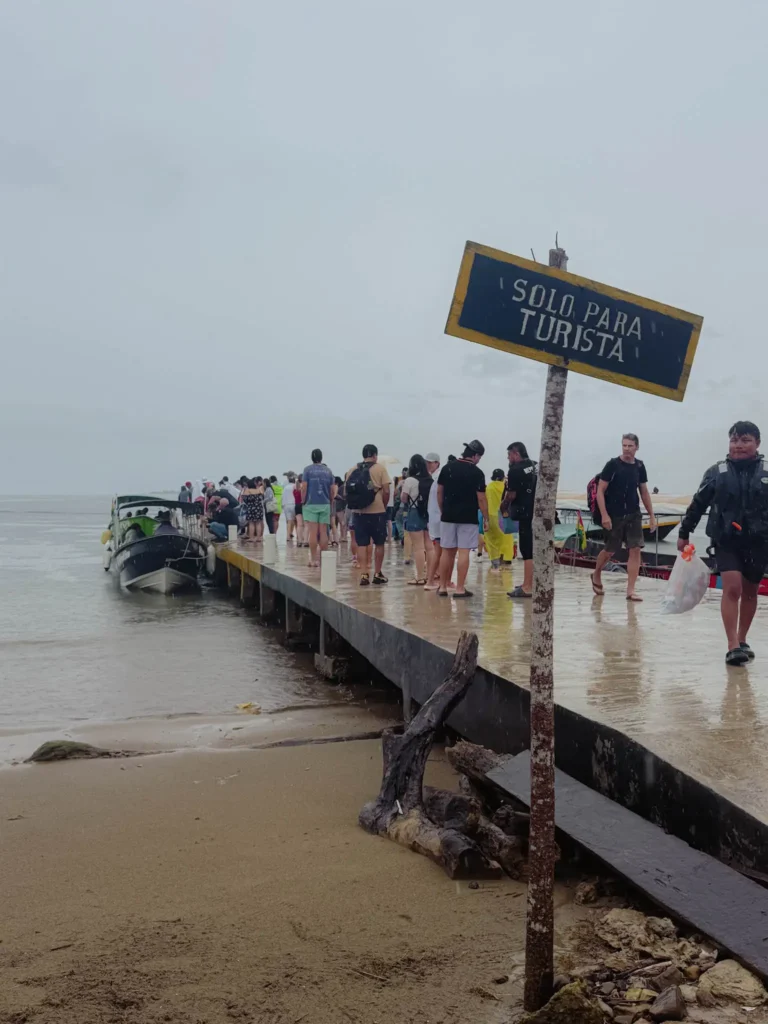
One thing worth knowing: the boat docks where passengers transfer to their vessels look chaotic at first glance. People, bags, dinghies, and a lot of shouted Spanish all converge at once. In practice, the whole operation is coordinated by the Guna Yala community and runs with surprising efficiency. Everyone gets where they are going. Trust the process.
The journey
Most San Blas sailing trips embark from Carti, a small port on the Caribbean coast roughly three hours from Panama City by 4WD. Your operator or agency will typically arrange the transfer as a shared van leaving Panama City between 5am and 6am.
The drive itself is part of the experience. The road climbs through the continental divide, drops sharply into Guna Yala territory, and the final stretch involves a checkpoint where the Guna collect the entry fee for the archipelago (currently around $20 USD per person, cash only, in addition to the boat trip cost). The road is paved but steep in places. Travelers prone to motion sickness should sit in the front and consider taking medication before departure.
For travelers who want to skip the drive entirely, a small airstrip on the islands receives charter flights from Panama City. Flights cut the journey to roughly 25 minutes but cost considerably more and operate on limited schedules. Most sailing operators do not include the air option.
Allow buffer time on the return leg. The Carti road can flood briefly during heavy rains, and the schedule from your boat back to Panama City is less reliable than the outbound trip. Do not book a flight out of Panama City on the same day you return from your sailing trip.
Pack light and pack soft. Storage in a catamaran cabin is limited, and a hard-sided suitcase will make everyone's life harder including your own. A soft duffel bag or roll-top dry bag is the right choice.
Discover more of our most recommended gear →.
The verdict
Yes, with the right expectations in place. The San Blas Islands are one of the few places left in the Caribbean where the water is genuinely clear, the beaches are genuinely empty, and the communities you encounter are going about their own lives rather than performing for visitors. Experiencing that from a sailboat adds something a land-based stay cannot fully replicate: the freedom to move between islands, the particular quality of waking up on the water, and the satisfaction of arriving somewhere beautiful under sail rather than by van transfer.
A sailing trip is also simply the best way to sleep in San Blas. Island cabins are rustic and basic by design. The boats are not luxury, but they are comfortable, and waking up to a new anchorage every morning is something no fixed accommodation can offer.
For travelers who want to explore the archipelago at their own pace, with the best food San Blas has to offer and the freedom to find islands no day-tripper will reach, a sailing trip is the right call.
Planning the rest of your time in San Blas?
Guna culture, sailing trips, white-sand islands, and what to expect when you go.
The San Blas guide →