


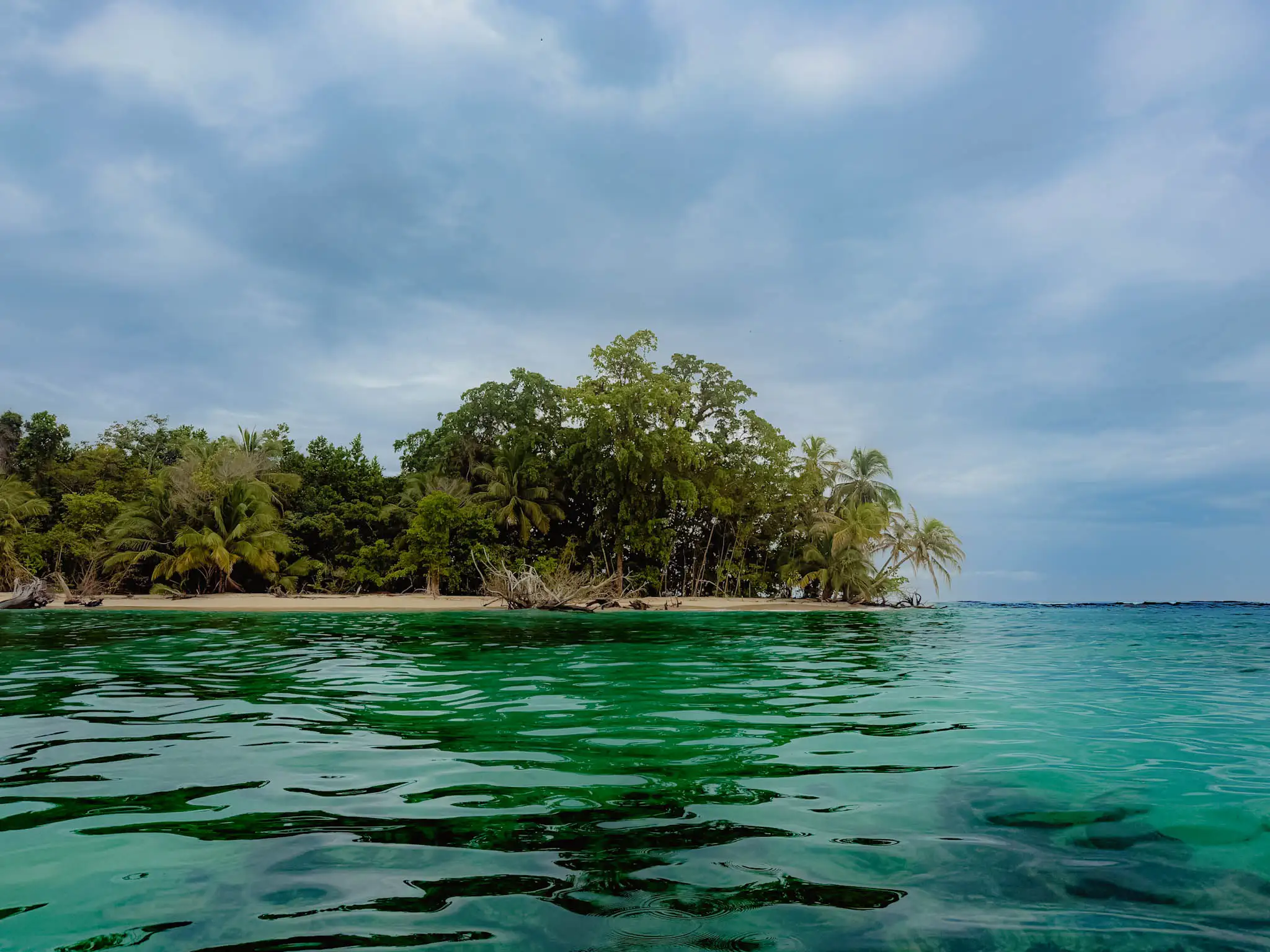
Part of the Panama Travel Guide
← Back to PanamaBocas del Toro is an archipelago of nine main islands and dozens of smaller cays scattered across the Caribbean coast of northwest Panama, near the border with Costa Rica. It is a place you move through by boat, where water taxis buzz between islands, sloths hang in the trees, and starfish drift in the shallows just off the dock. The vibe is unmistakably Caribbean: laid back, colorful, and a little rough around the edges in the best way.
This is not a polished resort destination, and that is exactly the point. Bocas del Toro rewards travelers who want island culture, honest adventure, and a genuine sense of place over manicured luxury. In this guide we cover everything from firsthand experience: how to get there, how to get around, where to stay by island and vibe, the best things to do, when to go, and the practical realities that the glossy guides tend to leave out.
Other Bocas del Toro articles
Quick Resources to Plan Your Trip to Panama
Planning your trip
There are two main ways to reach the archipelago, and which one you choose comes down to your budget and how much of your day you are willing to spend in transit. However you arrive, your first stop is Bocas Town on Isla Colon, and from there the whole archipelago opens up by water.
Flying to Bocas del Toro (recommended)
The most straightforward way to reach Bocas del Toro is to fly. Domestic flights from Panama City land at Bocas Town airport on Isla Colon, the main island and the hub of the archipelago. If you are coming from Panama City, another major destination, or arriving on an international connection, flying is the option we recommend. It turns what can be a long overland journey into a short hop, and it drops you right in the middle of the action on Isla Colon.
Flights to Bocas del Toro →The overland shuttle and boat route
The overland route is the budget alternative, and it is a real commitment. It typically involves a long bus or shuttle ride to the town of Almirante on the mainland, followed by a water taxi across to Bocas Town. We reached Bocas on a group shuttle from Boquete, and while it got us there, it is a full travel day. If your time is limited, the flight is worth every dollar. If you are traveling on a tight budget or already moving overland through the highlands, the shuttle-and-boat route is a workable, if slower, way in.
When you're there
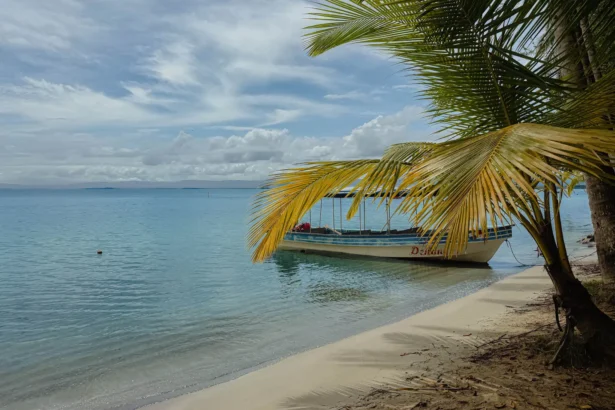
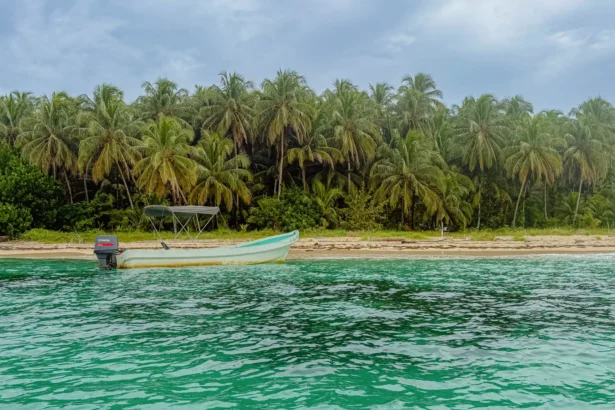
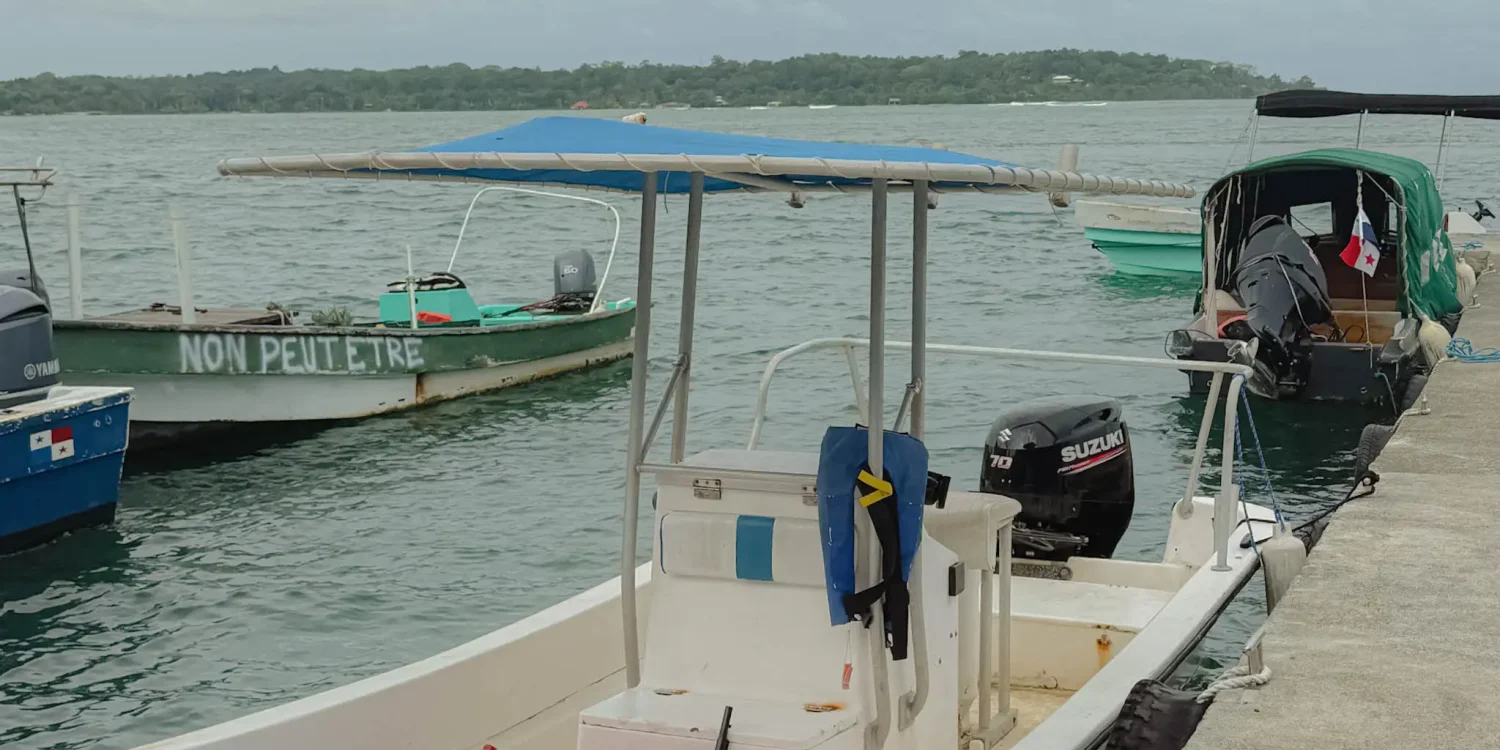
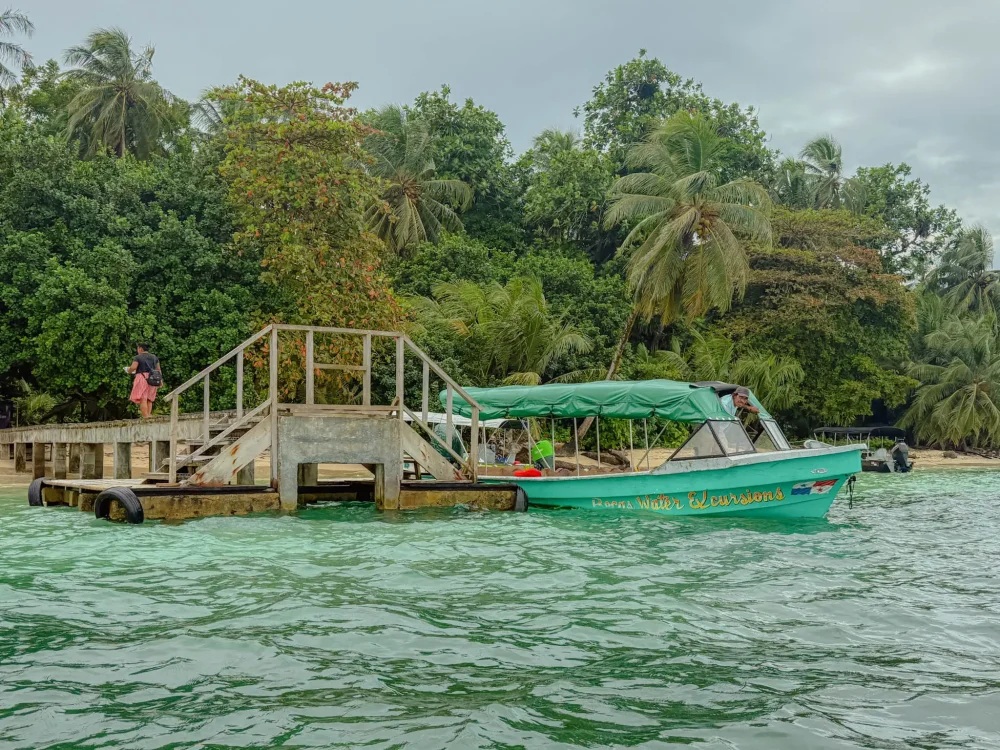
Once you land in Bocas Town, you get everywhere by water. Water taxis are the backbone of the archipelago, and they are easy to use. You can hail one from any of the docks around Bocas Town, and there are water taxi stands at various points along the waterfront. They run frequently, they are efficient, and they are inexpensive, making island hopping simple even if you have no plan for the day.
For a proper day out on the water, you can book a boat tour. The standard full-day tour is sold all over Bocas Town and takes you around several islands and beaches in one loop. We chose to privately hire a boat captain instead, which let us set our own route and pace, but the standard tour is an easy, affordable way to see the highlights if it is your first time here.
Island boat tours →On Isla Colon itself, you do not always need a boat. You can rent bikes in Bocas Town and ride out to the island's beaches, which is one of the best things to do in Bocas and something we cover in more detail below.
Planning your trip
Where you stay in Bocas del Toro shapes your entire trip, because each island in the archipelago has a genuinely different personality. This is not a destination where one area works for everyone, and choosing the wrong base can leave you either stuck in the noise when you wanted quiet, or isolated from the action when you wanted to be in it. The good news is that the islands are close together and water taxis make it easy to move around, so the real question is where you want to wake up each morning. Here is how we would sort them.
Bocas Town, Isla Colon
Best for: backpackers, young travelers, and anyone who wants nightlife and convenience.
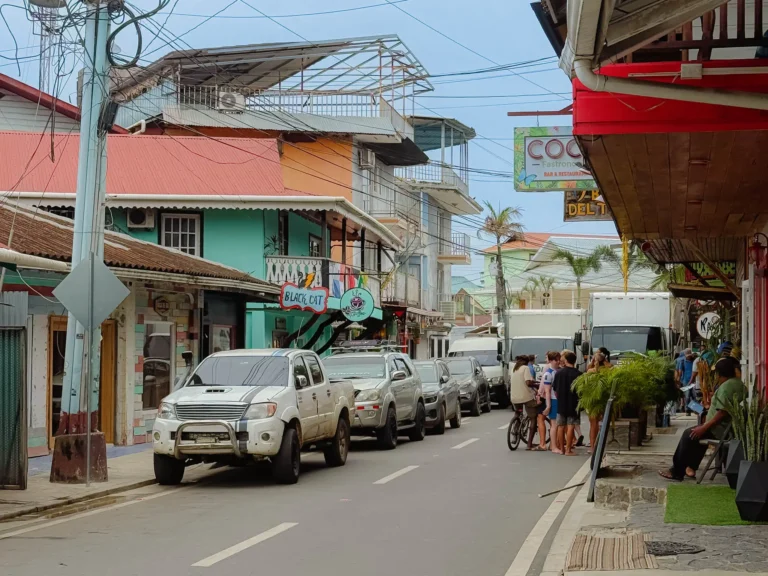
Bocas Town is the loud, lively heart of the archipelago and the most convenient base. It is where the water taxis run from, where you rent bikes for the Isla Colon beaches, and where the restaurants and nightlife are. That convenience comes with real noise after dark, so stay here if you want a social, party-forward scene. You will find everything from budget hostels to waterfront hotels near the docks.
Isla Carenero
Best for: travelers who want easy access to town plus a stronger sense of island culture.
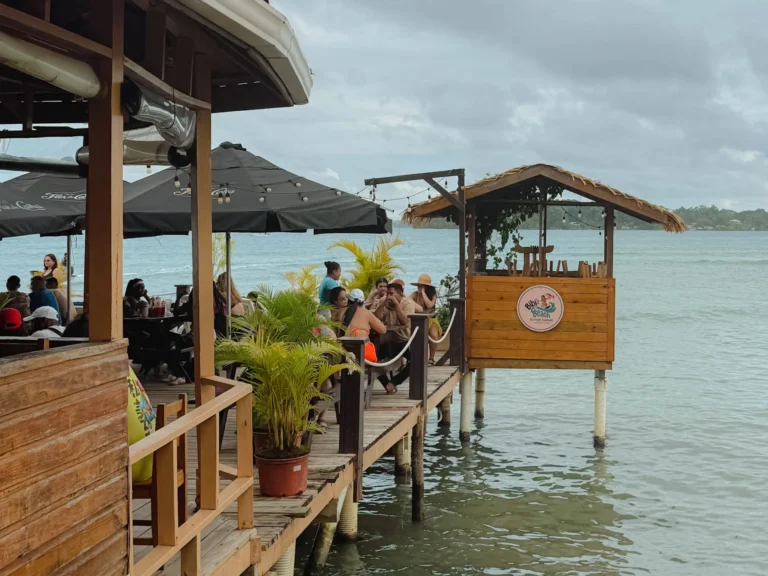
A two-minute water taxi from Bocas Town, Carenero trades the noise for a calmer pace and more island culture. This is where we stayed. One honest caveat the glossy guides skip: it is infested with sandflies that are especially voracious morning and evening. Keep your arms and legs covered in oil, and grab the local repellent from the Bocas Town pharmacy first, since it works far better than anything you bring from home.
Isla Bastimentos and Old Bank
Best for: nature lovers who want jungle lodges with easy water taxi access.
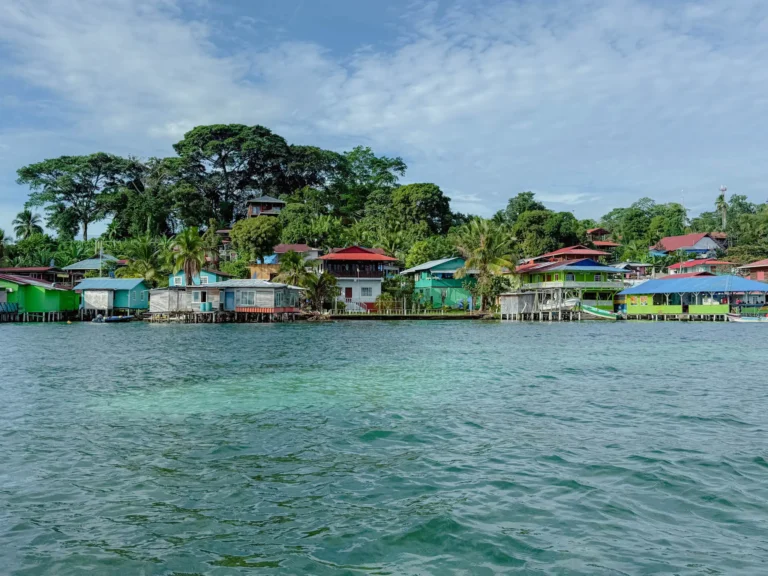
Bastimentos is the nature island, with remote lodges set against the jungle but still well connected by water taxi. It is for travelers who want to fall asleep to the rainforest and still reach the beaches easily. It also holds the town of Old Bank, a convenient hub that is not considered the safest area for tourists at night or without a guide, so we steer visitors toward the lodges instead. Visiting during the day or with a boat captain or guide is a different matter, and the food there is worth the trip.
Isla Solarte and remote escapes
Best for: couples and travelers seeking a quiet, design-forward, relaxing escape.
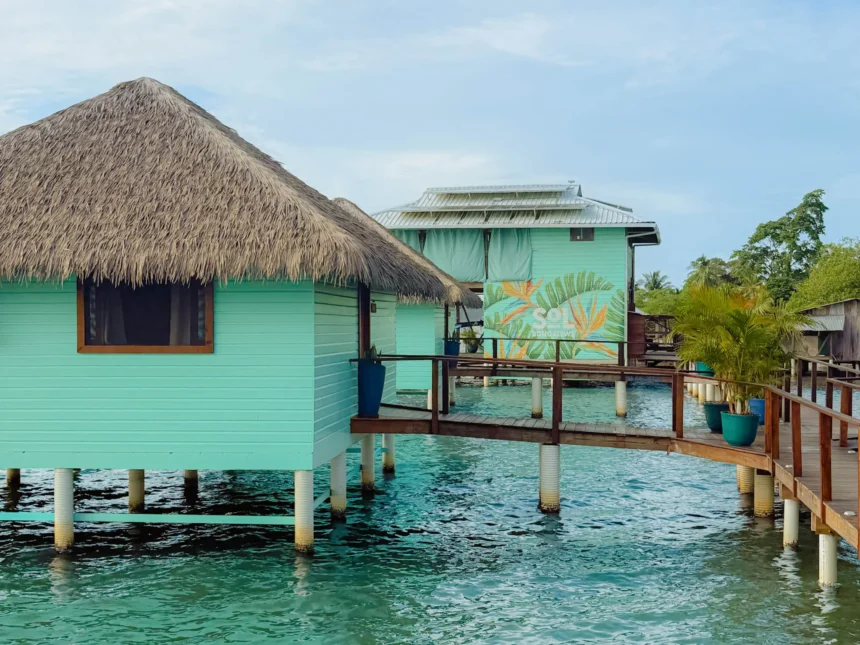
For a quieter escape, the remote islands are where Bocas gets special. Our standout is Sol Bungalows on Isla Solarte, over-water lodges with food on site. We did not stay overnight, but we spent real time on the property and met the owners, and their intent stayed with us: merging the guest experience with the craftsmanship and culture of the islands, from the bungalow design to the recommendations they give guests. You book direct through their own site, and it is worth reserving early since the remote lodges are small and fill up.
M
From the field · Melina
Sol Bungalows, Isla Solarte, Panama
What sets Sol Bungalows apart is not just the over-water setting, it is the intention behind it. Talking with the owners on Isla Solarte, it was clear their focus goes beyond a beautiful room. They have built the property around elevating local craftsmanship and culture, from the way the bungalows are designed to the way they steer guests toward the real Bocas. That is the difference between a place to sleep and a place that connects you to where you actually are.
First-hand observation
Nayara
One more property is worth naming for a specific kind of trip. Nayara is a private, all-inclusive luxury resort built around design and relaxation, and if what you want is a self-contained honeymoon or a quiet escape where everything is handled on-property, it delivers exactly that. We are upfront about the trade: an all-inclusive by design keeps you somewhat apart from the island culture that most of our picks are chosen to connect you with. Go in knowing that, and for the right traveler it is a genuinely comfortable base.
Planning your trip
Bocas is a place where the water is the main event, so most of the best things to do involve a boat, a beach, or both. Here is what we would prioritize, roughly in the order a first-timer should tackle them.
our recommended 3 day itinerary for discovering Bocas del Toro →
1
Take a boat tour of the islands
If it is your first time in Bocas, start here. The standard full-day tour is sold all over Bocas Town and loops you around several islands to see starfish, spot sloths and other wildlife, and relax in the calm spots along the way. We chose to privately hire a boat captain so we could set our own route and pace, which is worth it if you want more control, but the standard tour is the easy, affordable way to get your bearings on day one.
Standard Bocas del Toro island tour →2
Rent bikes to explore Isla Colon
You do not need a boat to reach some of the best beaches. Rent e-bikes in Bocas Town and ride out across Isla Colon to Starfish Beach, Playa Bluff, and Playa Escondida. It is the most independent way to see the island, and the ride itself, past the water and the local neighborhoods, is half the fun. We recommend reserving bikes in advance with Bocas E-bikes to guarantee well-maintained bicycles to ride around the island.
3
Go snorkeling and find the starfish
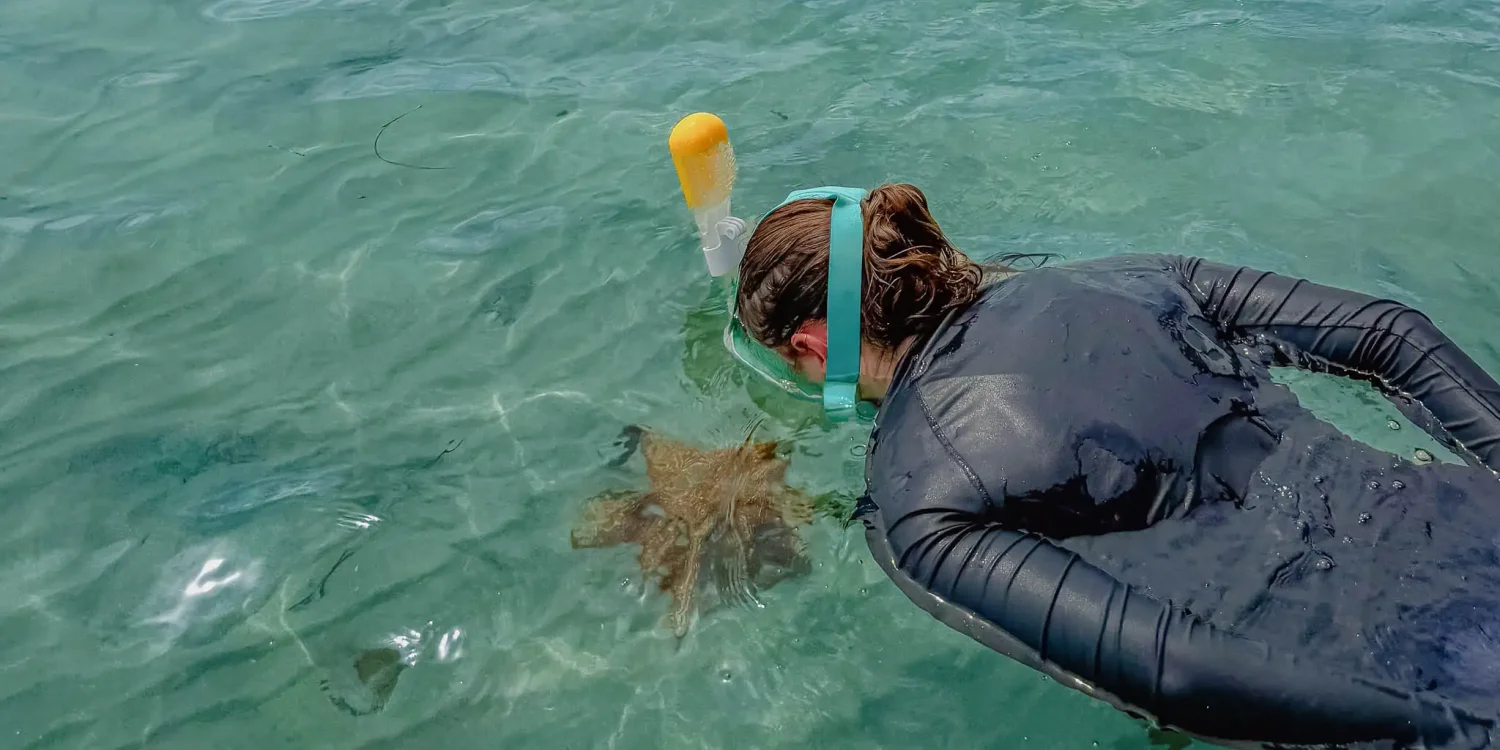
The snorkeling here is easy and rewarding, with warm, shallow water and, at the right spots, dozens of oversized starfish resting on the sandy bottom. You do not have to go far to see them. From our dock on Isla Carenero we could spot starfish right off the edge, and the boat tours reliably hit the best snorkeling beaches. At Starfish Beach, you can rent snorkel gear from vendors along the beach to enjoy the starfish that cover the bank along the shore.
4
Explore the beaches
The beaches are the reason many people come, and they range from easy to reach to gloriously remote. Starfish Beach and Playa Bluff are the simplest to access from Bocas Town, while the more remote beaches like Wizard Beach, Red Frog Beach, and Playa Zapatilla 2 are the most beautiful and are best reached by boat. One honest safety note: there is a path from Old Bank to the beach, but it can be dangerous and we do not recommend hiking it. Hire a boat instead.
5
Catch a wave at Playa Bluff or Playa Paunch
Bocas has a real surf scene, and Playa Bluff and Playa Paunch is the best-known break for the average surfer. Surf runs from January through March, peaks in April, and returns with the rains from June through August and again in December. The waves can be powerful and rough, so this is not the place to wing it. If you are not confident, take a lesson before you paddle out.
6
Experience the nightlife
Bocas Town has a lively, young nightlife scene aimed mostly at travelers staying in hostels. On Fridays, an organized bar crawl (Filthy Friday) runs around the Bocas Town and Carenero area, and if you want to bar-hop it is often better value than paying the hefty cover charges you will otherwise face at individual bars. One important caveat: drugs are illegal in Panama, even though they are prevalent in Bocas, and the penalties could be serious.
Planning your trip
The best time to visit Bocas del Toro is September and October, during the archipelago's mini dry season. This short Caribbean-only window brings dry weather and the clearest water of the year for diving and snorkeling, and it happens to be one of the quietest stretches for tourism. It is the best combination on the calendar.
That mini dry season is the single most useful thing to understand about timing a trip here. Bocas sits on the Caribbean coast and runs on a completely different calendar from the Pacific side of Panama. While the rest of the country is deep in its wet season, Bocas gets a second dry window in September and October that most travelers have no idea exists.
The other thing worth knowing is that in Bocas, the crowds and the weather do not move together. Peak tourism is driven by the American holiday calendar, not by local conditions. The islands fill up over the December and January holidays and again during spring break in March, which means you can arrive in a genuinely wet month and still pay peak prices and compete for tables. Meanwhile September and October, which offer some of the best conditions of the year, stay quiet simply because they fall outside the windows most Americans can travel.
Bocas del Toro weather by month
Bocas has two dry windows, not one. The long dry season runs from January through March, and the mini dry season arrives in September and October. April and May are transitional, and the rain settles in from June through August and again from November through December. Select a month to see what to expect.
The best time for diving and snorkeling
September and October, without question. The water is at its clearest all year, the seas are settled, and the archipelago is quiet. If your trip is built around getting in the water, whether that is snorkeling the starfish or diving properly, plan your dates around this window and you will see Bocas at its absolute best.
The long dry season from January through March is the solid second choice. Visibility is good and conditions are dependable, you will just be sharing the water with considerably more people.
The best time for surfing
Surfers work on a different calendar entirely, and Bocas delivers for most of the year. The swell runs from January through March, peaks in April, which is the height of surfing season here, and then returns with the rains from June through August and again in December.
Paunch and Playa Bluff are the best-known breaks, and the waves can be powerful. If you are not a confident surfer, book a lesson rather than paddling out on instinct.
When the islands are busiest
Peak season in Bocas is set by American school and holiday calendars, not by the weather. Expect the busiest, most expensive weeks over the December and January holidays and again during spring break in March. Accommodation fills early, prices climb, and the popular beaches and restaurants feel noticeably tighter.
If crowds are what you want to avoid, September and October are your months. May is another quiet stretch worth considering, as it sits after spring break and before the heavy rain.
Visiting during the wet season
June through August, plus November and December, are the wet months. Bocas is on the Caribbean coast and it rains hard, so the smart approach is to plan around the rain rather than hope it stays away.
Our honest advice is to base yourself somewhere with excellent water and beach access right on the property, so a wet afternoon costs you an activity rather than an entire day. Surfers should note that the wet months are also good surf months, so June through August and December are not a write-off at all if waves are the reason you are coming.
November deserves a specific mention because it is both wet and windy. We visited in mid-November and had excellent weather the whole trip, with darker clouds passing through for short stretches and nothing that stopped us doing a thing. We want to be straight with you though: that was a good run in a wet month, not what the calendar promises.
Bocas del Toro is not a polished resort destination, and the sooner you make peace with that, the better your trip will be. The infrastructure is basic in places, the bugs are real, and things do not always work the way they would at a chain hotel. None of that is a warning to stay away. It is the texture of the place, and most of it is genuinely part of the charm. Here is what nobody tells you before you arrive.
For a full country-level overview of practical information including domestic travel, health, and entry requirements, see our Panama travel guide →.
Planning your trip
Most travelers need three to five days in Bocas del Toro, plus a travel day on each end. Three full days on the islands covers the essentials, five lets you enjoy them without rushing, and a week or more turns a trip into an escape. Whichever you choose, book a travel day on either side, because getting to the islands and back out takes a partial day each way.
That travel-day point is the one piece of planning people most often get wrong. Whether you fly into Bocas Town or come overland by shuttle and water taxi, your arrival and departure days are largely eaten by getting there and getting out. So when you count the days below, think of them as full days on the islands, and add the travel days separately when you book your flights. Bocas rewards slowness and punishes a rushed itinerary, since almost everything you want to do involves a boat, and boats run on their own schedule.
3 days
The essentials
Three full days on the islands is enough to hit the highlights without much room to spare. Spend day one on the standard full day boat tour, which orients you and delivers the islands, the starfish, and the wildlife in one loop. Give day two to Isla Colon by bike, out to Starfish Beach and Playa Bluff. Use day three for snorkeling, or to reach a remote beach like Red Frog by boat.
It is a satisfying short trip, but it is efficient rather than relaxed, and you will leave with a few things still on your list.
5 days
The sweet spot
Five full days is what we would tell most people to aim for, because it is the difference between rushing and relaxing. You get the boat tour, the bike day on Isla Colon, a dedicated day for snorkeling or diving in the clear water, and a day to reach the remote beaches like Red Frog and Wizard, with a fifth day to do very little, which in Bocas is the whole point rather than a wasted day.
Five days also buys you a weather buffer. If a wet afternoon takes out an activity, you reschedule it instead of losing it.
7+ days
The slow version
If you can give Bocas a full week or longer, use the extra time to go remote. Base yourself somewhere quiet, get out to the beaches most visitors never reach, and let the pace of the islands set your schedule instead of the other way around. This is when Bocas stops being a destination you are visiting and becomes a place you are living in for a while.
Quick answers to the most common questions about visiting Bocas del Toro.
The best beaches around Bocas del Toro
An honest, island-by-island guide to the best beaches in Bocas del Toro to relax and enjoy the Caribbean sand and turquoise water.
3 days in Bocas del Toro
We spent two days in the Bocas del Toro archipelago and left knowing exactly how we would have spent a third. Here is the itinerary we would recommend.
Best time to visit Panama
The dry season is not the only season worth going. Here is what the calendar actually looks like, region by region.
Is Panama safe?
Panama is one of the safest countries in Central America. But the answer shifts considerably depending on where you are going.
