

Part of the Panama Travel Guide
← Back to PanamaSanta Catalina is a small, rustic surf town on the Pacific coast of Panama, and it is the mainland base for visiting Coiba National Park, a protected marine archipelago that sits offshore. The town itself is modest, with basic amenities, a short list of restaurants, and beaches that are not the postcard beaches you have seen from Panama. What Santa Catalina has instead is La Punta, the most popular surf break in the country, and access to some of the best marine life on the Pacific side. People come here to surf, to dive, and to get out to Coiba, and the town is honest about being built around those three things and very little else.
This is not a destination you add to a Panama itinerary because it happens to be on the way, and it is not on the way to much of anything. Santa Catalina rewards travelers who want to learn to surf or improve the surfing they already do, who want to trade a city for a slow beach town where the day runs on tides and swell, and who want to get in the water with genuinely good marine life. It is not the place for cultural immersion or a memorable dining scene, and we would rather tell you that plainly than sell you a version of the town that does not exist. In this guide we cover everything from firsthand experience: how to get there, where to surf by skill level, how to visit Coiba National Park, where to stay, when to go, and the practical realities that catch first-timers out.
We visited in November and spent two days and three nights on the ground, which was enough to take a surf lesson at Estero, run a full day trip out to Coiba, and get a real read on the town, though it was not enough to do it justice. If you want more than one lesson, or you want to dive rather than snorkel, give yourself more time than we did, because each activity here costs you the better part of a day. One note on what we did and did not do: we surfed and we snorkeled, but we did not dive. Santa Catalina is a well-established dive base and we cover what is available below, but we are not going to recommend operators or dive sites we have not used ourselves.
Quick Resources to Plan Your Trip to Panama
Getting there
Getting to Santa Catalina takes the better part of a travel day from anywhere in Panama, and there is no shortcut around it. There is no airport in town, so every route ends with a long road journey along winding coastal roads, and the winding is not a minor detail. We traveled in by private shuttle from Boquete and out by private shuttle to Panama City, and both drives were enough to make us glad we had planned for them. If you are at all prone to motion sickness, take something before you get in the van rather than waiting until you start to feel it, because there is nowhere useful to stop once you are on the coastal stretch.
Shuttle (what we recommend)
A private shuttle is what we recommend without hesitation, and it is how we moved through this whole stretch of the country. It takes roughly six hours from Panama City, five and a half hours from Boquete, and eight and a half hours from Bocas del Toro. Fares run by route rather than sitting at a single price, from around $35 on the shorter legs out of Boquete or David up to about $70 from Bocas del Toro, with Panama City in the middle at roughly $60 per person. The comfort difference over the public bus is real on a road like this one, and the shuttle runs direct rather than routing you through a transfer town and leaving you waiting on a connection. Some operators want payment in cash on boarding, so confirm when you book rather than turning up at the pickup with a card and nothing else.
Shuttle bus options →The public bus route
The public bus is the budget alternative, and from Panama City it takes more than eight and a half hours, which is over two hours longer than the same trip by shuttle. The route runs through Soná, where you transfer for the final leg out to the coast, and the whole journey is operated by Union de Transportistas del Sur de Soná, known locally as UTRANSUR. It will get you there for considerably less money, but you trade most of your day and a good deal of comfort for the savings, and you are dependent on the connection in Soná lining up with your arrival. We did not travel this way ourselves, so we are not going to describe the ride as though we had. If you are moving through Panama on a tight budget and already traveling overland, it is a workable route. For everyone else, the shuttle is worth the difference.
Bring cash, and more than you think
There are very few ATMs in Santa Catalina and much of the town runs on cash. Coiba day tours, some surf lessons, and some shuttle companies all prefer or require it. Withdraw what you need before you arrive, and note that operators who do take cards will sometimes add a small fee.
Surfing
Santa Catalina is the best place to surf in Panama, and it is also one of the best places in the country to learn. That combination is unusual. Most surf destinations are good for one or the other, but Santa Catalina has a forgiving sand-bottom beach break for beginners and a serious reef point break for experienced surfers within walking distance of each other, which means a first-timer and an advanced surfer can base themselves in the same town and both get what they came for. Surfing in Panama happens on both coasts, but this stretch of the Pacific in Veraguas is where the country's surf culture is concentrated, and Santa Catalina is its center.
Estero, the beginner and intermediate break
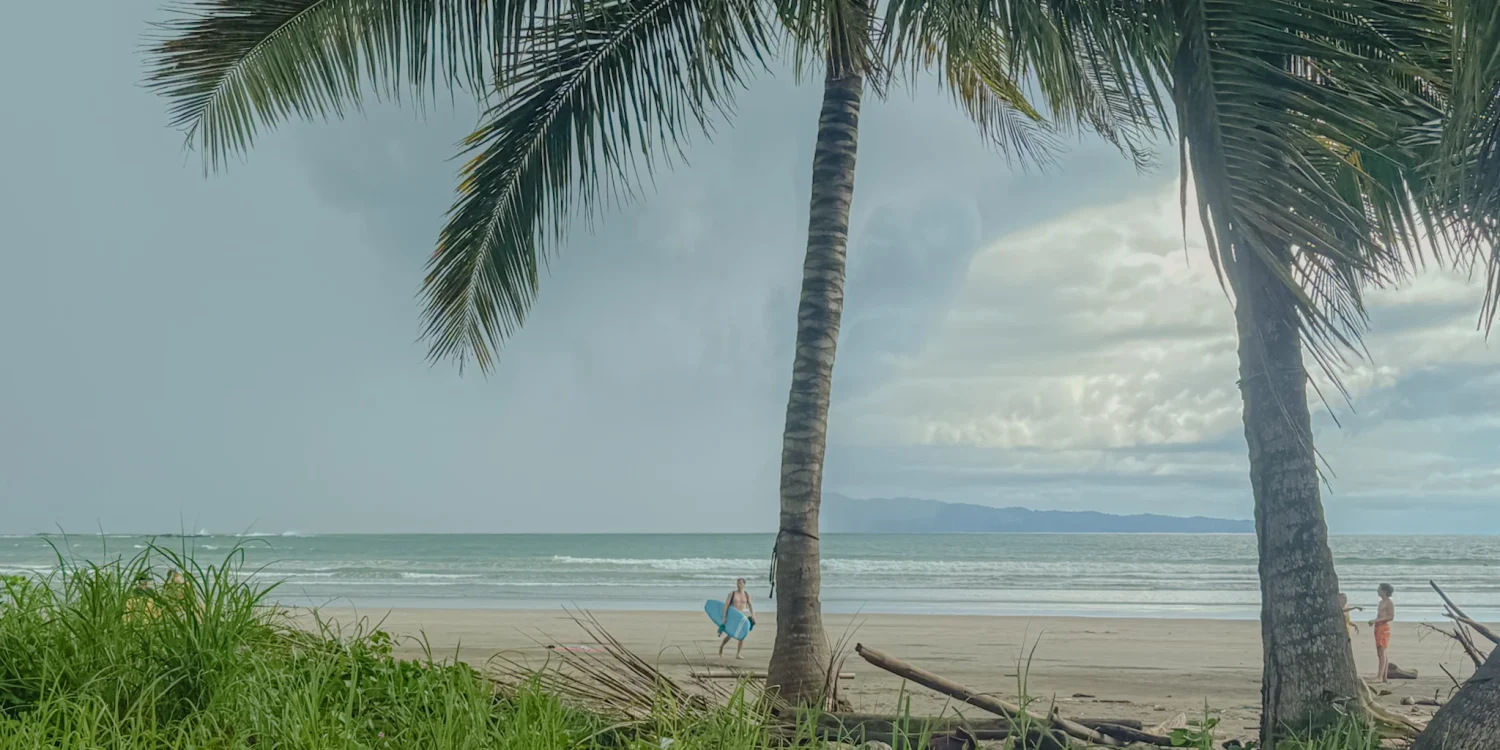
Estero is where you learn to surf in Santa Catalina, and it is genuinely well suited to it. This is where our instructor took us for our first lesson. The wave breaks over sand rather than reef, the water where it breaks sits at around four to five feet deep, and the beach behind it is wide and open, so there is room to fall off, wade back out, and try again without consequence. The wave itself is long, which matters more than beginners realize, because a long ride gives you time to actually find your feet rather than scrambling and losing it in two seconds. If you are learning or you are still building confidence, this is your break, and there is no reason to be anywhere else.
La Punta, the intermediate and advanced break
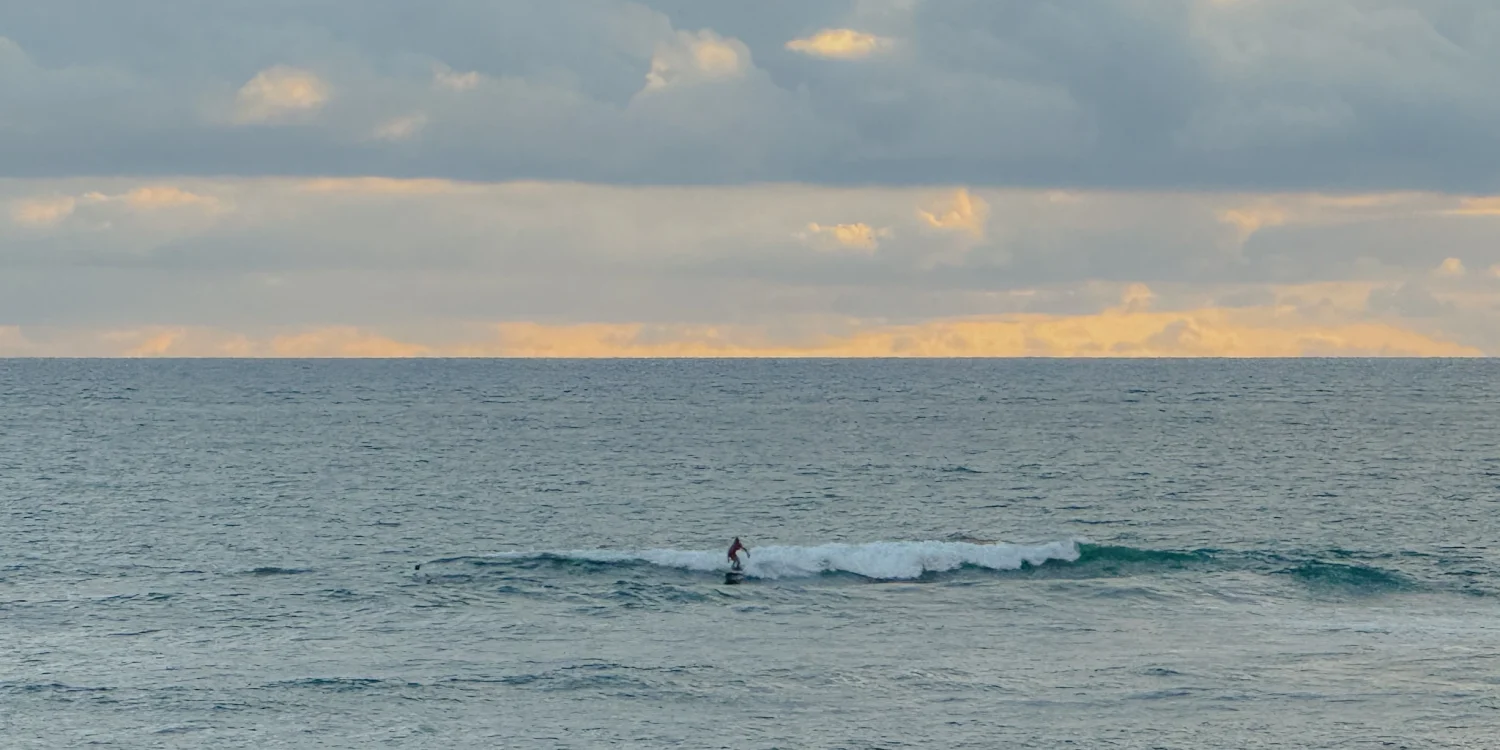
La Punta, also known as Punta Santa Catalina, is the most popular wave in Panama and the reason serious surfers come here. It is not a beginner wave, and it is worth being blunt about why. The wave breaks over rock and sharp reef that sits shallow, so a bad fall has a real cost, and the break's reputation means it draws a crowd, which adds the challenge of a busy lineup to an already demanding wave. At its peak La Punta reaches around 15 feet and barrels, which is a serious wave by any standard and firmly the territory of experienced surfers only. We stayed at Hotel Santa Catalina, which looks directly onto La Punta and has ocean access, so guests can paddle or kayak straight out to the wave from the property. When we visited in November the wave was not running anywhere near that size, which makes the shoulder months a reasonable window for a confident intermediate to have a go at Panama's best-known break without taking on its biggest days.
Other breaks and reading the swell
There are other surf spots around Santa Catalina beyond these two, and the honest advice is to let a local decide which one suits you on any given day. Conditions here shift with the swell, and a break that is perfect on Tuesday can be wrong for your level by Thursday. The surf instructors and shop staff in town know the coast well and will point you to the right spot based on your ability and what the water is doing, which is a far better system than picking a name off a map and hoping.
Lessons, board rental, and surf programs
If you are learning, book a lesson rather than renting a board and working it out yourself. We took a two-hour private lesson with Casey Surf Training and it is who we would send anyone to. Casey is a local expert surfer who speaks excellent English, and for our two-person private lesson there were two instructors in the water with us, which meant genuine one-on-one attention rather than taking turns waiting for a correction. Both of us stood up and rode a wave by the end of the two hours, which is a better outcome than either of us expected going in, and the boards were included for the duration of the lesson. If you would rather just rent, Hotel Santa Catalina has a surf shop on site and Oasis Surf Camp rents boards as well.
For something more structured than a one-off lesson, Waluaa runs surf programs in Santa Catalina, and they are the operator we would point people toward. We should be clear about why, because we have not done a full retreat ourselves. What we have used are the individual pieces. Casey, who we took our lesson with and recommend above, is one of Waluaa's senior surf instructors, and their retreats are based at Hotel Santa Catalina and Villa Coco, two of the three hotels we recommend below. So while we cannot review a full week as a package, we can vouch for the coaching and the accommodation it is built on, and that is a team and a program we are comfortable getting behind. They offer three levels of commitment depending on how much time you have and how serious you are about improving.
Single surf lessons
The best way to try surfing for the first time, or to add a second session once you have the basics.
Three or five day surf programs
Consecutive days in the water, which is the fastest way to actually improve. This is the option we would choose, and the reason we wish we had given Santa Catalina more days than we did.
Week-long surf and yoga retreat
Daily surf sessions paired with yoga to help your body recover in between, based at Hotel Santa Catalina or Villa Coco with all meals included. One thing to know before you book: Coiba is not included in any of the retreat programs, so if you want to get out to the national park, plan that as a separate day.
Diving
Santa Catalina is one of the best dive bases in Panama, and the reason is Coiba. The dive operators in town run trips out to the national park, where the appeal is large pelagic marine life rather than reef scenery alone, and it is what draws divers to make the long journey here in the first place. Dive shops in town run certification courses, guided day trips, and multi-day packages, and because the boat ride out to the park is long, dive days here are genuinely full days rather than a morning out.
We want to be straight with you about the limits of this section. We snorkeled in Coiba but we did not dive, so we are not going to recommend a dive operator or walk you through specific dive sites as though we had been down on them. What we can tell you is what the water is like, because we were in it, and that is covered below. If diving is the reason you are coming to Santa Catalina, give yourself more days. Between the travel in, the travel out, and the length of a dive day, two days on the ground is not enough to build a diving trip around. For every activity that you are thinking of doing (diving, surfing, etc.) give yourself at least two days for each.
Coiba National Park
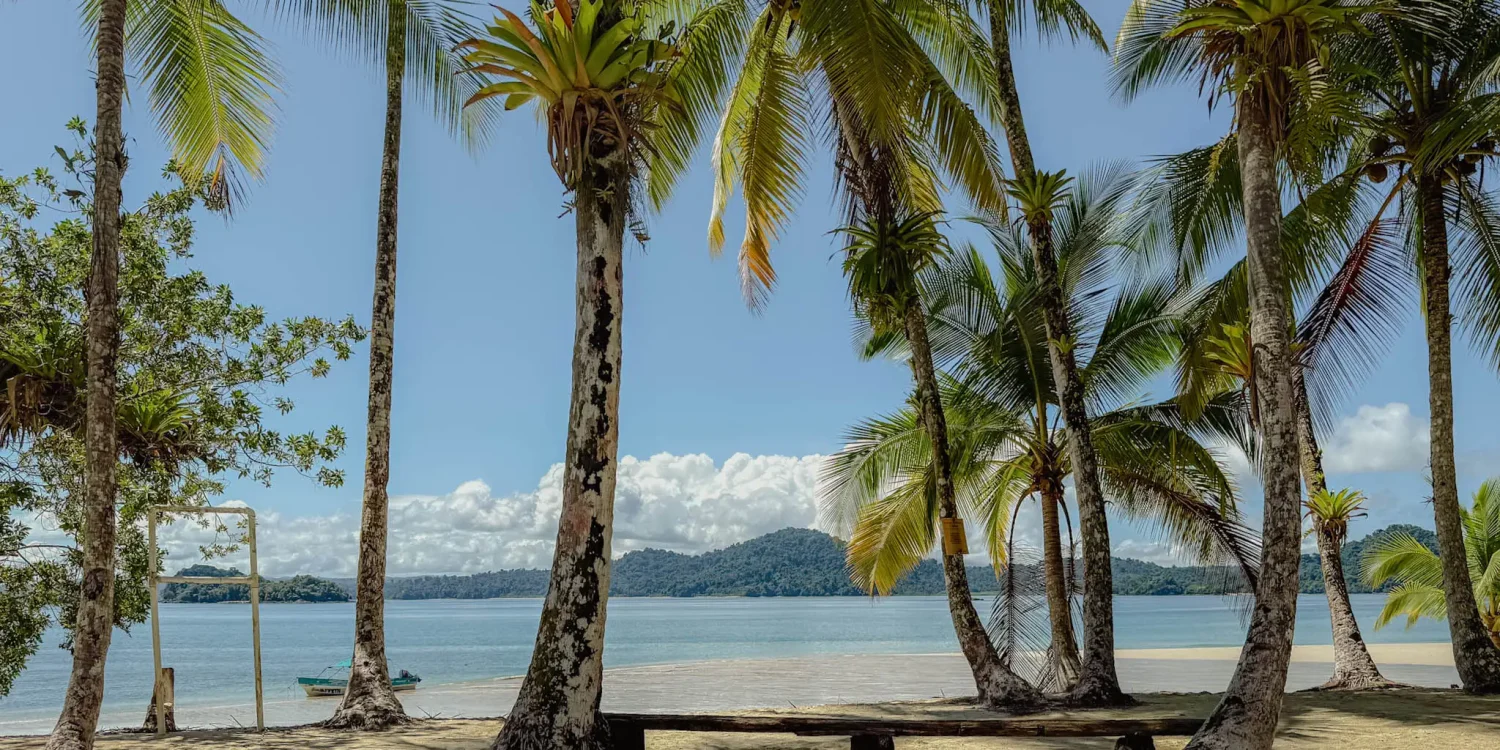
You visit Coiba National Park on a full day boat trip from Santa Catalina, booked in town (most economical option), through online operators, or through your hotel. Coiba is a UNESCO World Heritage site and a protected marine park, which is why the beaches are as clean and empty as they are, and it is also why you cannot simply turn up. Access is controlled, an entrance fee applies, and you can only visit the islands with a certified local guide, so the day trip is not just the convenient way to see Coiba. It is the way to see Coiba.
Booking a Coiba day trip
Coiba tours are sold in person all over Santa Catalina and through most accommodations, and you do not need to book weeks ahead. The tours are broadly the same from one operator to the next, which is useful to know, because it means you can shop around on price and departure time without worrying that you are getting a lesser version of the day. Expect to pay from around $65 per person as a starting point. Most operators prefer cash and some add a small fee for paying by card, and since there are very few ATMs in town, this is the expense that catches travelers out. Bring enough cash for the tour with you when you arrive rather than assuming you can withdraw it locally.
One operator we can point you to directly is Unlimited Adventures Coiba, who run a full day snorkeling trip out to the archipelago from Santa Catalina for around $65 per person plus the park entrance fee, with snorkeling gear, lunch, and hotel pickup. Their trip matches the day we describe above and they run an English-speaking guide.
The park entrance fee
The park entrance fee is separate from the tour price and needs to be purchased in advance online, so handle it before you arrive rather than on the morning of your trip. Save a photo of the receipt to your phone. You may be asked to show it, and having it saved locally matters because you should not count on a signal once you are out on the water.
What the day is actually like
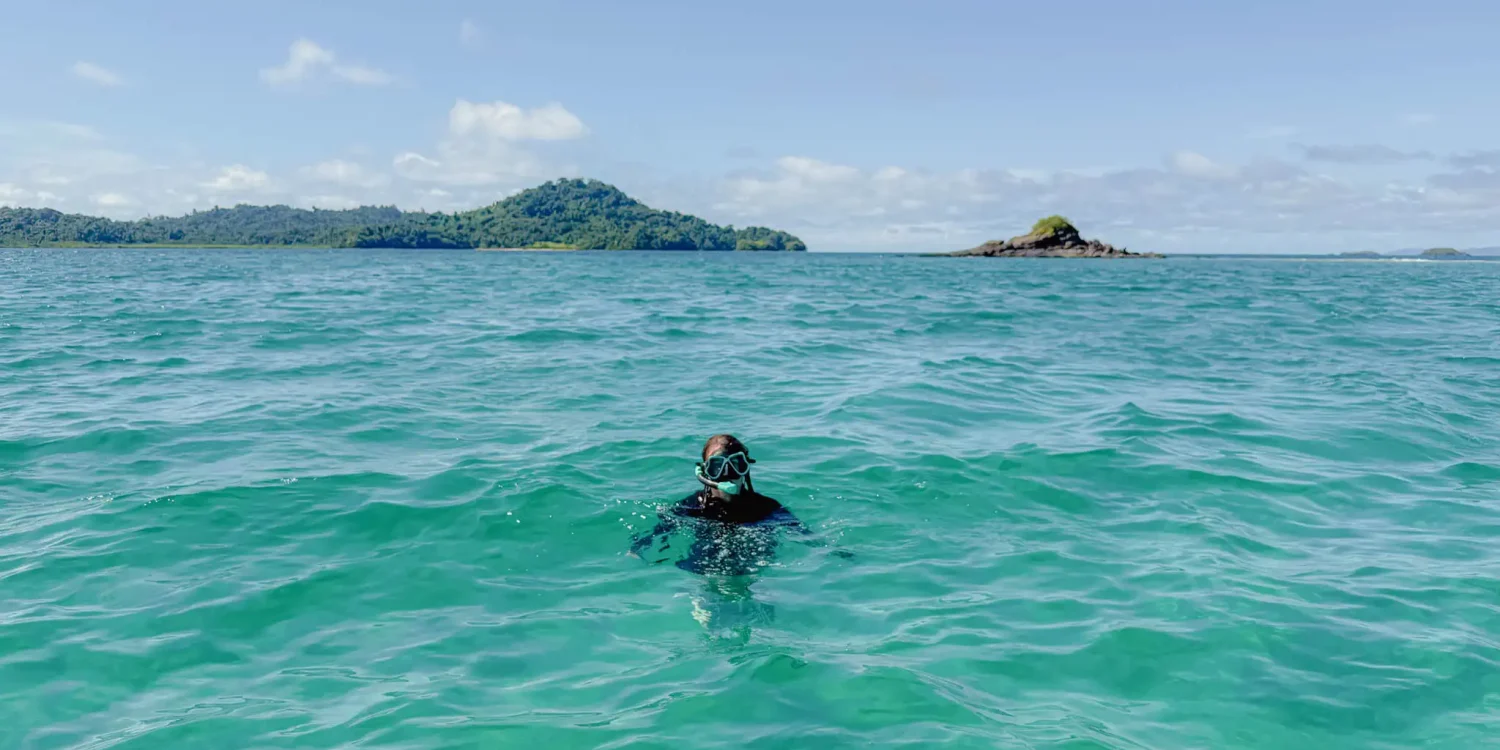
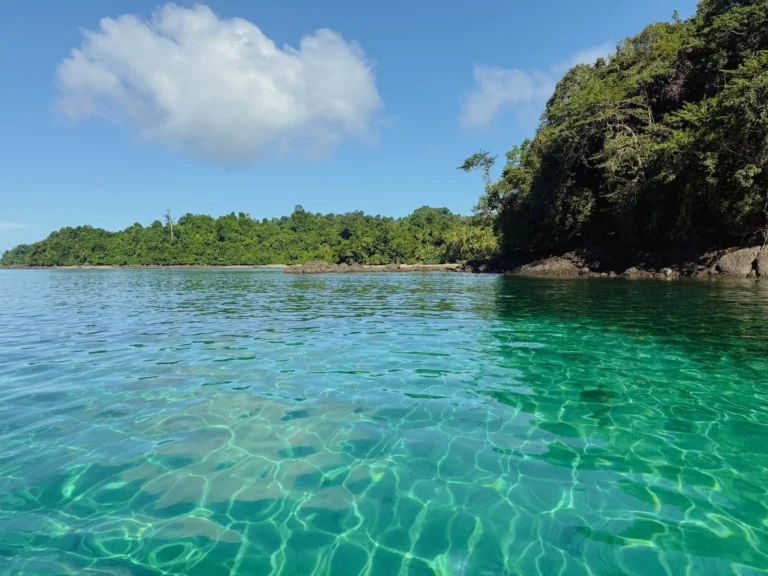
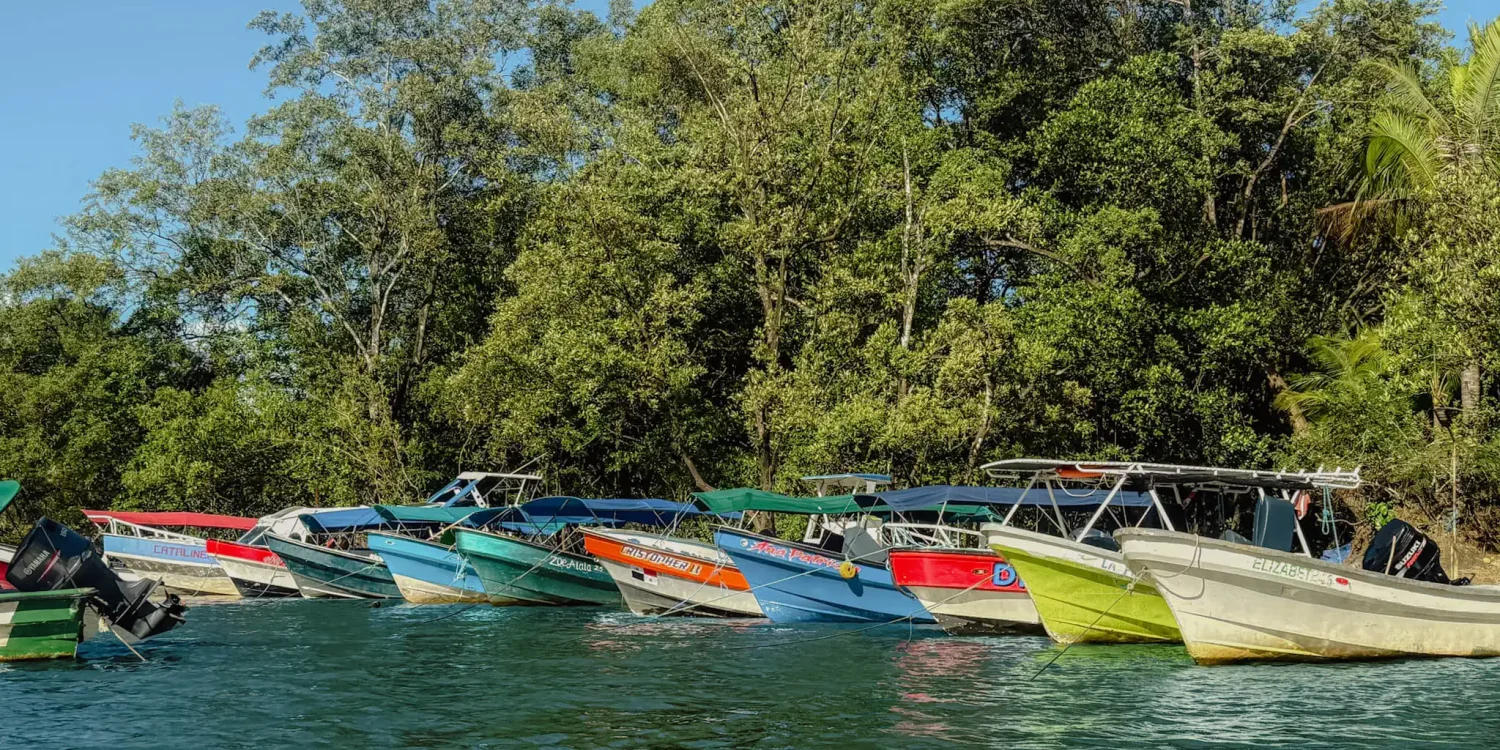
The boat ride out to the archipelago takes one to two hours in each direction and it can be rough. The boats are wooden with wooden bench seating, which is part of the character of the trip but is worth knowing about in advance if you have a back injury or anything else that a few hours of bouncing would aggravate. Once you are out there, the day moves between several stops, alternating beaches with snorkeling sites, and each snorkel spot is chosen for something different, so you are not seeing variations on the same reef all day. Lunch was included on our tour and eaten out on the islands, which is worth confirming when you book since it saves you packing a full day of food. The beaches themselves are white sand and close to empty, which is the direct benefit of the park's protected status and the reason they look nothing like the beaches back in town.
What you will see in the water
Snorkeling in Coiba, we saw a range of reef fish, healthy reef, sea turtles, and reef sharks, and the sharks were the highlight of the day by a wide margin. On the boat ride back to Santa Catalina, we picked up a pod of dolphins that rode the wake alongside us for a stretch of the return, which is the kind of thing no operator can promise you. If you are hoping for whale sharks, your best odds run from January through March, though they are never guaranteed and you should treat a sighting as a bonus rather than the reason you booked.
Is Coiba worth it?
Yes, without hesitation. Coiba is the reason to come to Santa Catalina if you are not a surfer, and it is worth building a day around even if you are. The boat ride is long and the seats are hard, but you are visiting a protected marine park that most travelers to Panama never see, and the water delivers on it.
Where to stay
Where you stay in Santa Catalina matters more than it does in most beach towns, because the town is spread out and the two things you came for, the surf breaks and the boat docks, are not in the same place. A stay that puts you on the beginner wave can leave you a half-hour walk from where the Coiba tours leave from, and a stay that puts you close to town gives up the direct water access that makes a surf trip easy. There are only a handful of places worth recommending here, so the choice is less about narrowing a long list and more about being honest with yourself about what you are here to do. Here is how we would sort them.
Hotel Oasis & Surf Camp
• Simple + Honest
Best for: budget travelers who plan to surf every day and want to wake up on the wave.
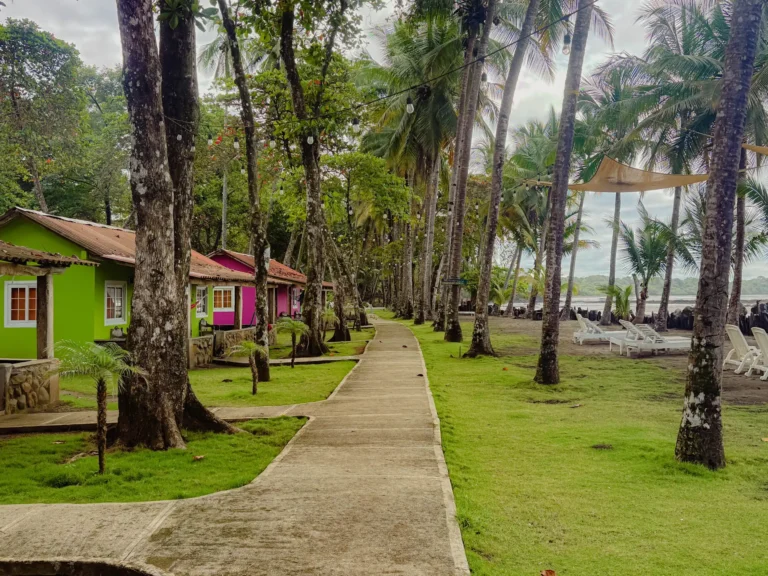
Oasis sits directly on Estero, the beginner break, which means you can walk out of your room and into the water. A private room with air conditioning is noticeably more rustic than what you get up the road, which is the trade you are making for the price. If you are an improving surfer who intends to spend the trip in the water, that trade is an easy one. We did not stay here, though we spent time on the property and ate at the beachfront restaurant, so we are recommending it on the setting and the surf access rather than on a night in the room.
An honest drawback. It is roughly a 30 minute walk from the town center and you have to cross a stretch of water to reach the property, which can come up to your knees at high tide, so arriving with luggage takes some planning. One more thing worth knowing: Oasis also has newer, more expensive rooms priced close to Hotel Santa Catalina, and at that price we would book Hotel Santa Catalina instead.
Hotel Santa Catalina
•• Sweet Spot
Best for: almost everyone, and especially surfers who want the best of both ends of town
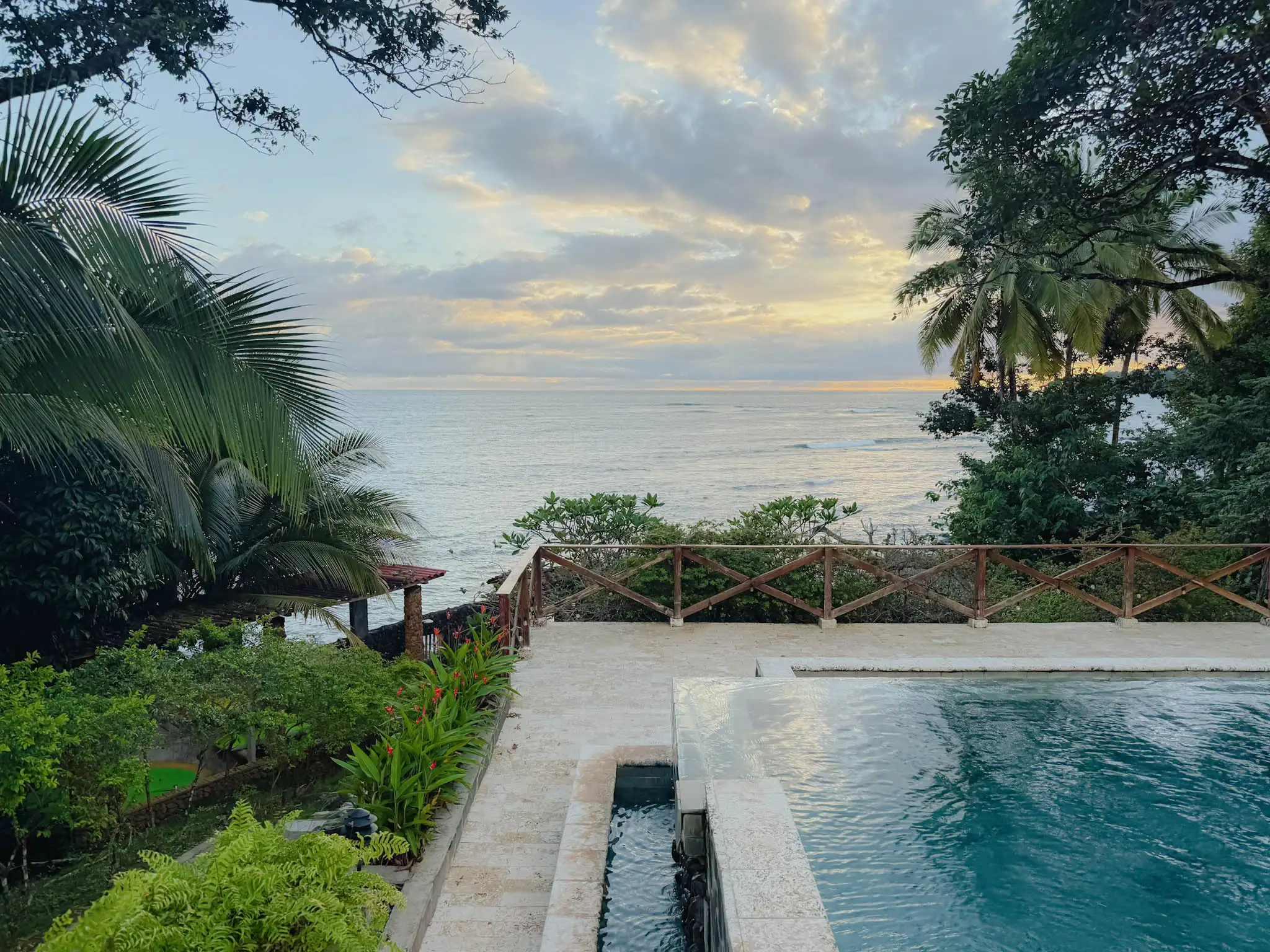
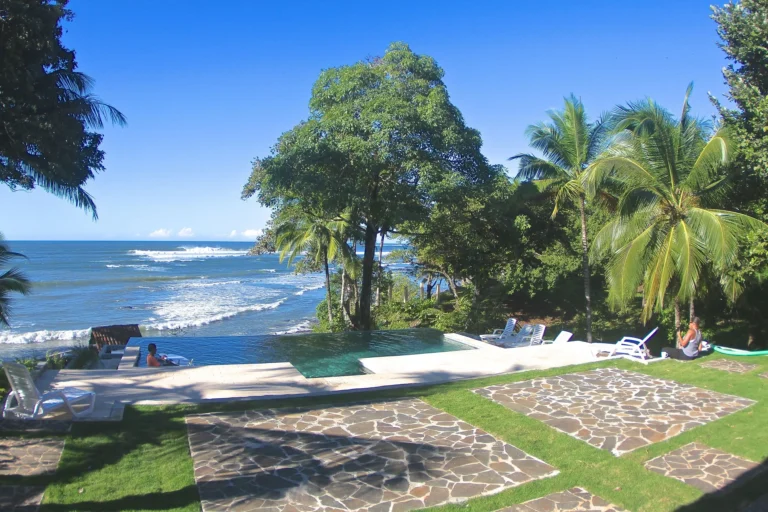
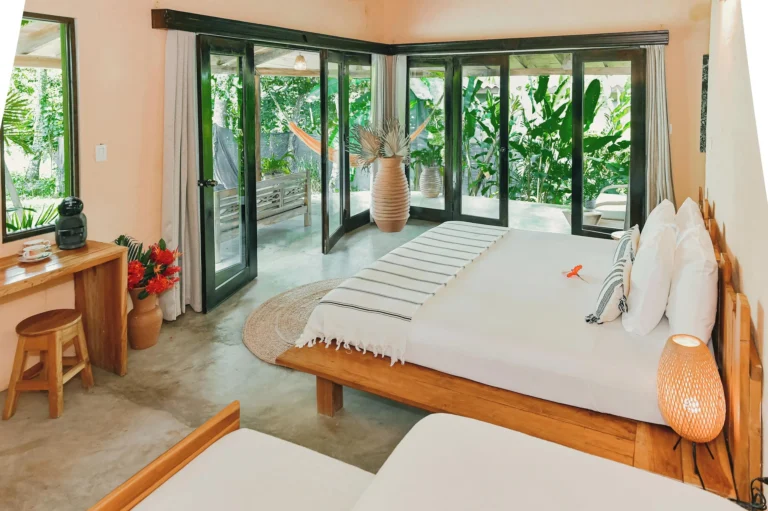
Hotel Santa Catalina is one of our favorite hotels in all of Panama. The property looks directly onto La Punta, which is one of the best views in town, and it has ocean access, so experienced surfers can paddle straight out to the wave. It is also within walking distance of Estero, which means one property covers both the beginner break and the advanced one, and that combination is genuinely rare in a town this spread out.
The practical details are what make it work. There is a pool looking out over the ocean and a restaurant on site. There are bikes available, which solve the distance problem that catches out anyone staying further from town and make it easy to reach the restaurants along the road. There are also kayaks, which you can take out to the small island off the coast for the day. If you book one place in Santa Catalina, book this one.
Villa Coco
••• Worth Splurging
Best for: travelers who want the nicest rooms in town and everything arranged for them.
Villa Coco is the top end of Santa Catalina, with the most beautiful rooms in town and a restaurant with a strong reputation. What sets it apart practically is that it functions as a booking desk for the whole destination. Surf lessons, Coiba tours, diving, deep sea fishing, and yoga can all be arranged through the property, which takes the legwork out of a trip where most things are otherwise booked in person and in cash. It is also one of the two hotels Waluaa uses for its surf and yoga retreats. We did not stay here ourselves, so we are recommending it on the strength of the property and its reputation in town rather than on a night spent in the room.
Where to eat
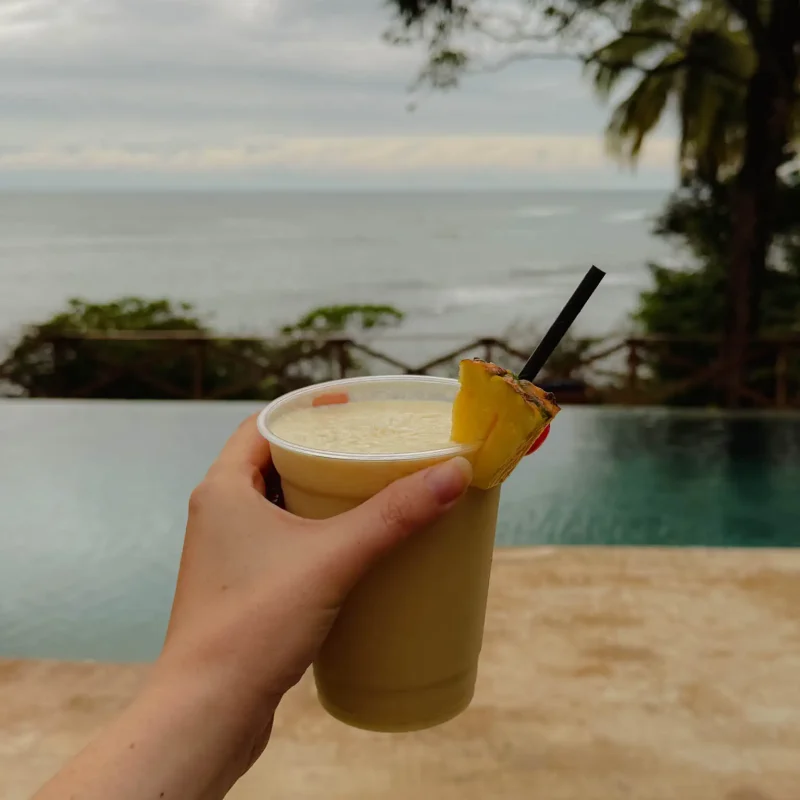
Do not come to Santa Catalina for the food. We would rather say that plainly than pretend otherwise, because the town's strengths are in the water and the dining is simply not one of them. Most of what you will find is standard, and while there are some decent seafood spots, nothing we ate blew us away.
That said, a few things are worth knowing. The better restaurants sit along the road between Hotel Santa Catalina and the town center, which is another argument for staying somewhere with bikes. The beach restaurant at Oasis does a good pasta, though you will want to settle in and accept that everything here runs on beach time, and pushing against that is a losing battle. Eat well, expect simple, and save your enthusiasm for the boat trip.
When to go
The best time to visit Santa Catalina for most travelers is the dry season, January through March, when underwater visibility is at its best and the surf is manageable enough to learn on. The more useful thing to understand, though, is that Santa Catalina does not really have one best season. It has two, and which one is yours depends entirely on whether you are coming to learn to surf or to take on the biggest wave in Panama. Those two travelers want opposite months.
The other thing worth knowing is that rain here does not work the way the phrase "wet season" suggests. When it rains in Santa Catalina it usually rains hard for a few hours, either in the morning or the afternoon, and then it is done. It rarely takes a whole day from you. That makes the wet months far more viable than the calendar implies, which matters, because the wet season is also when the surf is at its best. You can read more about the best time to visit different regions of Panama.
Santa Catalina weather and surf by month
Santa Catalina has one dry season and one wet season, but the best weather and the best surf do not arrive together. Dry season runs January through March, wet season from May through October, and April, November, and December sit in between. The biggest swell comes with the rain, so the months that are hardest for visibility underwater are the ones experienced surfers plan around. Select a month to see what to expect.
The best time for surfing
If you are learning or improving, come whenever suits you. Estero works year-round, which is the single best argument for Santa Catalina as a place to learn, and there is no month you need to plan around.
If you are an experienced surfer and La Punta is the reason for the trip, come in the wet season. May through October is when the swell is biggest and the wave reaches its full size, and the rain is a small price for it. Outside that window La Punta is far more approachable, which is what makes the dry and shoulder months a reasonable time for a confident intermediate to paddle out at Panama's best-known break.
The best time for snorkeling and diving
Come in the dry season. You can get in the water year-round, but visibility is at its best from January through March, and that is the difference between a good day in Coiba and a great one. Given how long the boat ride out to the park is, it is worth stacking the odds. That window also overlaps with the best chance of seeing whale sharks and manta rays, which is the strongest single argument for those months.
If humpbacks are what you are after, that is a different trip. Whale watching season runs July through October, in the middle of the wet season, so you trade visibility for the sighting. You can also see humpback whales as part of a day trip from Panama City to the Las Perlas islands.
What we would recommend
If you are not an advanced surfer chasing La Punta at full size, come in the dry season. You get the best underwater conditions of the year, the highest chance of seeing whale sharks and mantas, and surf that suits learning or improving without being intimidating. That is the most Santa Catalina offers in a single trip.
We visited in November, in the shoulder, and had a good run. The surf was small enough for a first lesson and the Coiba day was excellent. But we were on the edge of the wet season and we know it. Dry season is the recommendation.
How busy does Santa Catalina get?
Not very, by Panama standards, and the reason is the same difficulty that shapes everything else about the town: it is hard enough to reach that it never draws the crowds of the more accessible destinations. That said, two windows are busier than the rest. June through August brings international visitors on their summer vacations from the US and Europe, and the dry season from January through March draws the people who come for the clearest water and the calmest surf. Neither is overwhelming, but if you are coming in those months, book your accommodation ahead rather than counting on walking in.
Planning
Most guides tell you how many days to spend somewhere. That is the wrong first question here, because Santa Catalina is really two destinations sharing one road, and the shape of your trip depends almost entirely on which one you came for. Surfers want consecutive days and flexibility with the tide. Divers and snorkelers want full days on a boat and clear water. Trying to do both without planning for it is how people end up leaving with the feeling that they rushed it. Here is how we would build each version.
If you are here to surf
Book consecutive days rather than spreading lessons out. Surfing improves with repetition far more than with one session and a long gap, so three days of lessons in a row will take you further than five lessons scattered across two weeks.
Base yourself for water access. Hotel Santa Catalina is the strongest all-round choice because it puts La Punta in front of you and Estero within walking distance. Oasis is the budget version of the same idea, sitting directly on the beginner break, and it suits you if the plan is to surf every day and do little else.
Time it to your level. Beginners can come any month of the year, since Estero works year-round. Experienced surfers chasing La Punta at size should come between May and October and accept the rain as part of the deal.
Give it four days at least.
If you are here to snorkel or dive
Build the trip around Coiba, because it is the reason to come. Plan on one full day out to the park at a minimum, and two if you are diving rather than snorkeling, since dive days are long and you will want the flexibility if weather moves a day.
Come in the dry season. January through March gives you the best visibility of the year and the strongest chance of whale sharks and manta rays, and given the length of the boat ride, that difference is worth planning around.
Stay near the town center. This is where the surfer advice and the diver advice diverge. Coiba tours are booked in person around town and leave early, so the 30 minute walk from Oasis works against you here. Hotel Santa Catalina or Villa Coco make the logistics considerably easier, and the hotels will arrange the booking for you.
Bring the cash before you arrive, and buy the park entrance fee online in advance.
If you want to do both
This is the version we did, and two days was not enough. If you want to learn to surf and get out to Coiba on the same trip, plan on four to five days on the ground. A workable shape is a Coiba day, then two or three consecutive surf days, with a spare day left over for weather or a second boat trip.
If you are considering a surf retreat, plan Coiba separately. Retreat programs do not include the national park, so you either need days on either side of the program or a different structure altogether.
Come in the dry season if you have to choose. It is the compromise that costs you the least: the surf is well suited to learning, and the water in Coiba is at its clearest.
Planning
2 days
The minimum, and what we did. One surf lesson and one full day in Coiba, with the drive in and out on either side. Enough to see the town properly and understand why people love it, but not enough to make progress on a board or to have a spare day if the weather turns.
4 days
The sweet spot. Three consecutive surf days plus a Coiba day, or two surf days and two boat days if the water is why you came. This is the length we would book if we were going back, and the one we would recommend to most people.
7 days
The full version. A five day surf program or an open water certification, a day in Coiba, and enough time left over to settle into the rhythm of a town that runs on beach time. This is a destination that rewards slowing down, and a week is where that starts to happen.
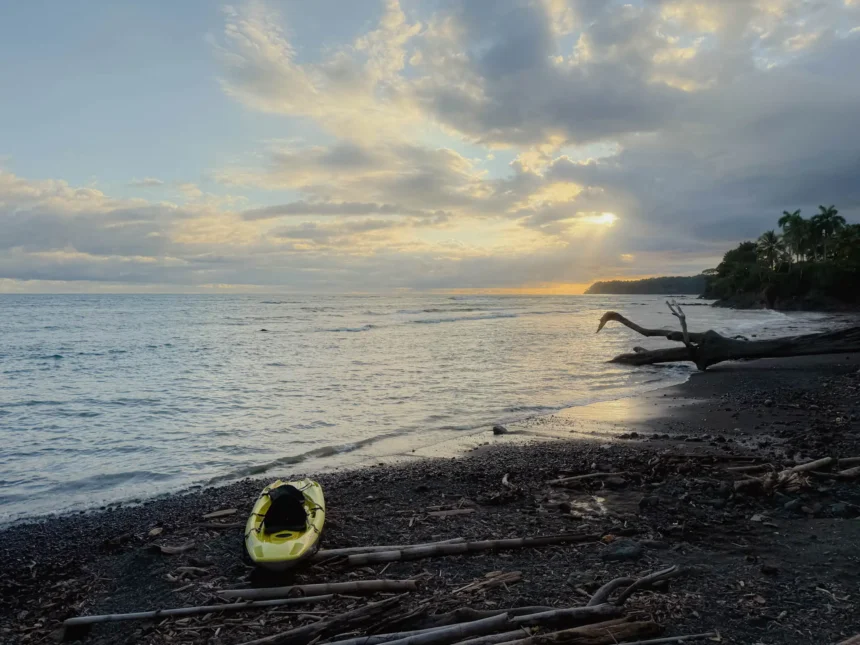
Santa Catalina rewards a little preparation more than most places in Panama, precisely because it is so rustic and so remote. The things that catch travelers out here are rarely the big decisions and almost always the small logistics: running short on cash in a town with barely any ATMs, underestimating the distances between the breaks and the town, or turning up to a Coiba morning without the paperwork sorted. None of it is difficult once you know to plan for it, and the notes below are the details we wish we had known before we arrived.
For a full country-level overview of practical information including domestic travel, health, and entry requirements, see our Panama travel guide →.
Quick answers to the most common questions about visiting Santa Catalina.
Guide to Bocas del Toro
Plan your trip to Bocas del Toro with our honest island-by-island guide
Day trips from Panama City to visit las Perlas Islands
Las Perlas islands are the closest spot to find white sand beaches and go snorkeling from Panama City. Here's how you can visit them
How to visit the San Blas Islands
The San Blas Islands are unlike anywhere else in Panama. They reward the traveler who wants immersion over comfort. Written from first-hand experience.
How to visit Portobelo and Isla Grande
This destination on the Caribbean coast sits only two hours east of Panama City.
Best time to visit Panama
The dry season is not the only season worth going. Here is what the calendar actually looks like, region by region.
Is Panama safe?
Panama is one of the safest countries in Central America. But the answer shifts considerably depending on where you are going.
