


Part of the Panama Travel Guide
← Back to PanamaThe Caribbean coast sits two hours east of Panama City, and most visitors never make it here. The ones who do tend to stay longer than they planned. (The Caribbean destinations that most people visit are the San Blas islands or Bocas del Toro.)
Portobelo is not a polished heritage site. It is a small, lived-in town where the Spanish colonial forts have been absorbed into everyday life, where Congo culture plays out in the streets, and where the Black Christ of Portobelo draws more Panamanian pilgrims each October than almost any other religious event in the country. A short lancha ride from the town dock puts you on Isla Grande, a Caribbean island so low-key it barely has addresses. Extend the trip to two or three days and you add Gatun Locks on the Atlantic side of the Panama Canal, one of Panama’s most underrated UNESCO ruins at Fort San Lorenzo, and Gamboa, a rainforest town on the Canal where the wildlife watching is as good as anything in Central America.
Most travelers who visit Portobelo Panama come for a day and leave satisfied. But this stretch of the Caribbean rewards a slower approach. Two days opens up everything. Three days turns it into one of the best itineraries the country has to offer.
This guide covers all of it: the forts, the island, the Canal’s Atlantic entrance, the rainforest, and exactly how to combine them whether you have a day, two days, or three.
Getting there
Portobelo sits roughly two hours east of Panama City by car. The route follows the Trans-Isthmian Highway through Colon Province before turning north toward the Caribbean coast. The road is paved and in good condition for the majority of the drive. The final stretch into Portobelo town runs along the waterfront and is one of the better arrival moments in Panama: the bay opens up ahead of you, the fort walls appear on the left, and the Caribbean is right there.
By car
Driving is the right call for this trip. The destinations are spread out enough that a rental car gives you a level of flexibility that a tour or public transit cannot match, particularly if you are combining Portobelo with Isla Grande, Gatun Locks, and Gamboa across multiple days. The Trans-Isthmian Highway is well-signed and straightforward to navigate from Panama City.
Search rental cars for Panama →By guided day tour
Guided day tours from Panama City are widely available and cover Portobelo with transport included. They suit travelers who want a single structured day focused on the history without managing logistics. If you are adding Isla Grande, confirm that the tour includes the lancha transfer from La Guaira, as not all operators cover both stops.
Guided day tours to Portobelo →Getting to Isla Grande
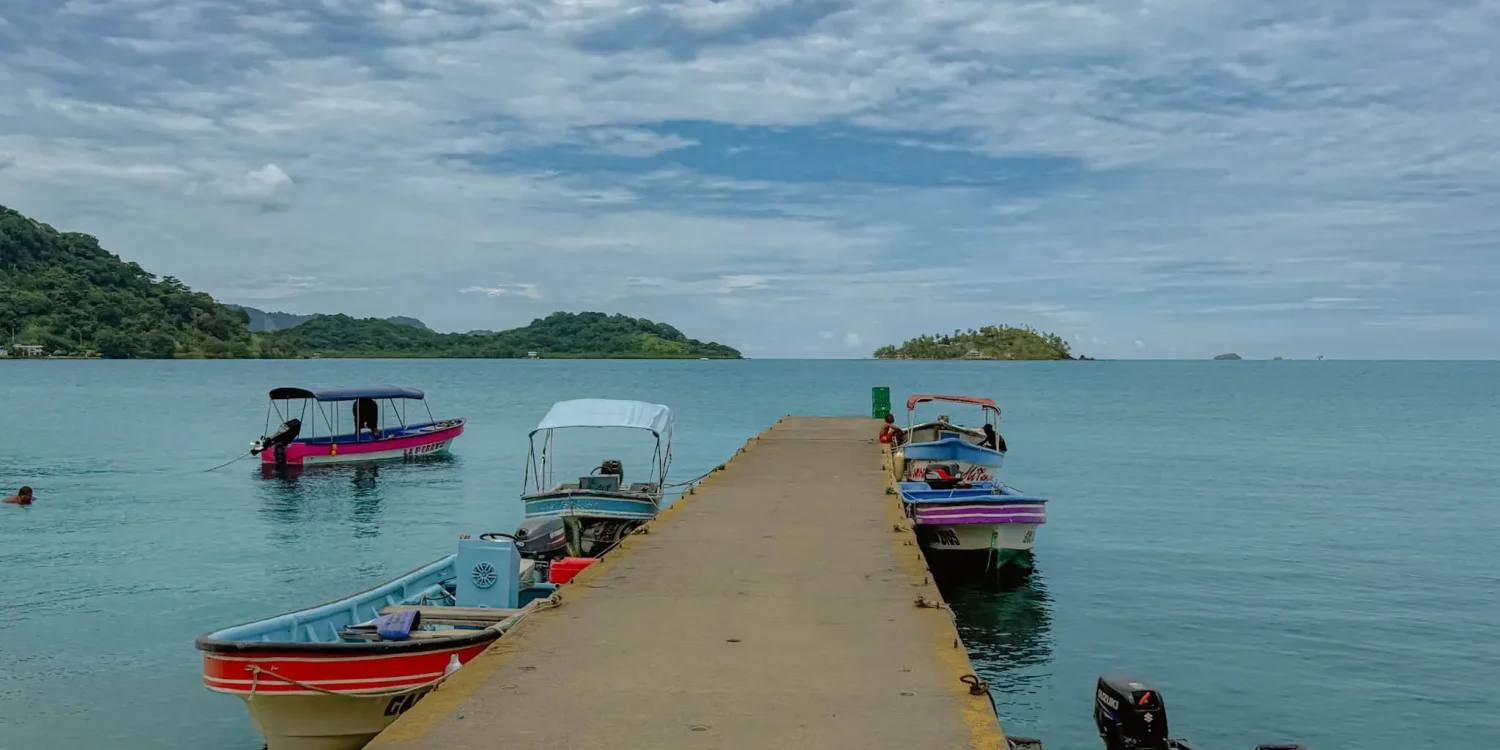
Isla Grande is reached by a short lancha crossing from the dock at La Guaira, about 20 minutes east of Portobelo by car. The crossing takes five to ten minutes depending on conditions. Lanchas run throughout the day and depart when they have enough passengers. There is no fixed schedule. Turn up at the dock and you will not wait long.
We recommend coordinating a tour around the islands through a Panamanian tour agency to get to see the different sites in the area.
highlights
This stretch of the Caribbean coast covers more ground than most visitors expect. These are the experiences worth prioritizing, from the colonial history that anchors Portobelo to the water and rainforest that extend the trip into something genuinely memorable.
1
The colonial forts of Portobelo
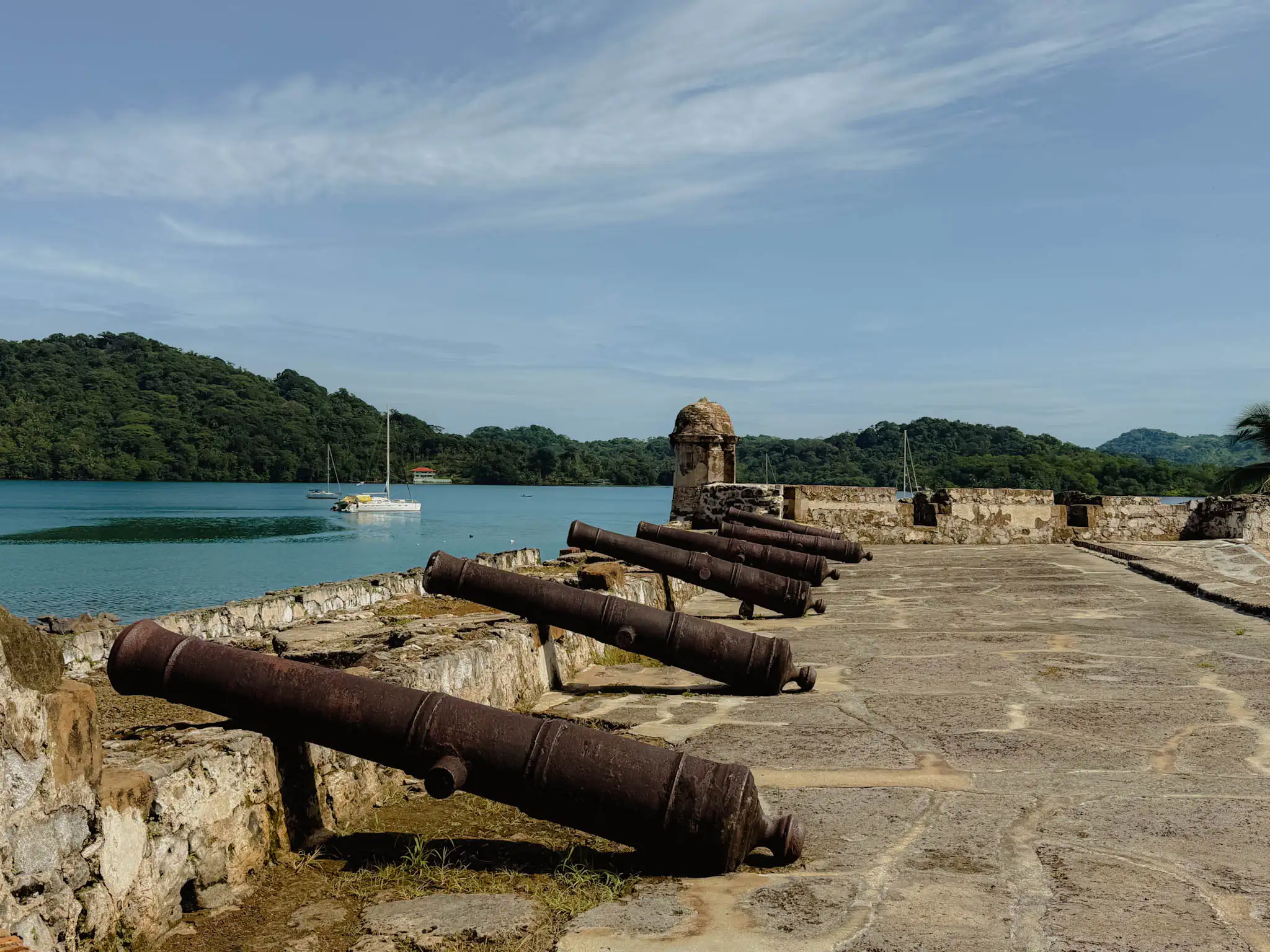
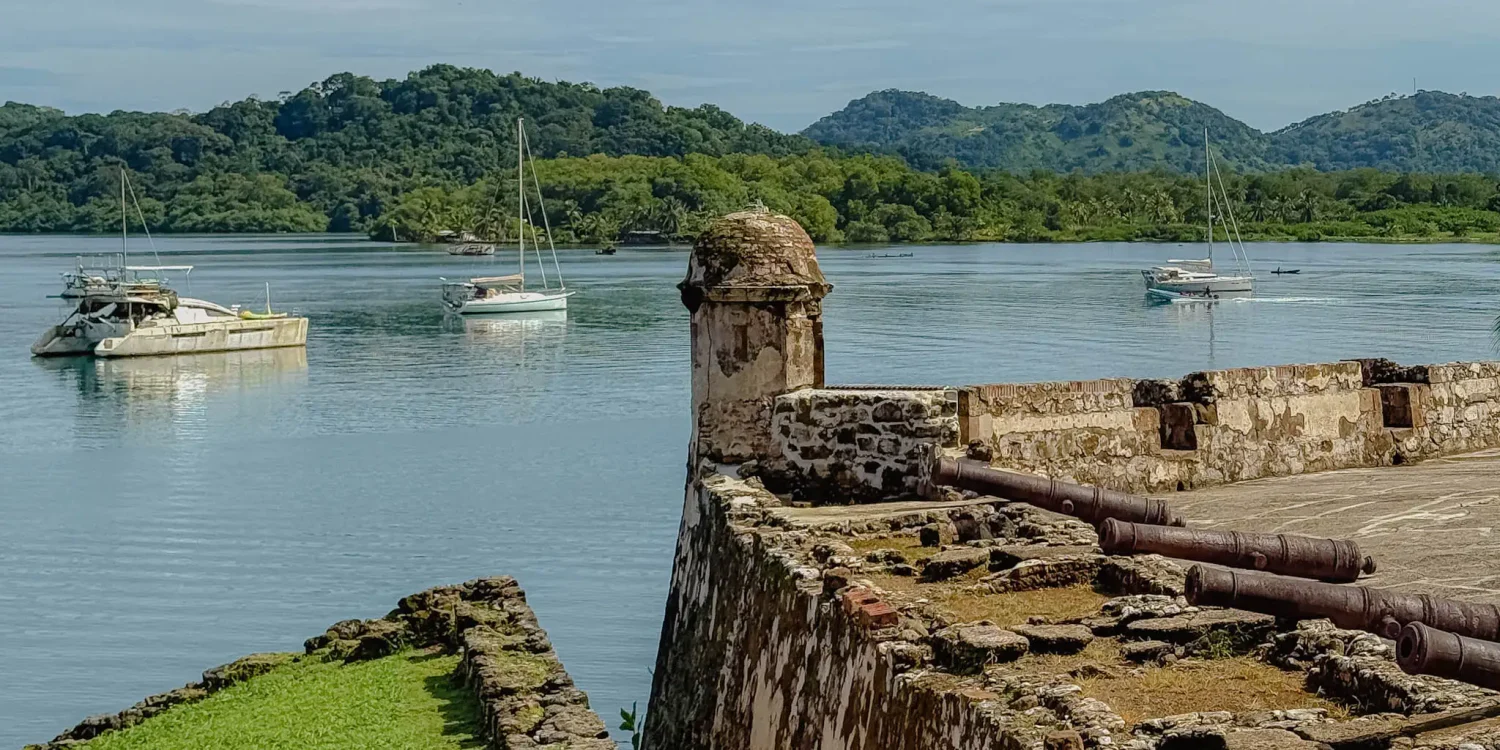
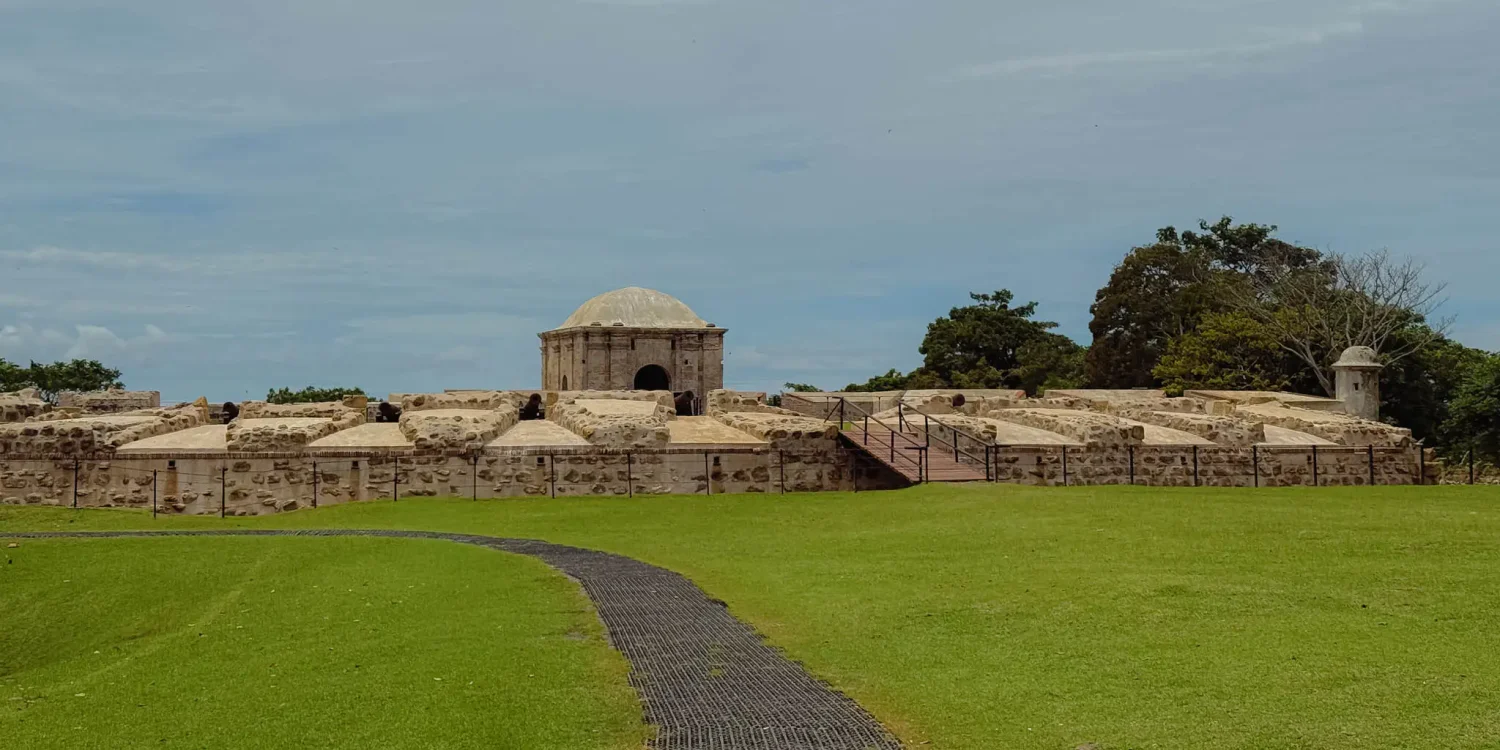
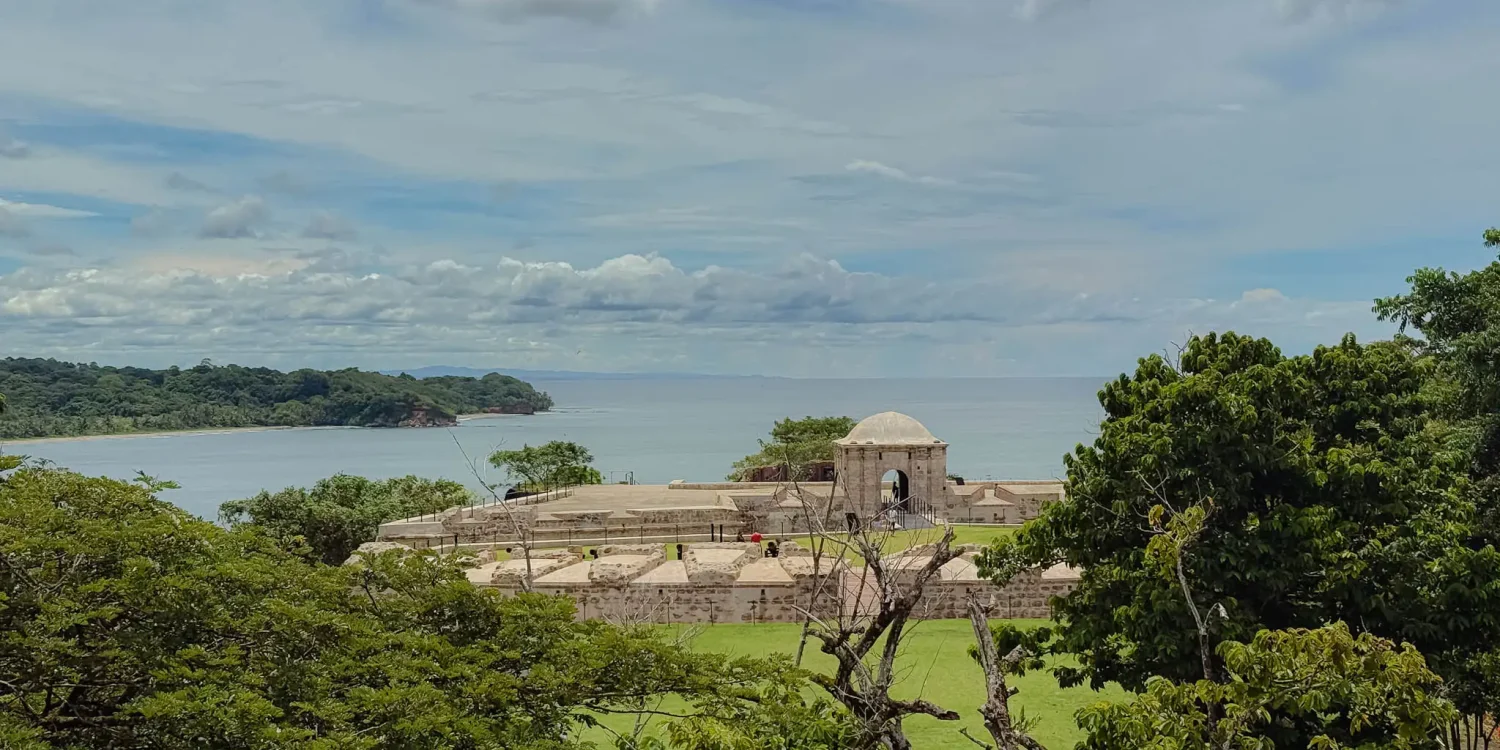
Portobelo Panama was once the most important port on the Spanish Main. Gold and silver from South America passed through here on its way to Spain, which made the town one of the most fought-over places in the Caribbean and one of the most heavily fortified. The forts that survive today, San Felipe (under restoration in 2025), San Fernando, and Santiago, were built to defend those trade routes, and standing inside them gives you a physical sense of the scale of that enterprise that a museum exhibit cannot replicate.
The forts are not manicured. That is part of what makes them worth visiting. The cannon emplacements are still in position. The walls are intact in places and crumbling in others. The town has grown up around and in some cases inside the structures, so the line between fort and neighborhood is blurred in a way that feels genuinely historic rather than staged. Fort San Felipe, at the entrance to the bay, is the most complete and the logical first stop. Fort Santiago (closed November 2025) sits at the western end of the waterfront and offers the best views back across the bay toward San Felipe.
Plan two to three hours for the forts. The Museo de la Real Aduana sits between Fort San Felipe and the main square and is covered in the next section.
Guided Portobelo fort tours from Panama City →2
Museo de la Real Aduana de Portobelo
The Museo de la Real Aduana de Portobelo occupies the restored Customs House on the main square, the same building where Spanish colonial administrators weighed and recorded the gold and silver passing through the port on its way to Seville. The structure dates to 1630 and is one of the best-preserved colonial administrative buildings in Panama.
The museum holds artifacts, maps, and documents from the trade route era, and the building itself is as much the exhibit as anything inside it. The scale of the entrance hall and the thickness of the walls give you a physical sense of what this place was built to do: secure one of the most valuable trade nodes in the Spanish empire. It is a short visit, thirty to forty-five minutes at a considered pace, and it adds real context to the forts you will have just walked through.
3
The Black Christ of Portobelo
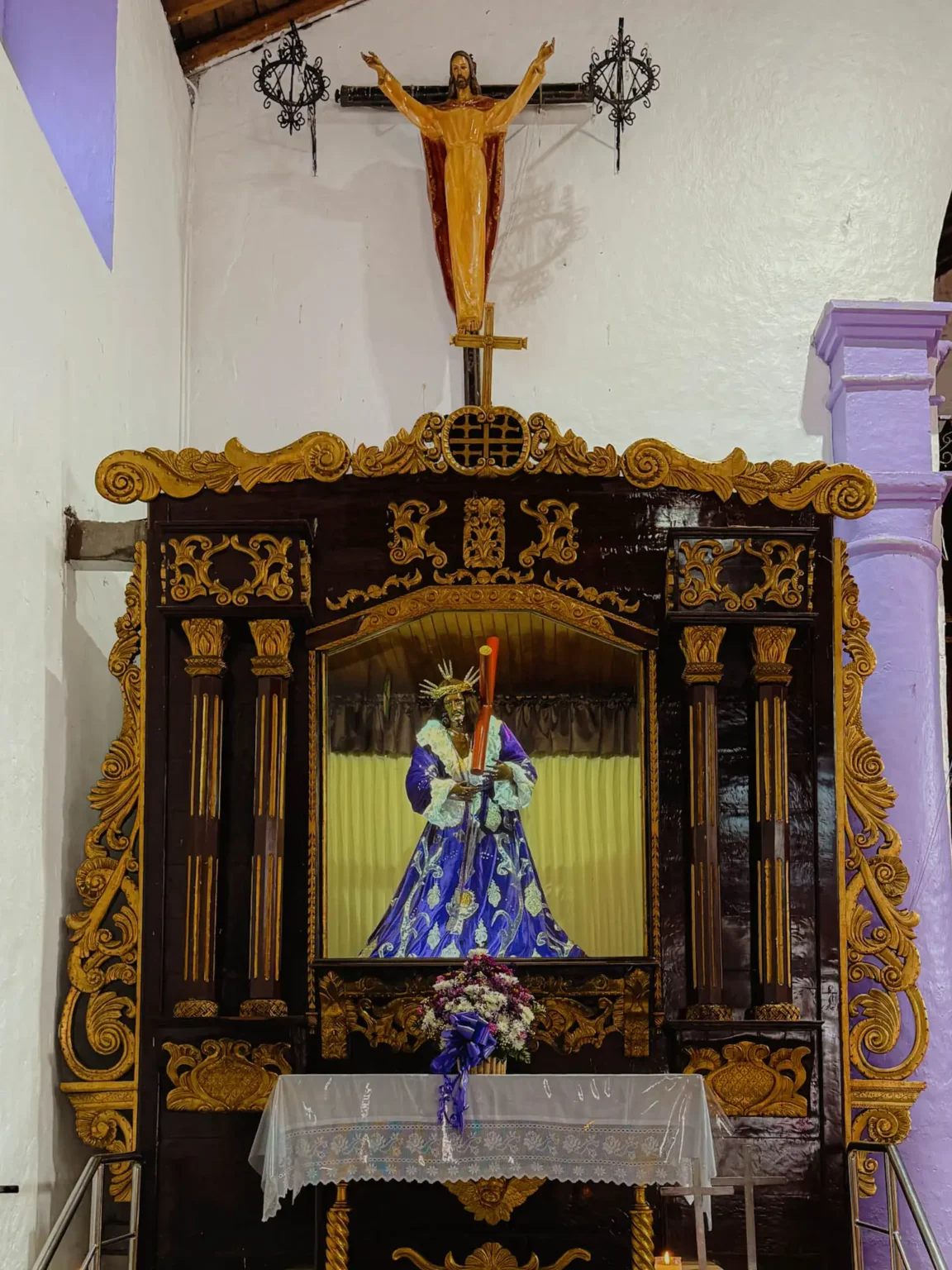
Inside the Church of San Felipe, which sits on the main square of Portobelo, stands a life-size figure of Jesus Christ carved from dark wood. The Black Christ has been in Portobelo since the 17th century and is the subject of one of the most significant acts of religious devotion in Central America. Every October 21st, tens of thousands of pilgrims walk to Portobelo from across Panama, some of them on their knees, to honor the figure. They wear purple robes, many of them fulfilling vows made in times of illness or hardship, and the town fills to a size that bears no relationship to its ordinary population.
Outside of festival season, the church is quiet and the figure is approachable. It is one of those places that earns its reputation when you stand in front of it and understand what it means to the people who made the journey to get here.
4
Congo culture
Congo culture is one of the most distinctive living traditions in Panama and Portobelo is its heart. It developed among the enslaved Africans brought to work the Caribbean trade routes and survived as a form of resistance, celebration, and collective memory. Today it expresses itself in music, dance, elaborate costuming, and a ceremonial tradition centered on the Congo festival season between Epiphany and Carnival.
Walking through Portobelo, you see its traces in the murals on the walls, in the handmade Congo costumes hung in doorways, and in the creative energy the town carries, distinct from anywhere else on the isthmus. If your visit coincides with a festival weekend, you will encounter it fully and directly. If not, the town’s relationship with the tradition is visible enough that it reads clearly even outside the festival calendar. You can learn more about the culture and experience this at the Museo de la Real Aduana de Portobelo.
5
Isla Grande
Isla Grande is a small Caribbean island accessible by lancha from the dock at La Guaira, about 20 minutes east of Portobelo. It is not a resort island. There are no white-tablecloth restaurants, no swimming pools, and no manufactured beach experience. What it has is clear Caribbean water, a relaxed fishing village on the western side, coral close enough to shore to snorkel without a boat, and the kind of unhurried atmosphere that makes two hours stretch comfortably into an afternoon.
The main beach on the western side of the island is calm and good for swimming. The snorkeling is best along the northern shore, where coral heads come up close to the surface and the fish life is consistent. Bring your own gear if snorkeling matters to you, rental equipment is available on the island but the quality varies.
6
Gatun Locks
The Panama Canal has two entrances and most visitors only see one of them. The Miraflores Visitor Center on the Pacific side gets the crowds and the infrastructure. Gatun Locks, on the Atlantic side near Colon, gets almost none of either.
The viewing platform at Gatun puts you directly alongside the lock chambers as vessels move through. If you have already visited Miraflores, Gatun is worth adding. If this is your first Canal visit, it is a completely valid way to experience it.
our Panama Canal guide covers both sides in full, including how to plan a partial transit →
7
Fort San Lorenzo
Fort San Lorenzo sits on a headland above the mouth of the Chagres River, about 30 kilometers west of Gatun, and it is one of the most dramatically situated ruins in the Americas. The fort occupies the tip of a forested peninsula where the river meets the Caribbean, with the jungle pressing in on three sides and a sheer drop to the water below.
The Spanish built the original structure in 1597. Henry Morgan destroyed it in 1671. It was rebuilt, attacked again, and finally abandoned. What remains is a UNESCO World Heritage Site that receives a fraction of the visitors that Portobelo does, which means you can walk the ramparts, look out over the river mouth, and have the whole thing almost entirely to yourself.
The road to San Lorenzo passes through a former Canal Zone checkpoint. You will need a valid passport or ID. The checkpoint is routine and the guards are accustomed to tourists visiting the fort. This is also part of a national park so you will have to stop to purchase a park pass before arriving at and purchasing a ticket to the fort. Allow an hour for the fort itself and factor in the drive from Gatun.
8
Gamboa
Gamboa sits on a bend of the Panama Canal about an hour from Panama City, where the Chagres River flows into the waterway and the rainforest comes right down to the water’s edge. It is a different kind of destination from everything else on this trip: slower, quieter, and organized entirely around nature rather than history or beach time.
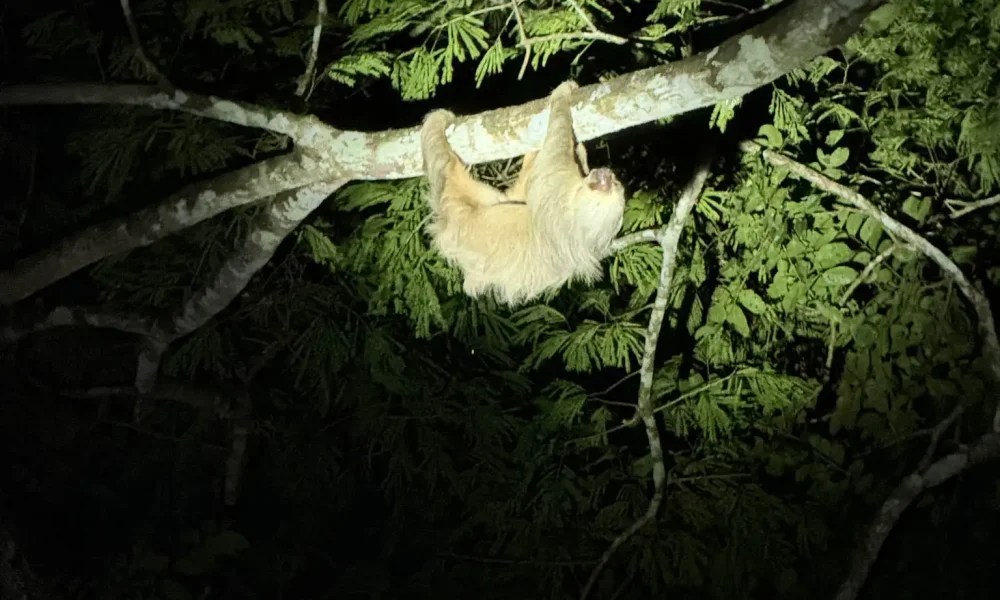
The Gamboa Rainforest Resort is the main base and one of the better-positioned properties in Panama for wildlife. The grounds alone give you sloths in the trees, toucans overhead, and capybaras on the lawn if you time your walk right. Beyond the resort, the Chagres River offers kayaking and boat tours, the canal-side walk at dusk is reliably productive for birds, and the combination of river, rainforest, and Canal views in a single location is hard to replicate anywhere else in the country.
Where to stay
Accommodation on this stretch of the Caribbean covers more range than you might expect, from community-rooted guesthouses in Portobelo town to a fully reimagined luxury resort on Isla Grande. Which base you choose depends on how you are sequencing the trip, but each option below is worth the night.
Portobelo
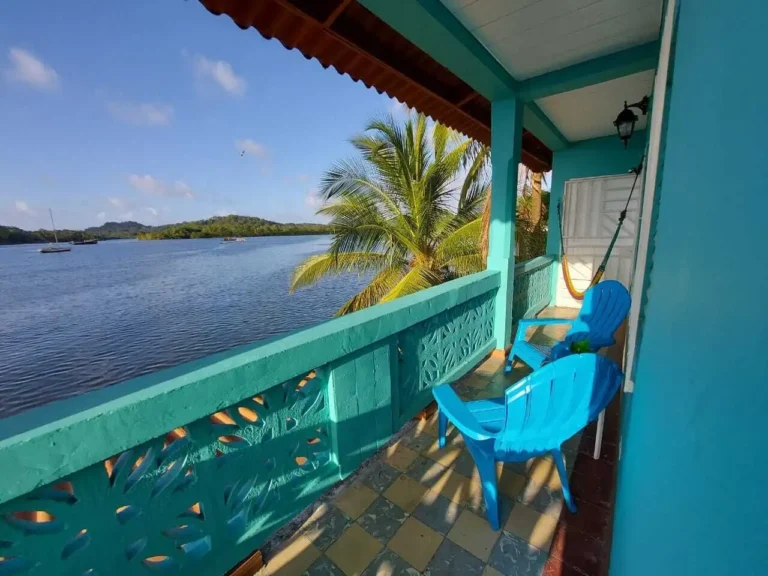
Casa Congo & Casa Rayo Verde
•• Sweet Spot
Best for: travelers who want to stay inside the history, couples, culturally curious visitors
Two properties, one management: Casa Congo is a colonial-era building with gallery-decorated rooms, a bay-view terrace, and a restaurant worth eating at. Casa Rayo Verde, 30 meters away, offers five rooms at a slightly lower rate with breakfast included.
Isla Grande
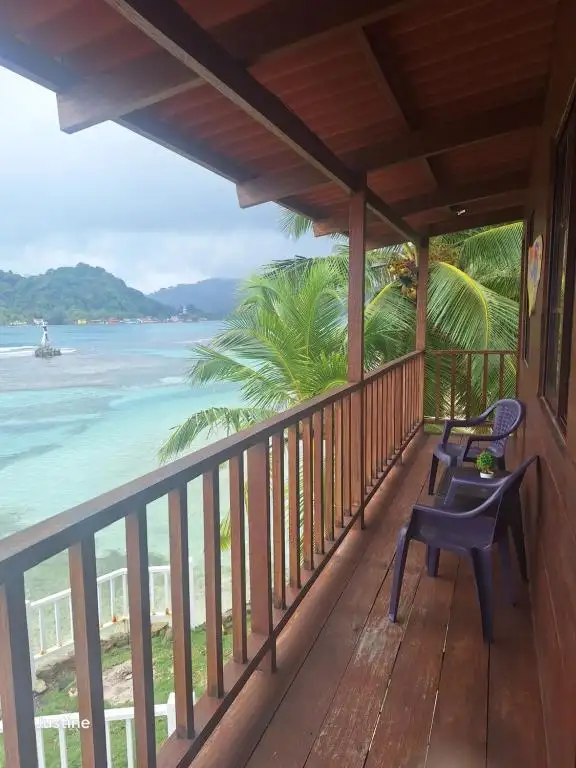
Cabañas Blue
•• Sweet Spot
Best for: travelers who want an easy, well-run base on the island without resort pricing
A well-run property with an outdoor pool, restaurant and bar, and rooms with sea or pool views, a five-minute walk from La Punta Beach. The staff are consistently well-reviewed for arranging boat tours and snorkeling trips. Comfortable, honest, and in the right place.
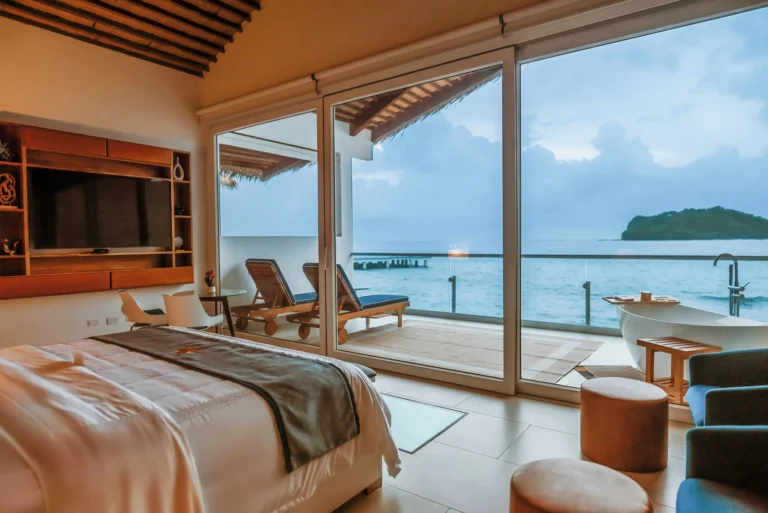
Ordovician Beach Resort
••• Worth Splurging
Best for: couples, honeymoons, travelers who want a full resort experience on the Caribbean coast
The only full resort on Isla Grande, with 47 rooms, overwater bungalows, a private beach, a spa, and a dive center. The culinary program sources most of its produce on-site and covers American, Caribbean, and Japanese menus. Purpose-driven ownership, community-employed staff, and a setting that raises the ceiling on what this stretch of Caribbean coast can offer.
Colon
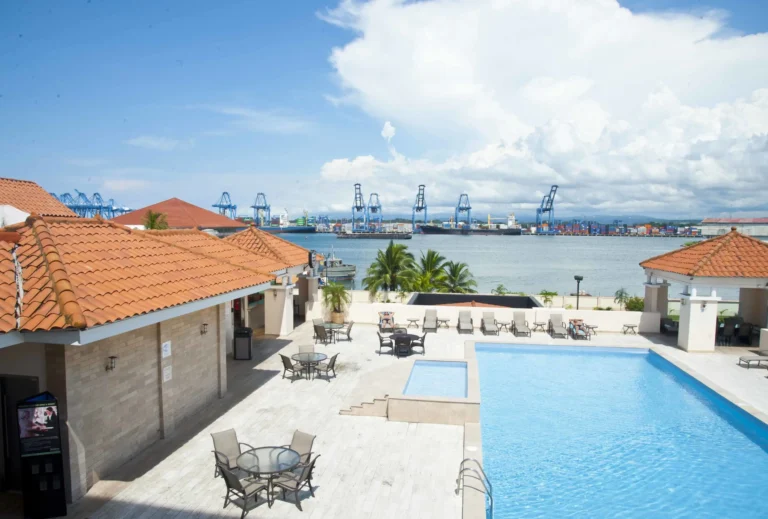
Radisson Colon 2000 Hotel
•• Sweet Spot
Best for: travelers doing the two-day or three-day itinerary who want a secure, comfortable base near the route
A note on Colon first: we do not recommend walking around the city independently. The Radisson is the exception. It sits at the Colon 2000 cruise port with secure parking and puts you 20 minutes from Gatun Locks the next morning. If you are doing the two-day or three-day itinerary, overnighting here instead of Portobelo shortens the Day 2 drive considerably.
Gamboa
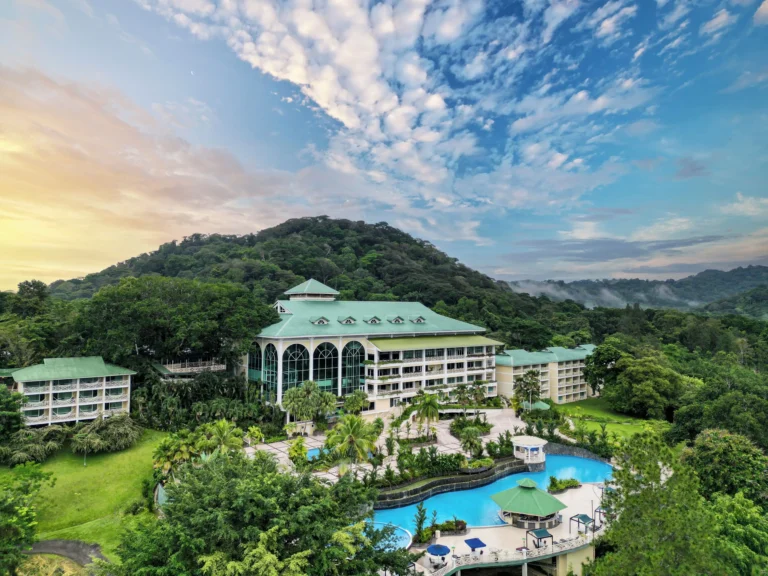
Gamboa Rainforest Resort
••• Worth Splurging
Best for: wildlife-focused travelers, couples, anyone extending to three days
The only full-service hotel in Gamboa, canal-side with forest trails, a pool with waterway views, and wildlife you do not have to go looking for. Sloths in the trees, toucans overhead, and a canal-side safari-style tour at dusk that rewards patience. It is the kind of place where you plan one night and start working out what it would take to stay two.
Planning
One-day, two-day, and three-day itineraries
Day trip
Covers Portobelo forts, the Church of San Felipe, and a lancha to Isla Grande for the afternoon. Requires leaving Panama City by 7am and involves a full driving day. The right length if the Caribbean coast is one stop among several on a Panama itinerary.
Best for: travelers short on time who want the Portobelo history without committing to an overnight
Leave Panama City for the day trip by 7am. If the Canal is new to you, stop at Gatun Locks on the drive east. It adds 30 minutes and the Atlantic-side view is worth it. Reach Portobelo by mid-morning and spend two to three hours on the forts, the Museo de la Real Aduana, and the Church of San Felipe. A short lancha crossing to Isla Grande in the early afternoon gives you two hours on the island before heading back to Panama City. You will be home by early evening. You can also do this through an organized tour group
Guided day tours to Portobelo →M
From the field · Melina
Caribbean coast and Canal Zone, Panama
Three days sounds like a lot for a region most people treat as a day trip. It is not. By the end of Day 1 you have been inside a 17th-century fort, crossed to a Caribbean island by lancha, and watched the light change over Portobelo bay. By the end of Day 2 you have stood at the Atlantic entrance to the Panama Canal, walked the ramparts of a jungle ruin almost entirely to yourself, and arrived at a rainforest lodge where a sloth is probably sleeping in the tree outside your window. Day 3 is the one where you stop moving and let the place reach you.
First-hand observation
Two Day Itinerary
Opens up a slower Portobelo, a proper morning on Isla Grande, and the return route via Gatun Locks and Fort San Lorenzo. The overnight in Portobelo changes the experience: the forts at dusk and the town after the day-trippers leave are a different place from the midday version.
Best for: travelers who want the full Caribbean coast experience, those who want more time on the water
Day 1
Drive to Portobelo in the morning. Forts, the Museo de la Real Aduana, and the Church of San Felipe take the morning. Lancha to Isla Grande after lunch and spend the afternoon swimming and snorkeling. Overnight in Portobelo.
Day 2
Explore Portobelo at a slower pace. Walk the waterfront, find coffee on the main square, and take time with Fort Santiago and the Congo murals that the previous day's schedule did not allow for. Drive home via Gatun Locks and Fort San Lorenzo, both of which sit naturally on the return route. Back in Panama City by early evening.
Three Day Itinerary
The full itinerary. Portobelo, Isla Grande, Gatun Locks, Fort San Lorenzo, and Gamboa. Three days turns this stretch of coast into one of the best mid-length itineraries in Panama, combining colonial history, Caribbean water, Canal engineering, and rainforest wildlife in one continuous trip.
Best for: travelers combining history, Caribbean coast, Canal, and rainforest in a single itinerary
Day 1
Drive east from Panama City. Portobelo in the morning: forts, the Museo de la Real Aduana, the Church of San Felipe, and the Congo murals at a considered pace. Lancha to Isla Grande after lunch for the afternoon on the water. Overnight in Portobelo, Isla Grande or Colon.
Day 2
Drive to Gatun Locks in the morning for the Atlantic-side Canal experience. Continue to Fort San Lorenzo for late morning. Drive south to Gamboa, arriving in the early afternoon. Spend the rest of the day and evening at the resort: forest trails, evening safari, pool. Overnight in Gamboa.
Day 3
Full day in Gamboa. Morning wildlife walk or a boat tour on the Chagres River. Lunch on the resort grounds. Return to Panama City in the evening.
Safety
Portobelo and Isla Grande are safe for travelers exercising standard awareness. Portobelo is a small, walkable town. Isla Grande, as an island with no cars and limited infrastructure, is one of the lower-risk environments in Panama.
The main practical note applies to Colon city, which sits on the Trans-Isthmian Highway between Panama City and Portobelo. Colon has a higher crime rate than most of Panama and is not a recommended stop for independent travelers. Drive through rather than stopping, and do not park or walk around Colon city center. The highway bypasses the city center if you stay on the main route.
The road to Fort San Lorenzo passes through a checkpoint and requires a car with valid ID. Do not attempt it on foot.
Planning
The Caribbean coast follows a different seasonal pattern from the Pacific side, and the distinction is worth understanding before you plan your trip.
Dry season (December to April)
Dry season is reliable on the Pacific side of Panama, but the Caribbean coast receives rain year-round and the difference between seasons is less pronounced here than in Panama City or Boquete. December to April brings lower overall rainfall and the best conditions for Isla Grande snorkeling and beach time. This is the window most travelers aim for.
Wet season (May to November)
The Caribbean coast is wetter than the Pacific side in all months, but the wet season brings heavier and more frequent rain. Isla Grande and Portobelo remain accessible and worth visiting in wet season, and visitor numbers drop considerably. If you are extending to Gamboa, wet season is a strong time for wildlife: the forest is at its most productive and the Chagres River runs full.
October: the Black Christ Festival
The festival of the Black Christ on October 21st is the most significant event on Portobelo's calendar. Tens of thousands of pilgrims walk to Portobelo from across Panama. The town is transformed. If you want to witness one of Panama's most important acts of collective devotion, this is the date to plan around. Book accommodation months in advance if you intend to stay overnight during the festival.
Planning
Getting there
Portobelo is two hours east of Panama City on the Trans-Isthmian Highway. A rental car is strongly recommended for this trip. Public buses connect Panama City to Portobelo via Sabanitas, but the scheduling makes combining multiple stops in a single day impractical. If you prefer not to drive, a guided tour that covers both Portobelo and Isla Grande is the most efficient alternative.
Cash
Portobelo and Isla Grande operate largely on cash. ATMs are not reliably available in Portobelo town and are not present on Isla Grande. Bring what you need from Panama City before you leave, including funds for the lancha crossing, entrance fees to the forts and Museo de la Real Aduana, meals, and any Congo market or craft purchases. The lancha fare runs approximately USD 2 to 3 each way.
The Colon bypass
Colon city sits on the route between Panama City and Portobelo. Stay on the Trans-Isthmian Highway bypass and do not stop in the city center. The route to Portobelo does not require going through Colon if you stay on the main highway.
What to bring
Reef-safe sunscreen, snorkel gear if snorkeling matters to you, a dry bag for the lancha crossing, insect repellent for Gamboa in the evenings, a light layer for Gamboa nights which are cooler than the coast, and cash for everything.
Fort San Lorenzo access
The road to Fort San Lorenzo passes through a former Canal Zone checkpoint. You will need a valid passport or ID. The checkpoint is routine and the guards are accustomed to tourists. Allow an hour for the fort itself in addition to the drive from Gatun.
For a full country-level overview of practical information including domestic travel, health, and entry requirements, see our Panama travel guide →.
Quick answers to the most common questions about visiting Portobelo Panama and Isla Grande.
Guide to Bocas del Toro
Plan your trip to Bocas del Toro with our honest island-by-island guide
Day trips from Panama City
Panama City is a base, not just a destination. Here is what to do with a free day.
How to visit the Panama Canal
Planning a Panama Canal tour? Here's exactly what to expect, when to go, and whether it's worth it.
Best time to visit Panama
The dry season is not the only season worth going. Here is what the calendar actually looks like, region by region.
Is Panama safe?
Panama is one of the safest countries in Central America. But the answer shifts considerably depending on where you are going.
