Kyoto was once the capital of Japan and is a city that holds so much history. It is known for its temples, shrines, palaces, gardens, and traditional Japanese streets. Today, it is visited by millions of visitors every year looking to dive into the traditional and historical aspects of Japanese culture. This guide breaks down what to do in Kyoto and how to structure a 3 day itinerary to visit some of the top sites throughout the city.
Kyoto is a city full of tradition, which can be experienced in a variety of ways throughout. You have the opportunity to explore temples and shrines and see some of the more historical neighborhoods. Our guide brings you to these top destinations. However, the city is full of cultural gems that you can discover based on your interests. Kyoto is the destination within Japan to learn more about traditional tea ceremonies or flower arranging practices. And if you want a traditional multi-course meal (Kaiseki), Kyoto is the right city to try this – you can organize a reservation in advance through your hotel.
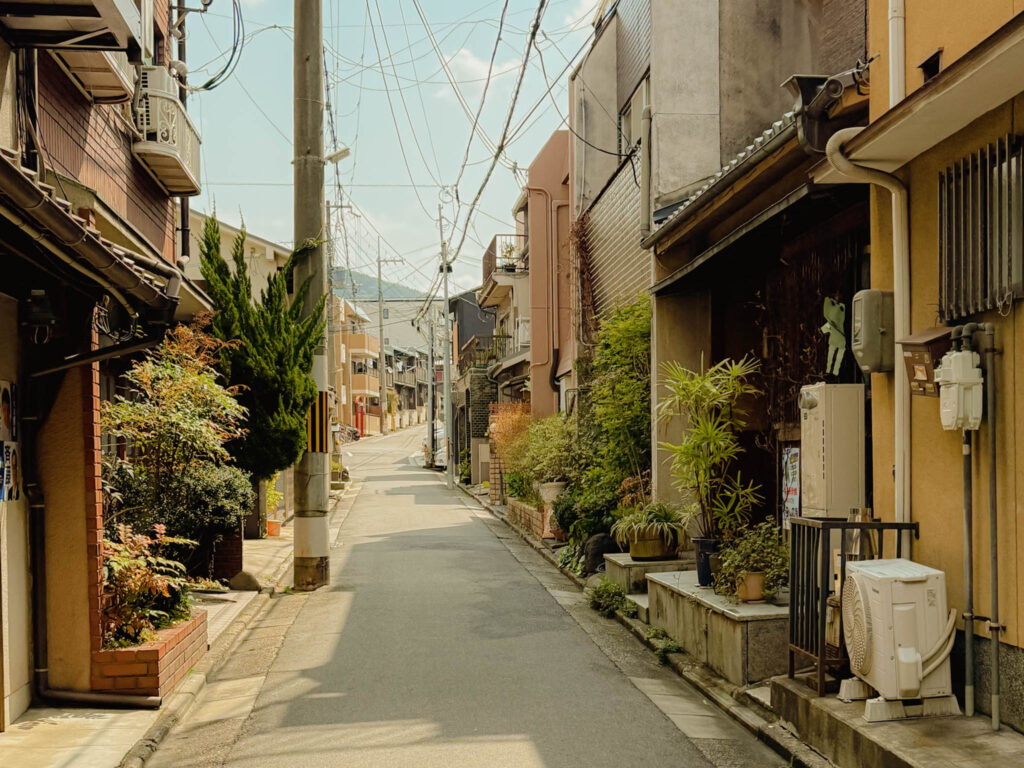
How to Maximize What to Do in Kyoto
Kyoto is a city that is visited by tens of millions of tourists every year. As a result, the tourist destinations may feel very crowded and full. The best way to mitigate this is to discover the city early in the morning (such as 6 AM). If you do not mind the crowds, then you do not need to wake up so early. You can also consider discovering the various sites throughout Kyoto with a tour group but you will not have the independence to explore on your own and you will be among the crowds that move through the city. Below, we talk about how to organize your time independently from large tours.
Getting to Kyoto
We recommend getting to Kyoto the night before "Day 1" so you can hit the ground running. There are many trains that travel from Tokyo, Osaka, and Hiroshima to Kyoto.
Day 1: Discovering the Temples and Shrines of Kyoto
When looking at what to do in Kyoto, you will find many different temples and shrines to discover and explore. And these can be overwhelming. You definitely do not need to visit all the temples and shrines within the city so below, we list some of the most popular ones and highlight the destinations that are musts.
Morning: Discovering The Neighborhood of Higashiyama
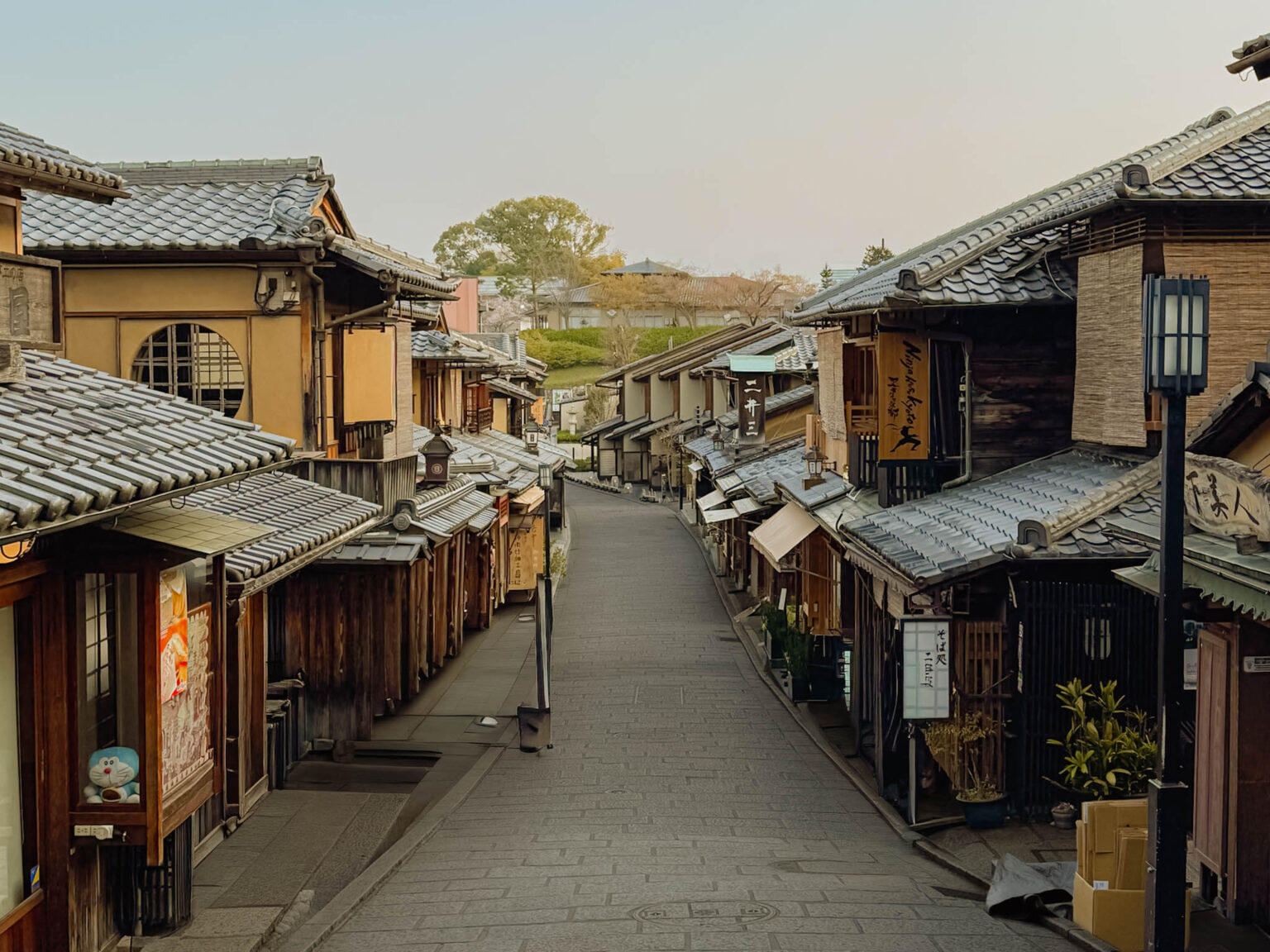
Higashiyama is the historical neighborhood that has been maintained and restored to be the best preserved ancient neighborhood. You can walk through the streets lined with wooden buildings to discover different boutiques, cafes, shops, etc. This neighborhood tends to be one of the most popular areas for tourists to walk around and if you want to experience it without crowds, we recommend arriving here around sunrise.
As the most prominent historical neighborhood of Kyoto, Higashiyama is also where you will find most of the temples. Choose a few that speak to you or just visit the highlights as you discover the unique and picturesque neighborhood. You can easily spend half of the day just wandering through the area and exploring the temples, shrines, shops that fill this small part of Kyoto.
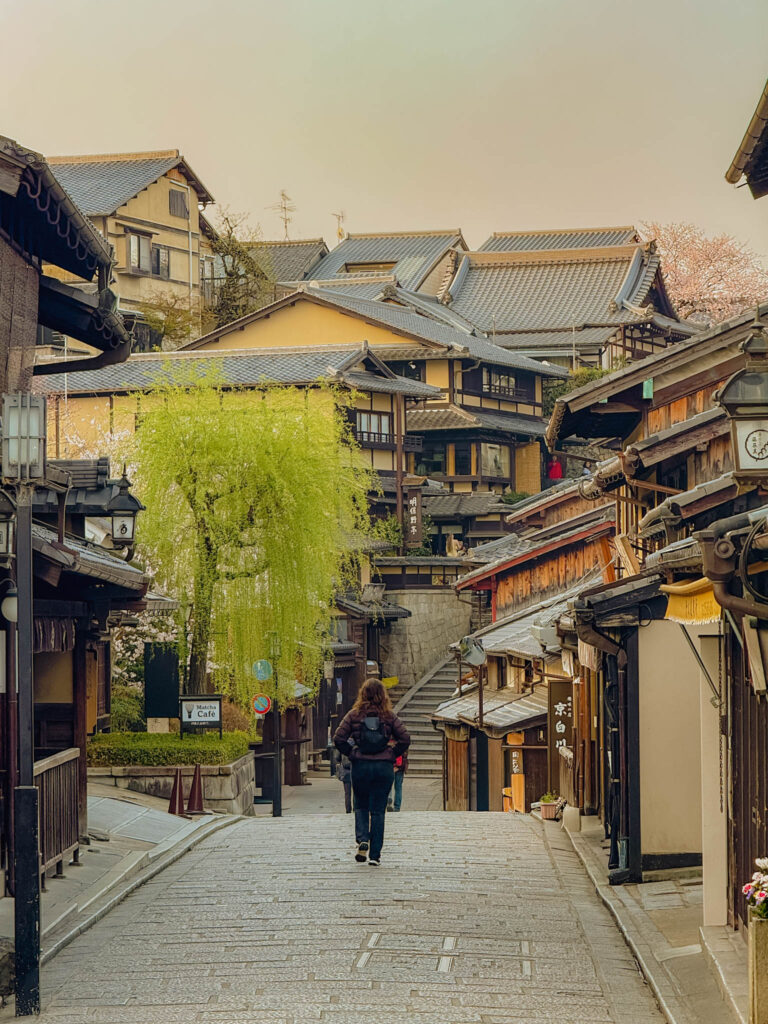
An Option to Experience the Temples of Kyoto
As you walk around, you will see many tourists dressed in traditional kimonos. There are many different companies that rent kimonos so you can walk around Kyoto and take photos in the traditional garb. (We recommend finding an experience that will teach you about the history and tradition of the kimono and the meaning of the various symbols found within the kimono.) You can also find experiences that combine the kimono rental with a photoshoot opportunity, a traditional tea ceremony, hair and make-up experiences, and more. The type of experience you choose really depends on the goals of your trip.
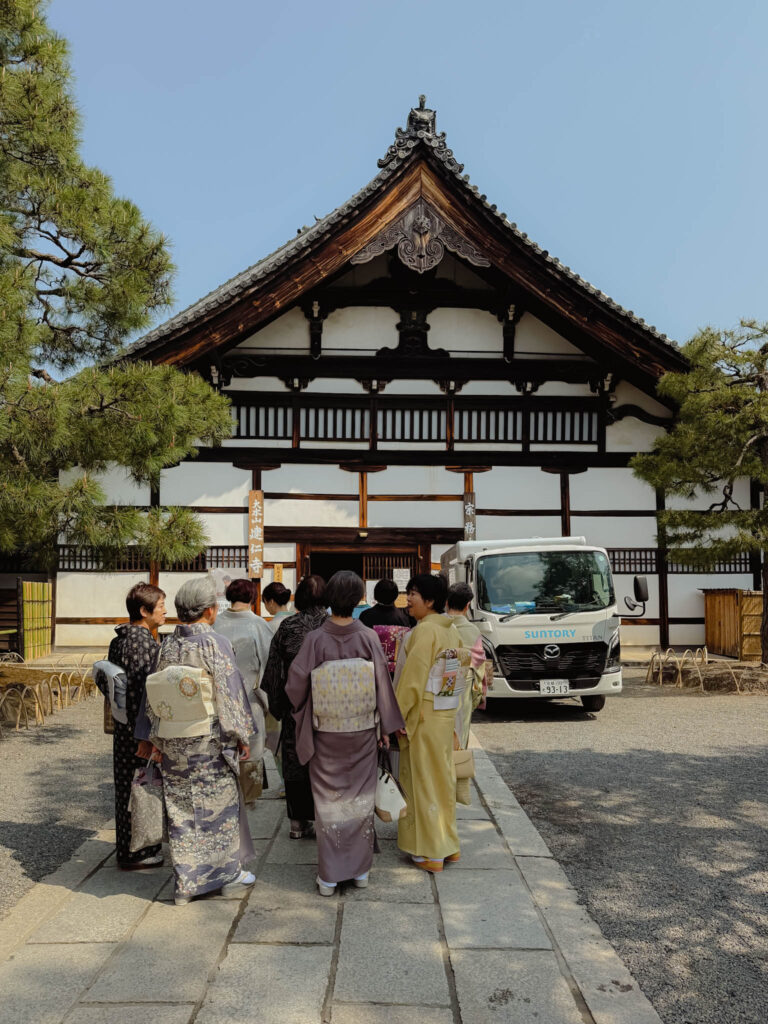
Yasaka Pagoda
Must Visit
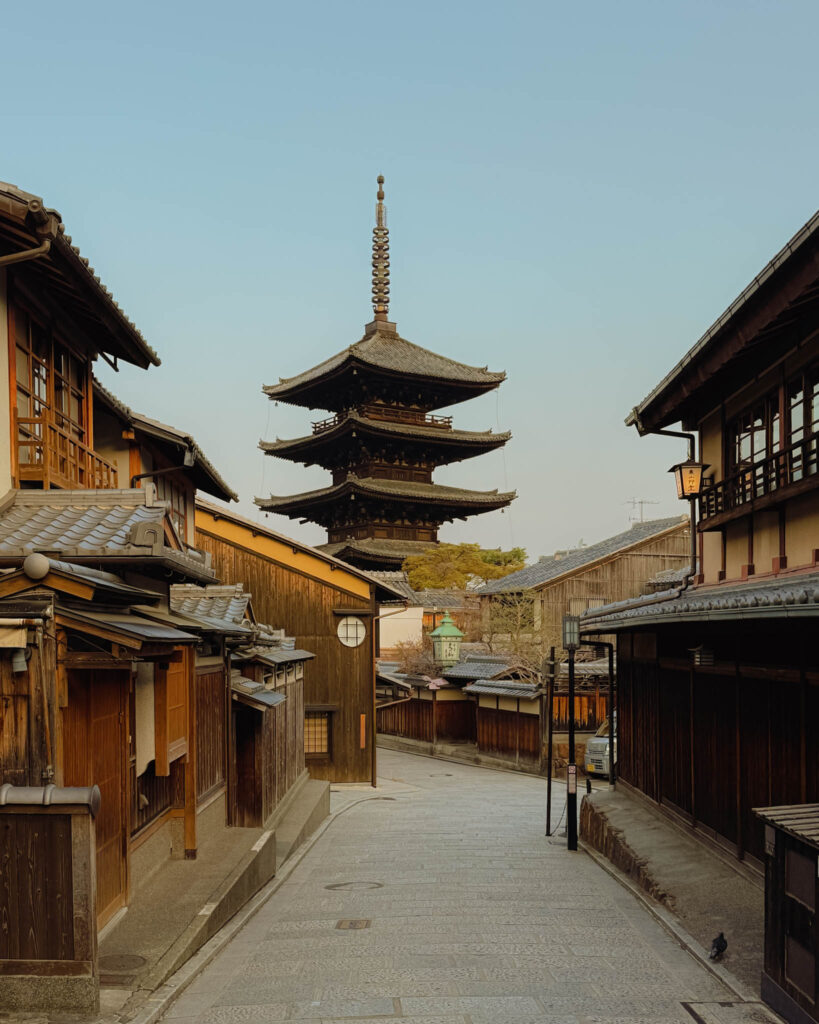
A dominating presence in the Higashyama neighborhood is the Yasaka Pagoda. People flock to various points around the pagoda to get photos of the neighborhood along with this Kyoto icon. The interior of the pagoda is rarely open to the public, so if it is, take advantage of it!
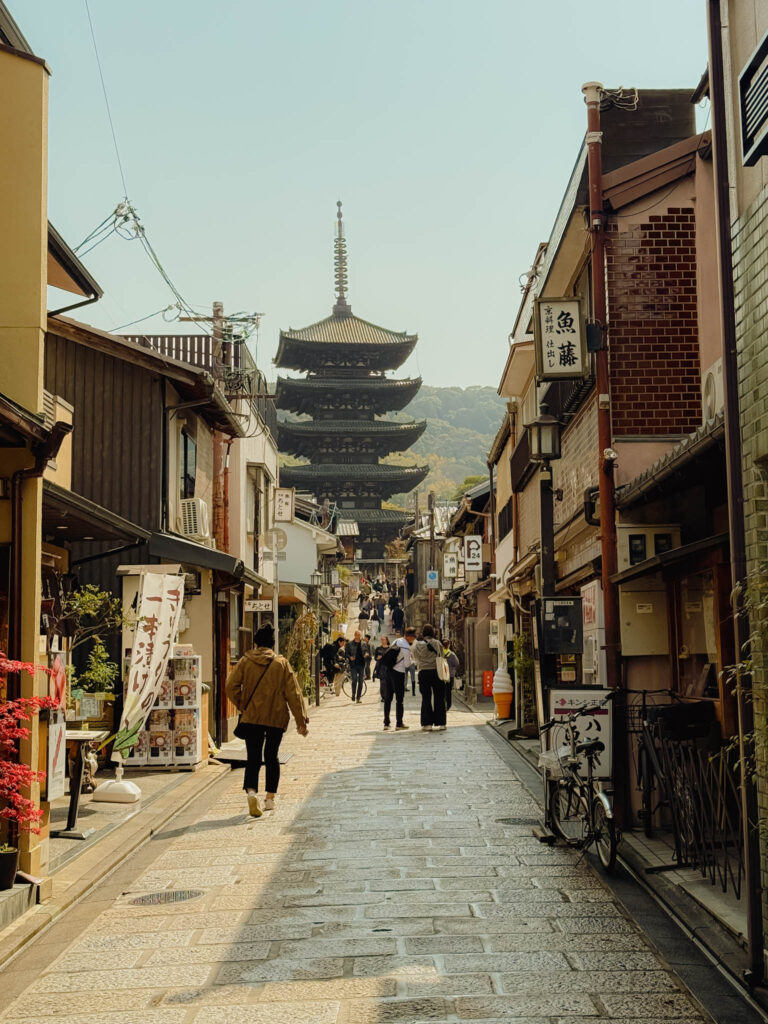
Ninenzaka Walkway and the Sannenzaka Steps
Must Visit
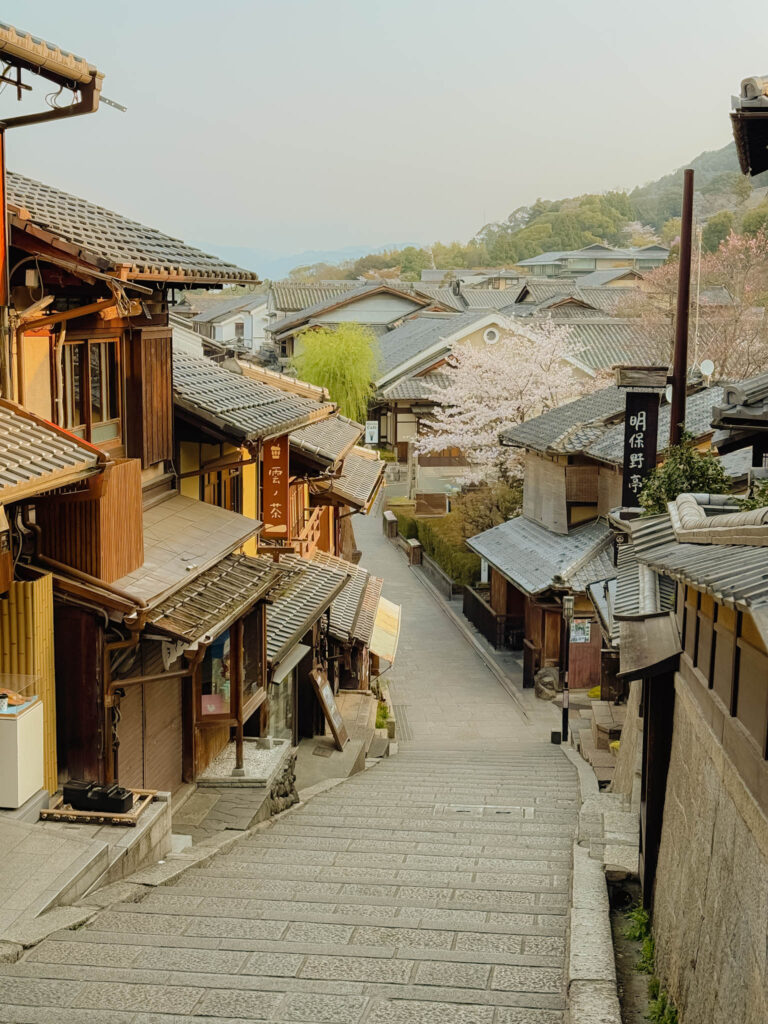
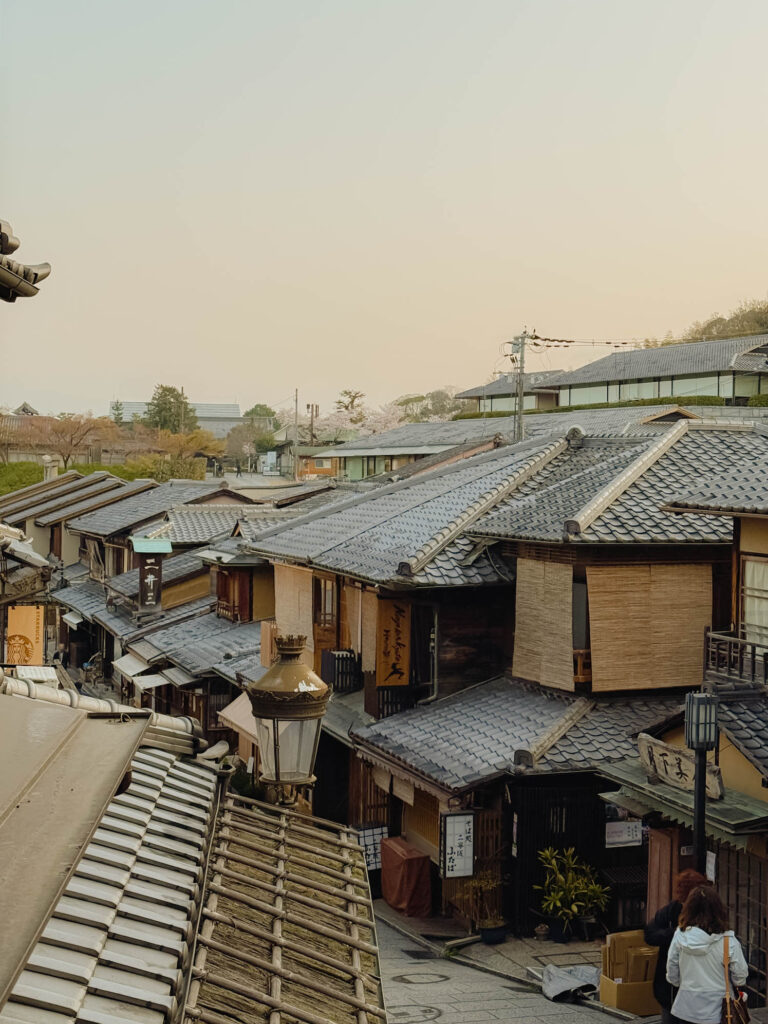
The main streets within Higashiyama are the Ninenzaka walkway and Sannenzaka steps. Along these paths, you will find boutiques, restaurants, and souvenir shops. These paths are also where the most tourists walk around and take photos. Get there early if you want to experience the streets with few people.
Kiyomizudera Temple
Must Visit
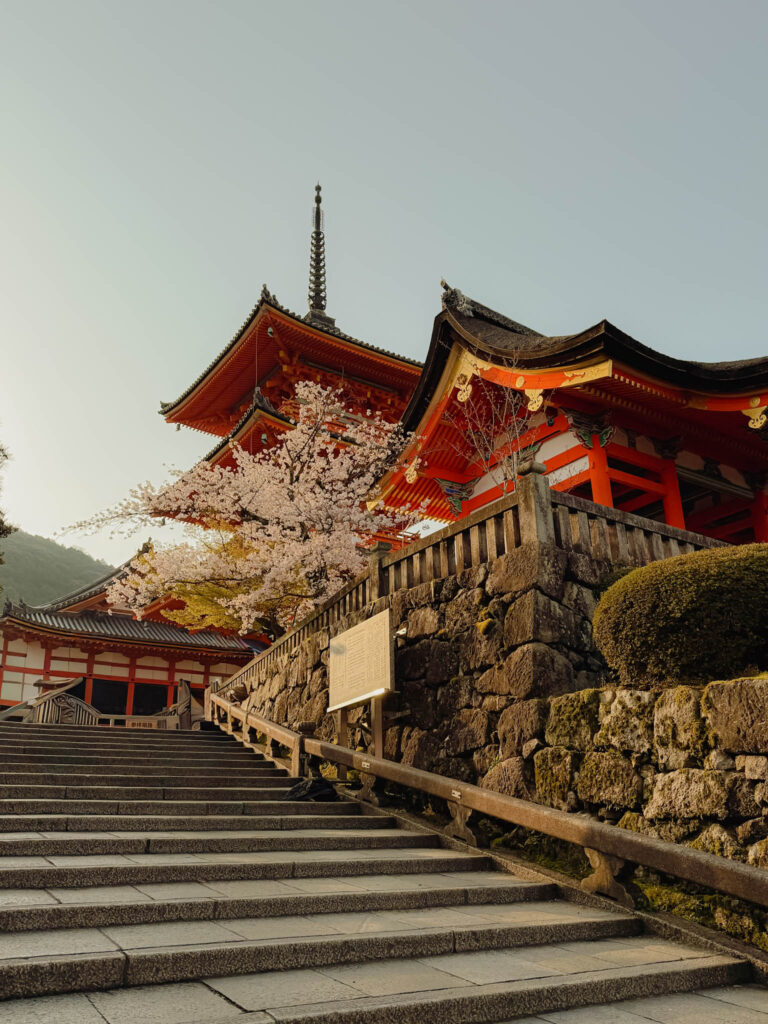
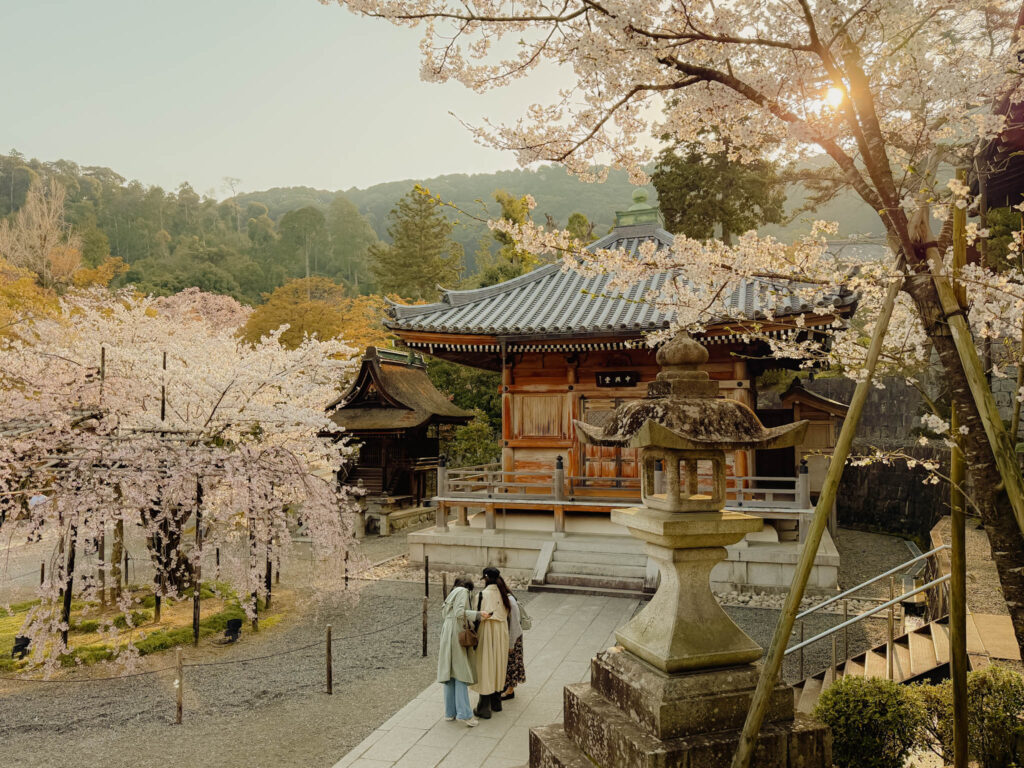
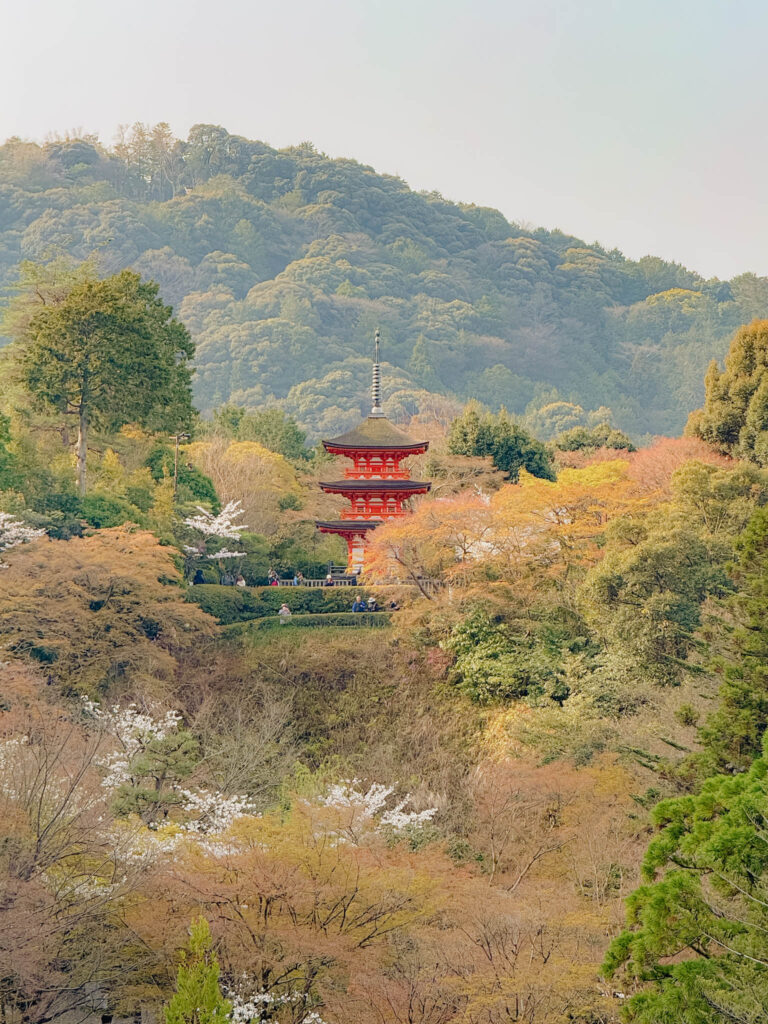
This Buddhist temple is one of the most visited in Kyoto and one of the most important in Japan. The wooden structures are built into the hillside, making it particularly special to visit in the spring with the cherry blossoms or the fall when the leaves change colors. And despite its popularity, there are little paths and corners where you can find peace and tranquility.
You can pay to enter the temple and walk around the grounds, taking in various views of the temple and Kyoto below. There are structures all around that are worth exploring, including pagodas and fountains.
Ryōzen Kannon
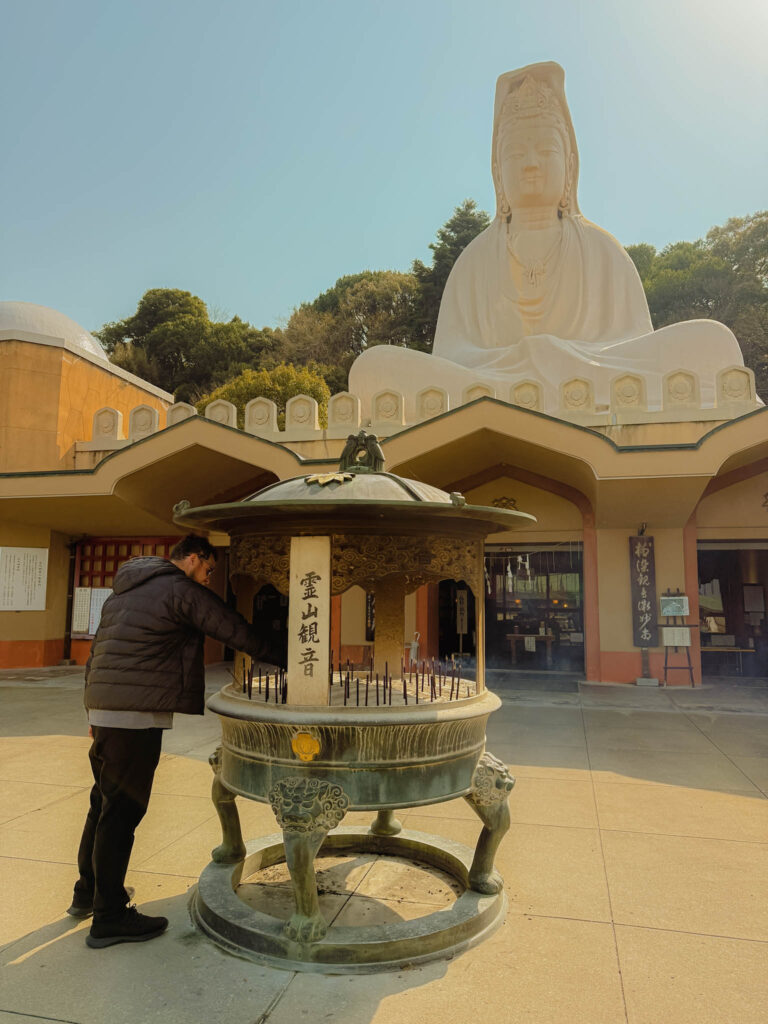
This war memorial commemorates the dead of the Pacific War of World War II. It is most famous for its large Kannon statue that sits on top of the temple. There is an admissions fee to enter but it includes incense that allow you to participate in a ceremonial wish at the entrance to the temple.
Kodaiji Temple
This temple was constructed in the 1600s in memory of Toyotomi Hideyoshi, the man who unified all of Japan. The structures within the temple are lavishly decorated and have beautiful gardens surrounding them. In particular, you will find a rock garden with raked gravel and a tsukiyama-style garden (what you may consider as a traditional Japanese garden). You can also walk through a bamboo grove, similar to the popular Arashiyama bamboo forest but with fewer crowds.
Kenninji Temple
This temple is the oldest Zen Buddhist temple in Kyoto. There is an entrance fee to visit the main gardens and buildings of the complex (but most of it is free to walk around).
Sanjūsangendō Temple
This temple is famous for the one thousand bronze Kannon statues that can be found within the temple. Seeing the quantity of statues lined up together within the main structure is quite powerful and impressive. Photographs are not allowed within this part of the temple but you can also explore the gardens around the structures.
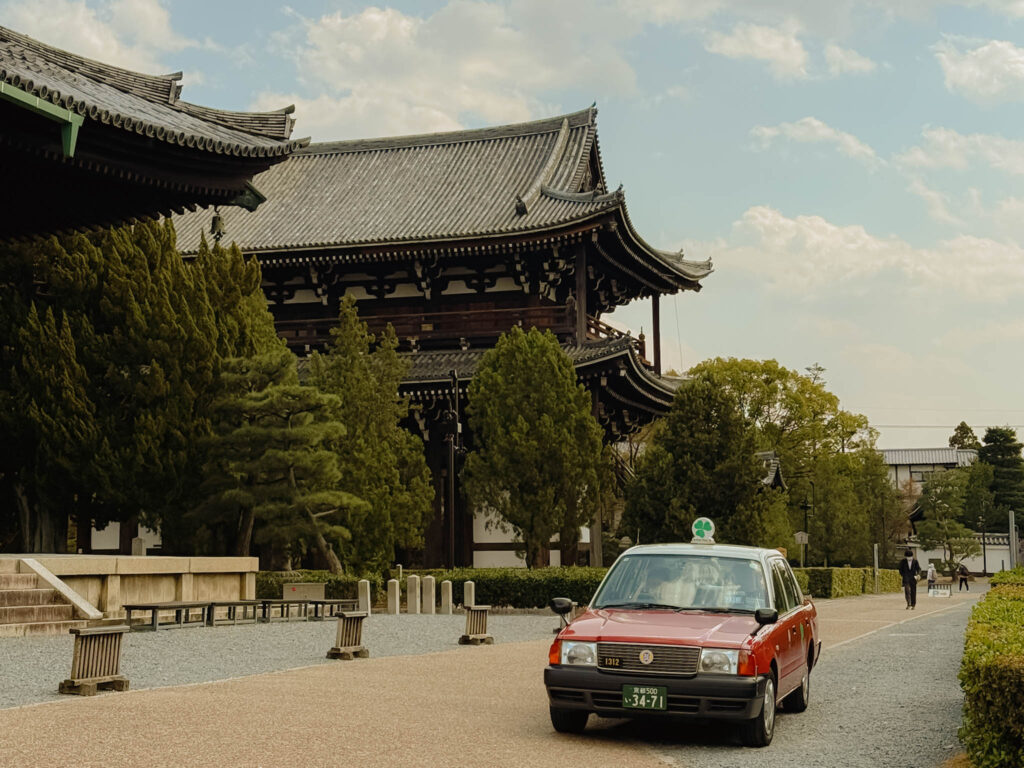
Tōfuku-ji Temple
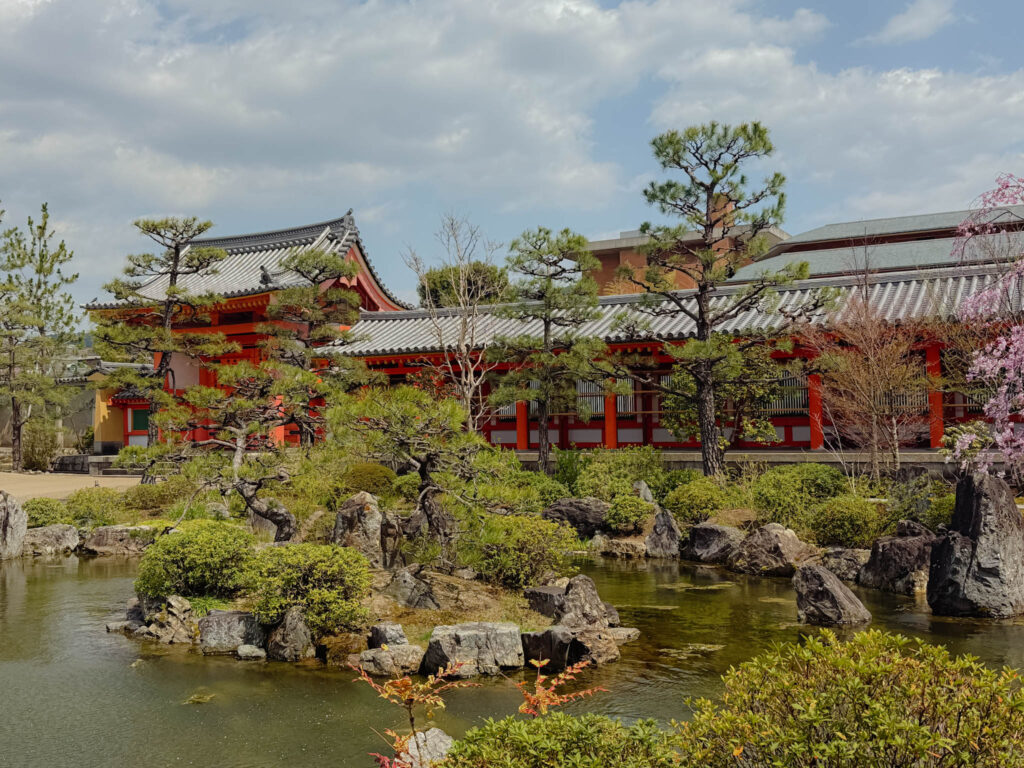
This large Buddhist temple complex consists of a variety of buildings and pagodas. It is especially popular to discover this temple in the fall due to the changing leaves, especially around its Tsutenkyo Bridge. While you do have to pay to visit the bridge, most of the impressively large structures are free to explore.
Afternoon of What to Do in Kyoto: Experiencing the Traditions of Japan
Kyoto, having been the capital of Japan during its imperial era between 794 to 1868, holds so much traditional history and culture. If you are interested in discovering more about this, we recommend finding an experience that aligns with your interests. These can include the following:
- Participate in a tea ceremony or take a matcha making class
- Take a cooking class
- Participate in a traditional kimono experience
- Learn to play the traditional hark (Koto)
- Spend time with a Maiko-san (a Geisha apprentice) to learn more about traditional Japanese art and performance and the Giesha history and culture
- Take a chopstick-making class
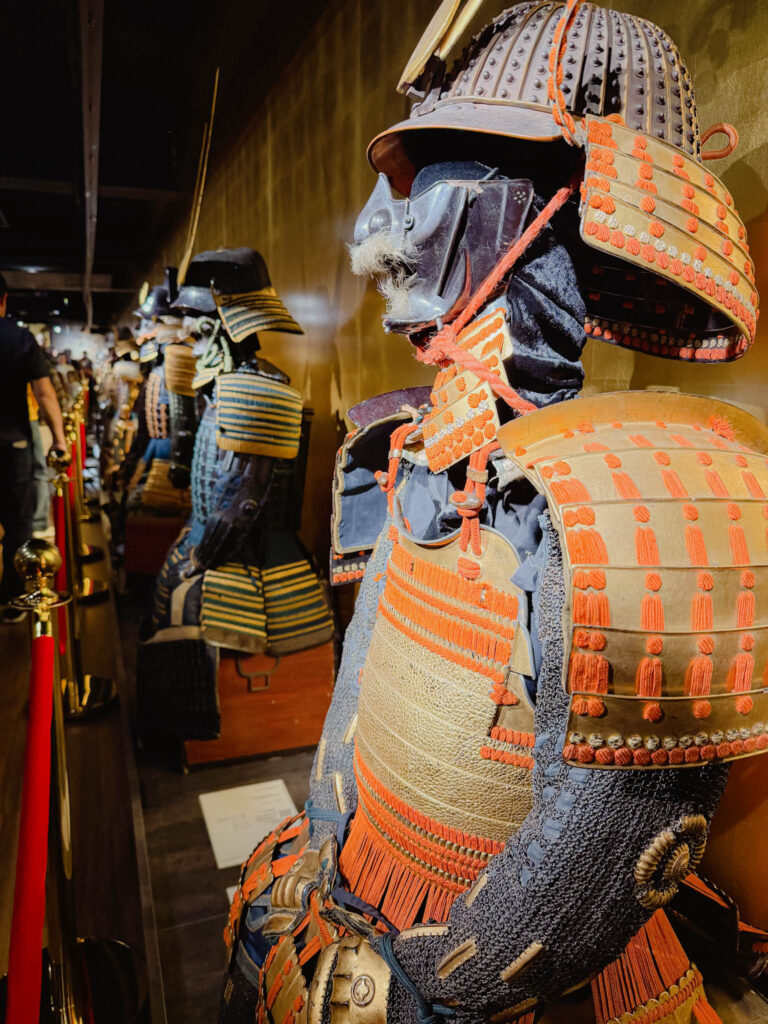
- Visit a Samurai museum to learn about these ancient warriors or do a ninja experience course (family-friendly)
Late Afternoon: Fushimi Inari Taisha and the 1,000 Gates
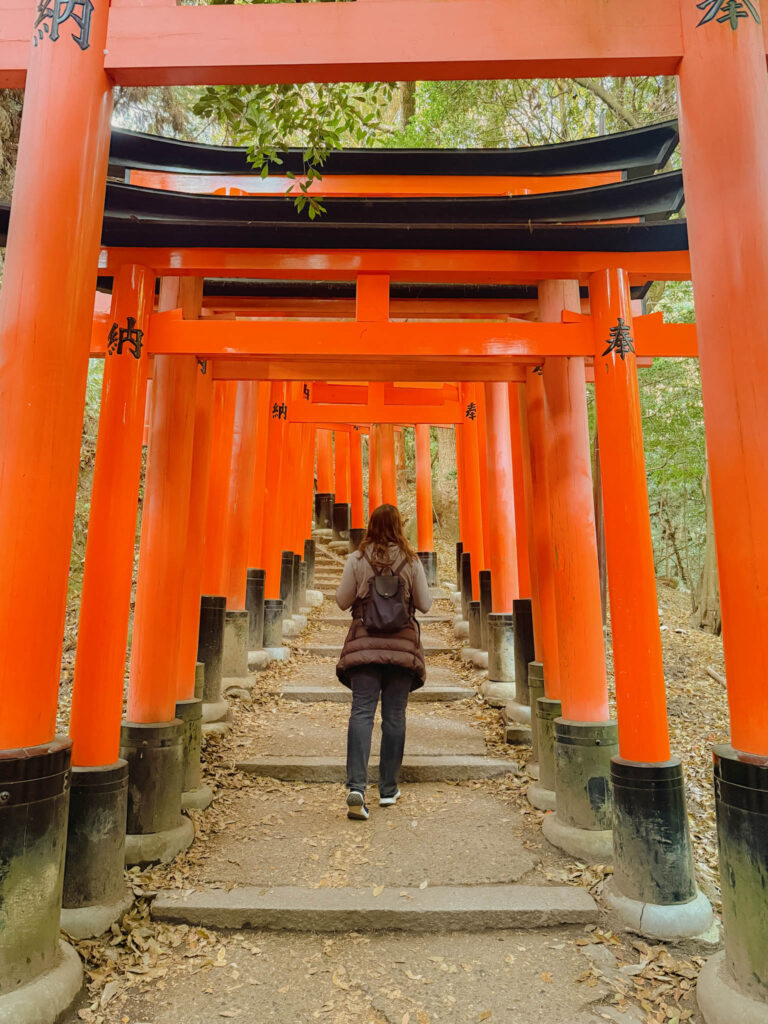
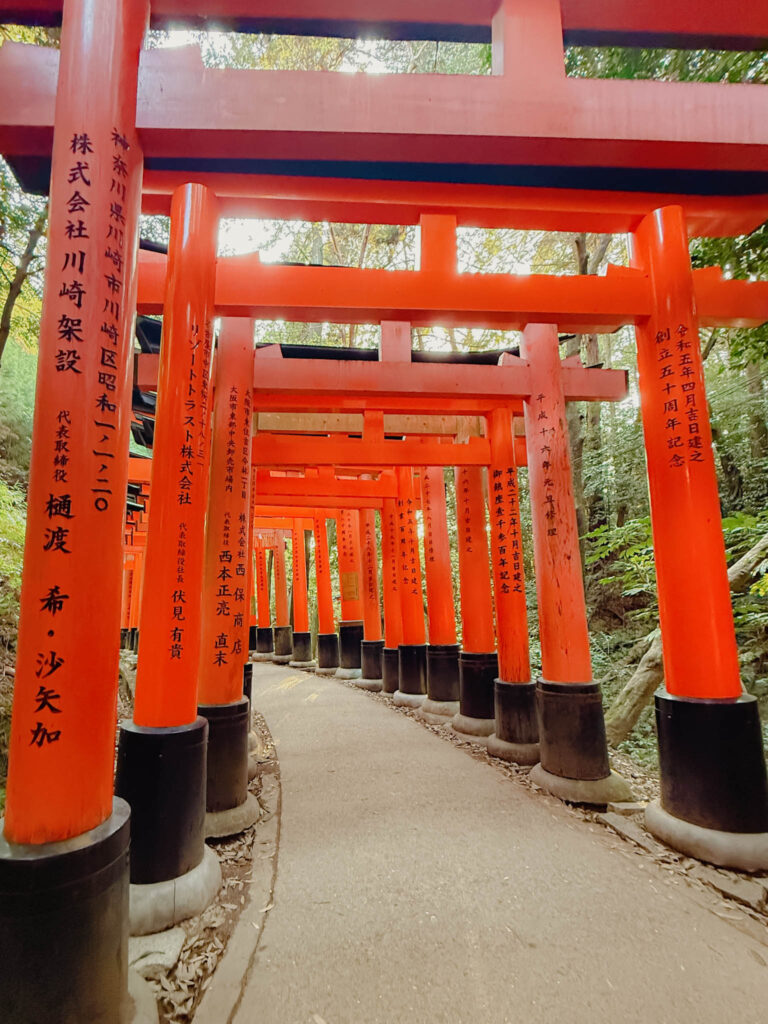
Spend the end of the day at Fushimi Inari Taisha, the famous shrine with thousands of red torii gates along pathways that go up the mountain. Try to get to the shrine an hour before it closes. Walk through the pathways up to the top of the mountain, as the paths at the top will have much fewer crowds. The best way to experience this shrine is with fewer people to feel the meditative power of the torii gates. (You can also visit this shrine first thing in the morning to have fewer crowds.)
Day 2: Continuing to Discover Kyoto
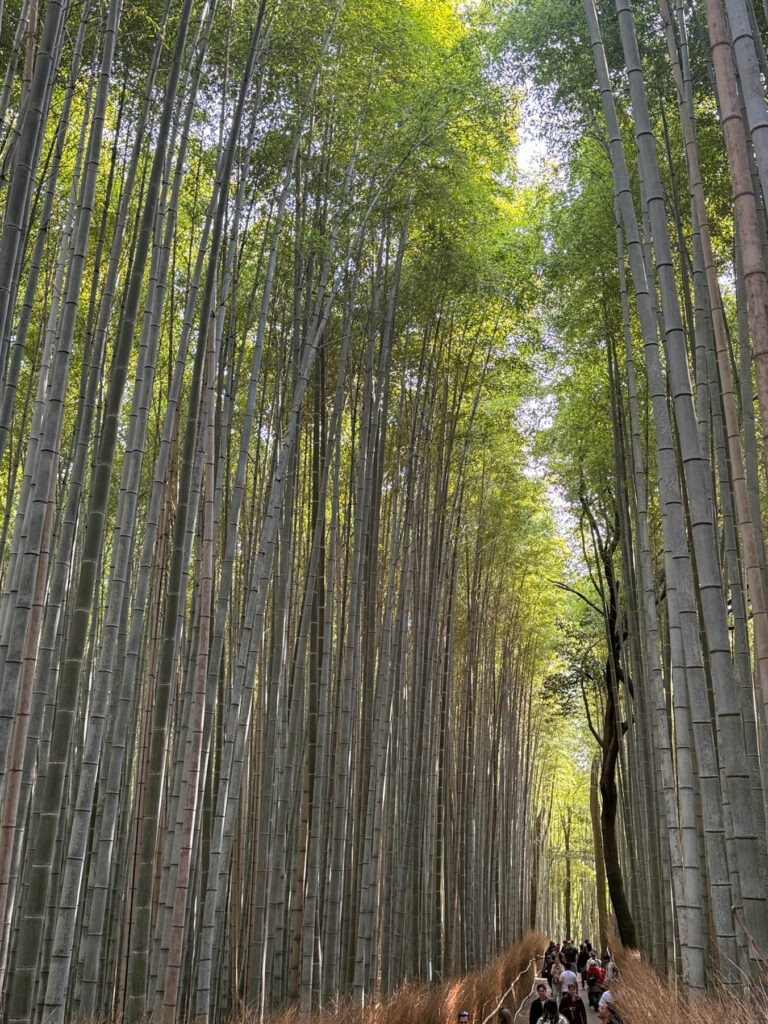
Early Morning: Arashiyama Bamboo Forest
The Arashiyama Bamboo Forest is a bamboo grove with a pathway that takes you through the the natural forest. You need to set your expectations for the experience. If you do not arrive at the forest first thing in the morning (6 to 7 AM), the pathway will be full of other tourists and since the pathway is not very long, it gets quite crowded. You can get here by train from anywhere in Kyoto.
Beyond the bamboo forest, you can also visit the Hozugawa River behind the forest (or take a cruise on the river), the temple Tenryū-ji. and wander through the neighborhood. The overall location transports you to a less urban environment and you can find other bamboo forests in the area when wandering around throuhgout Arashiyama.
Lunch: Nishiki Market
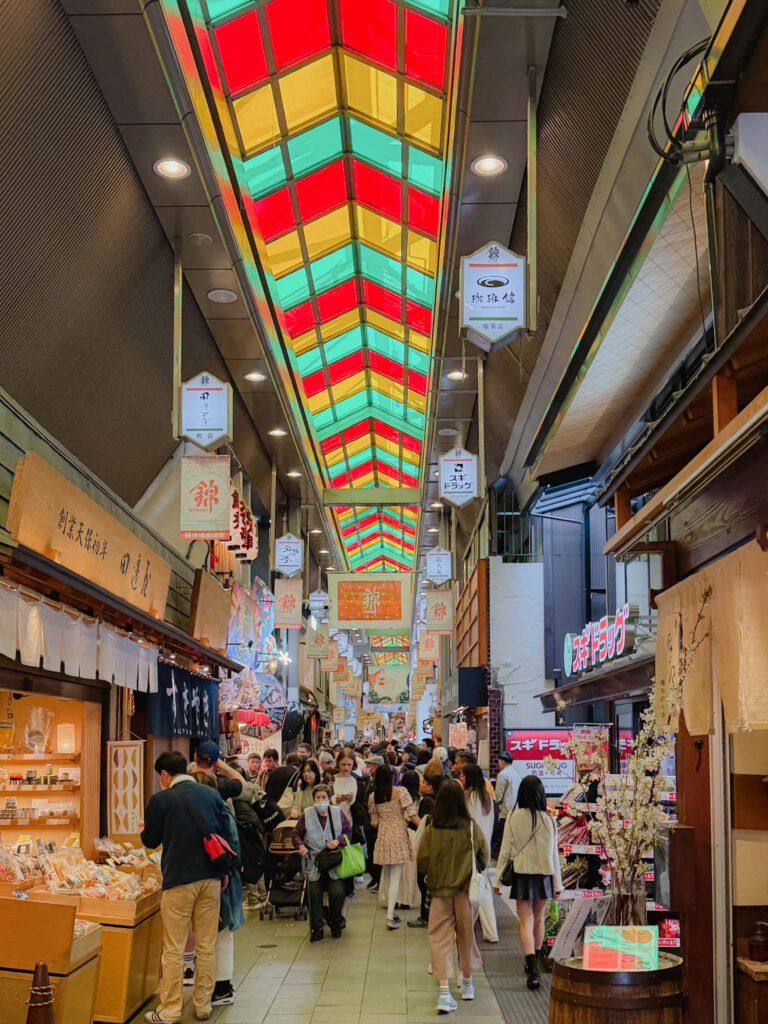
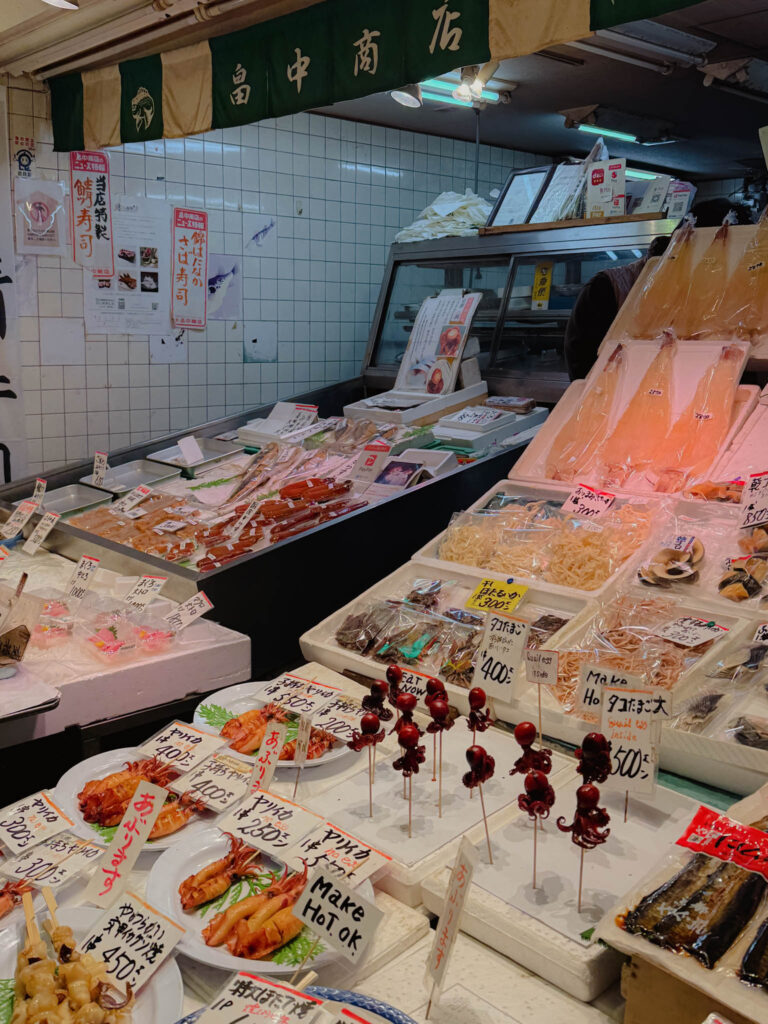
If you are not spending your afternoon continuing to discover Arashiyama, then return to Kyoto and head to the Nishiki Market for your lunch. Here you will find stalls full of a wide variety of food and local cuisines along with souvenir shops. There are also many restaurants located on the streets outside of the market.
Afternoon: Nijō Castle
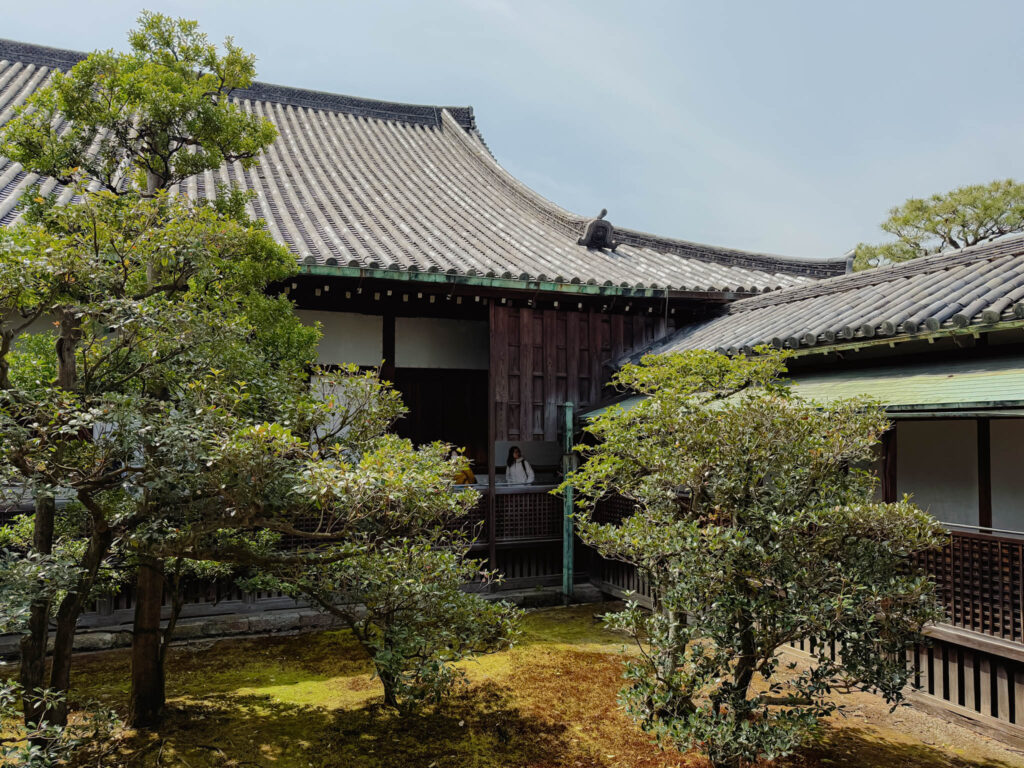
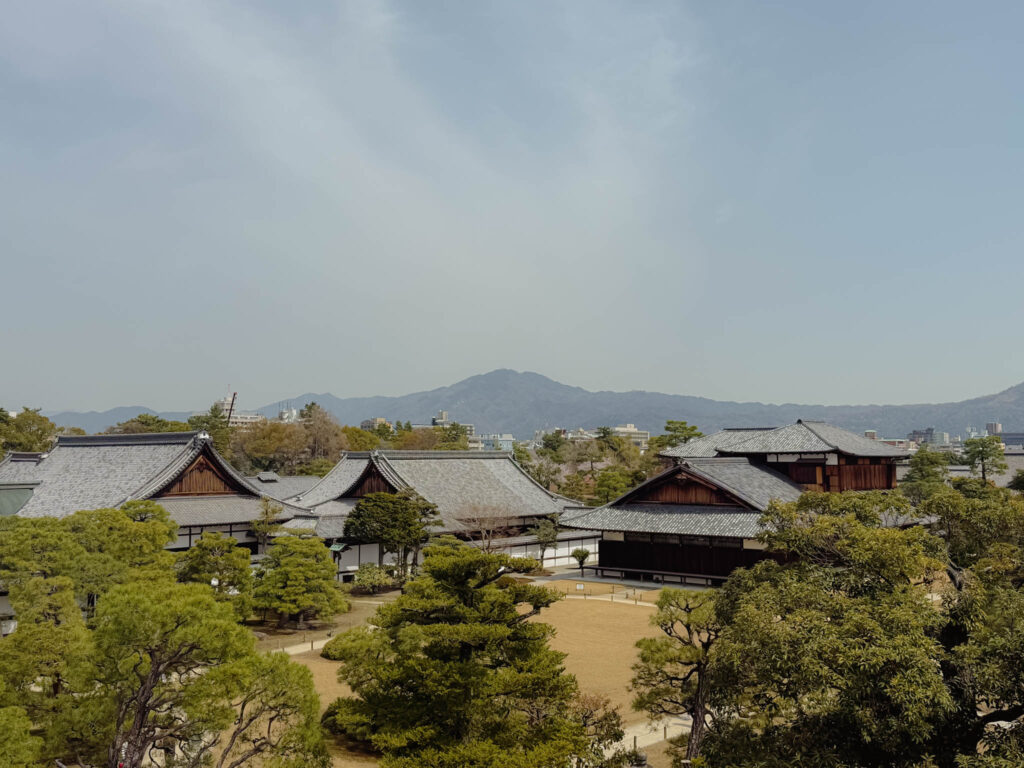
Spend the afternoon discovering Nijo Castle, the residence of Tokugawa Ieyasu, the last ruler to unify all of Japan. The historical site was also used as an imperial palace and has been preserved as an example of the architecture of Japan’s feudal era. Today, you can visit the castle grounds and even rent an audio guide to give you more information and history about the site. This could be great for those who are interested in Japanese history. You will see the decorated Karamon Gate, the Ninomaru Palace where the shogun resided and worked, the traditional Japanese gardens that surround the palace, and the top of the stone wall that surrounds the palace to give you a view of the grounds below.
Evening: A Free Walking Night Tour of Gion
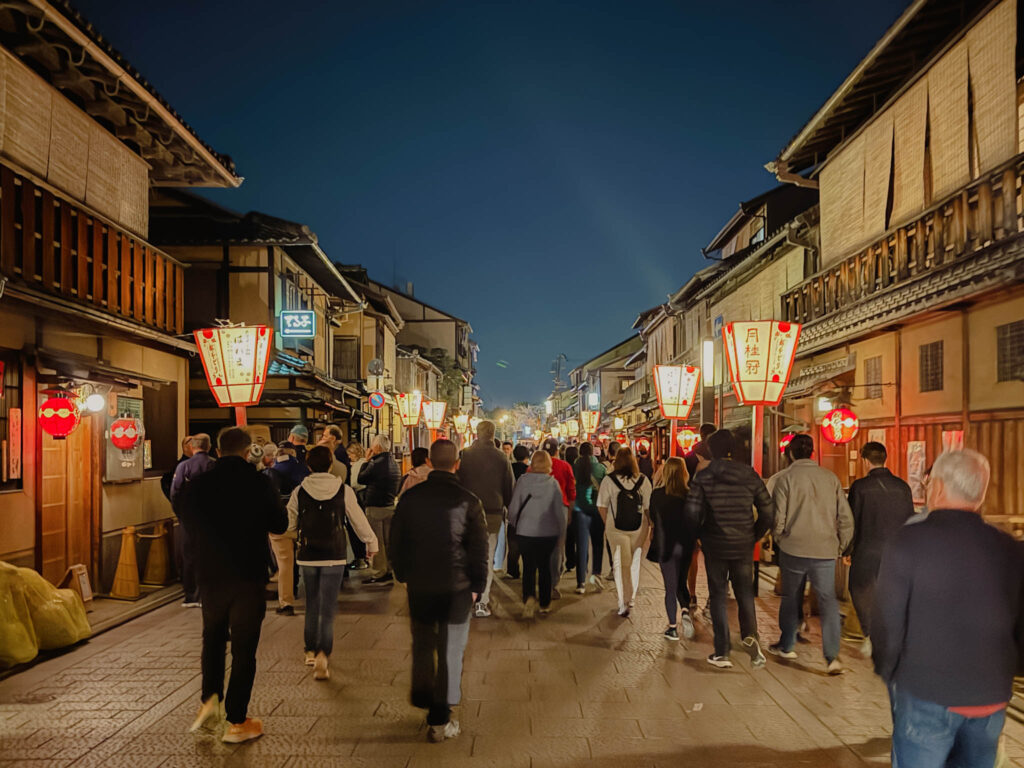
The neighborhood of Gion is the entertainment district of Kyoto and is the most famous Geisha district within the city. Geishas are traditional entertainers in Japan and are trained in ancient painting, singing, dancing, etc. that are highly celebrated and recognized in Japan. It is prestigious to train to become a Geisha and there are very few of them today. To see a performance by a Geisha, you must be invited to an elite dinner, typically with executives at top Japanese organizations. It is an exclusive experience. These evenings happen in private restaurants within the Gion neighborhood, so if you walk around the area in the evenings, you have the chance to seeing a Geisha walking to her appointment to entertain the business elite of Kyoto.
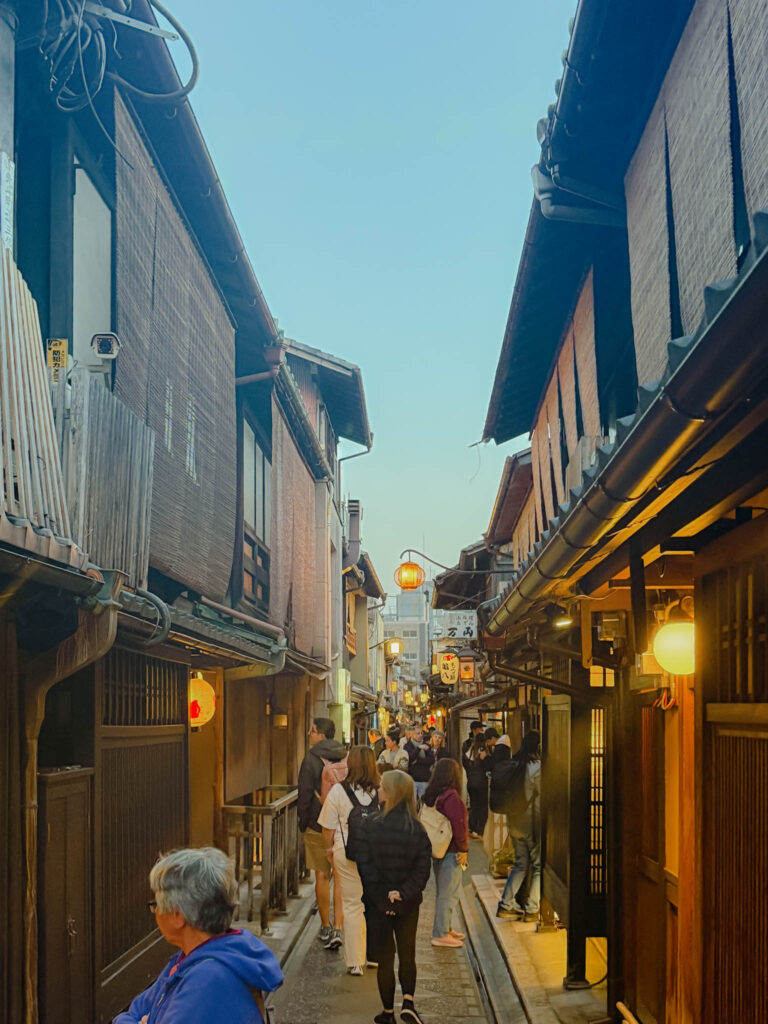
To learn more about the culture and traditions of Gion and remove the stigma around the Geisha culture of Japan, we recommend doing this walking tour that introduces you to the nightlife culture of Kyoto. Led by a local in English, you will understand historical Japanese culture in one of the most traditional parts of the country. After the tour, we recommend getting dinner in Gion, where you will be able to find food that ranges from street eats to high end Michelin star dining.
Day 3: Leaving the Traditional Kyoto
Morning: Kinkajuji Temple, the Golden Pavilion
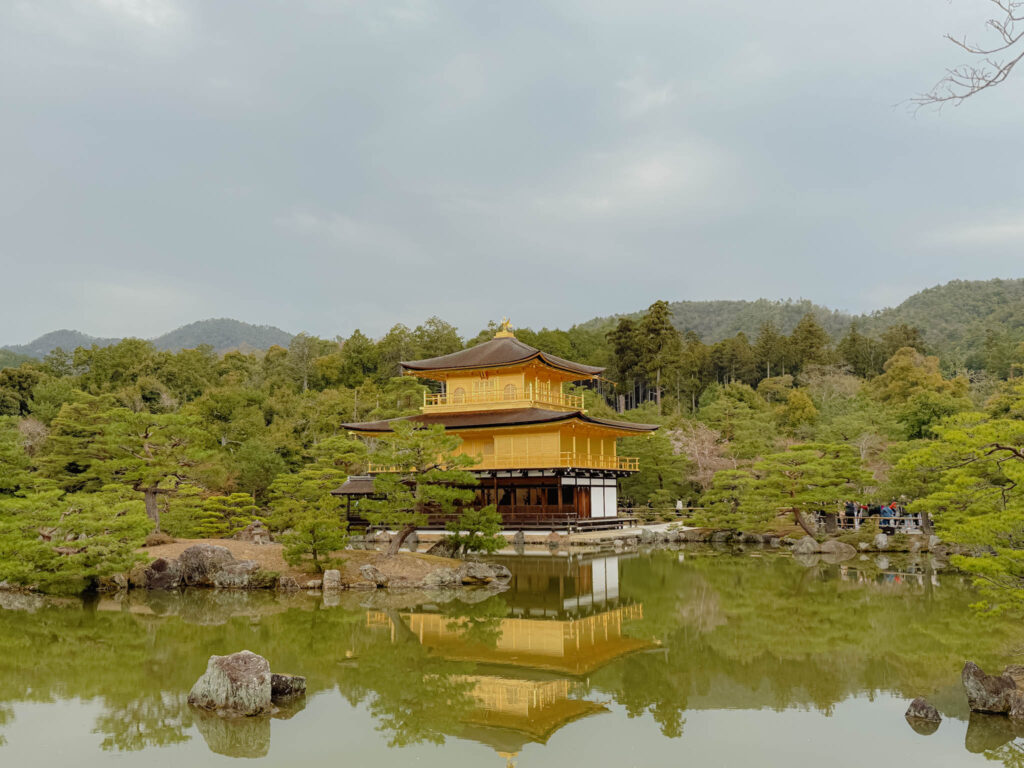
Kinkajuji Temple is a Zen temple in the northern part of Kyoto, famous for the gold leaf that covers the top two floors of the main structure. There is a unidirectional pathway that takes you around the garden, giving you views of the temple from various angles. This is a popular temple to visit in Kyoto and can be crowded.
Afternoon: The Philosopher's Walk
The Philosopher’s Path is a walk in the northern part of Kyoto’s Higashiyama
The Philosopher’s Path is a walk in the northern part of Kyoto’s Higashiyama neighborhood. It takes you along a stone path that follows a small canal. This walk is especially popular during the cherry blossom season because it is lined by cherry blossom trees. At the start and end of the path, you will find a few temples (highlighted below) and you can stop at a number of different cafes, restaurants, and boutiques along the walk.
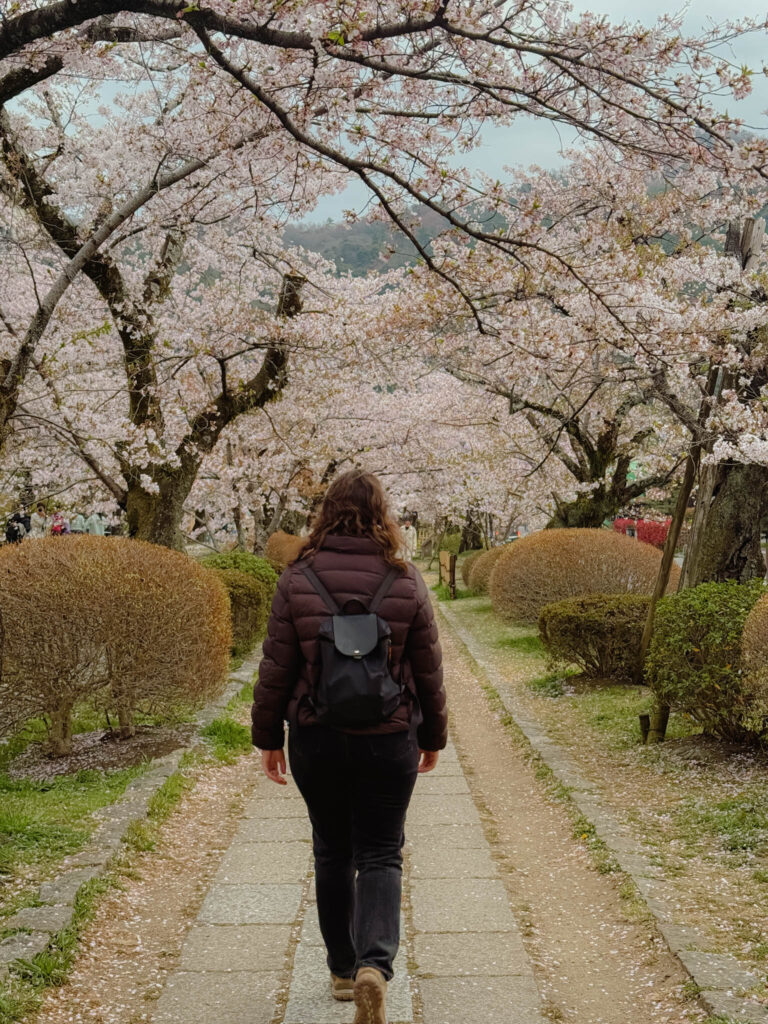
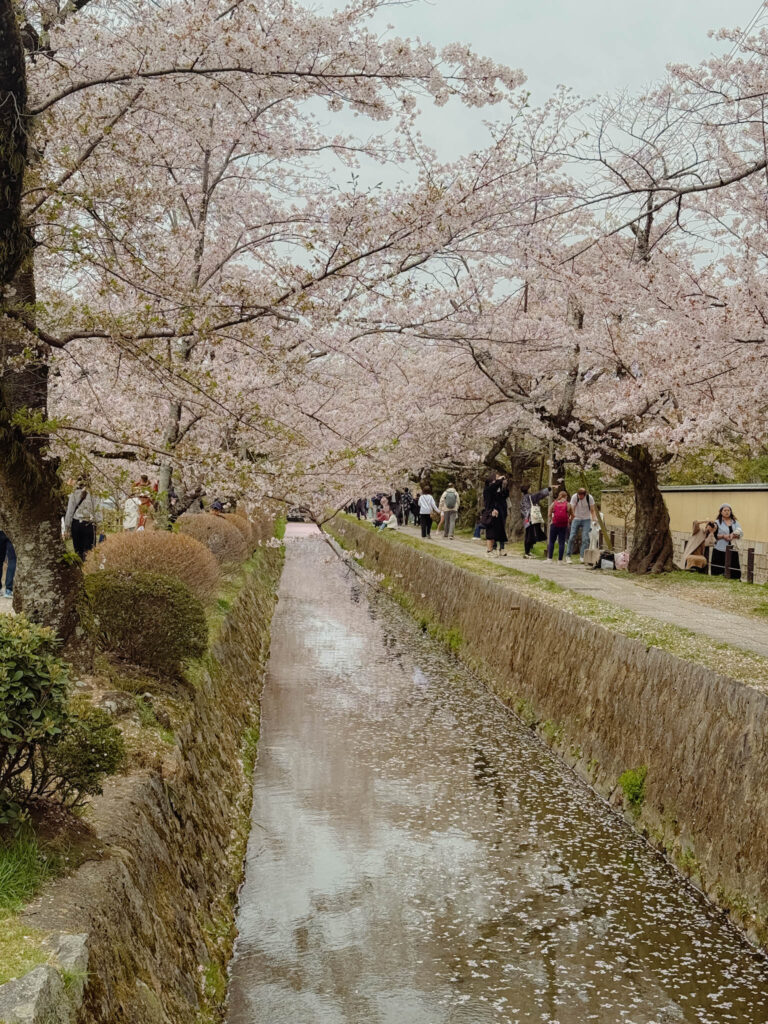
Ginkaku-ji Temple
At the northern part of the Philosopher’s Path, you will find the Ginkaku-Ji Temple. This is a counterpart to the Kinkajuji Temple with the Golden Pavilion because it’s pavilion is called the Silver Pavilion to highlight their contrasts. It is also known for its various gardens that can be enjoyed from the various paths that are within the temple’s grounds.
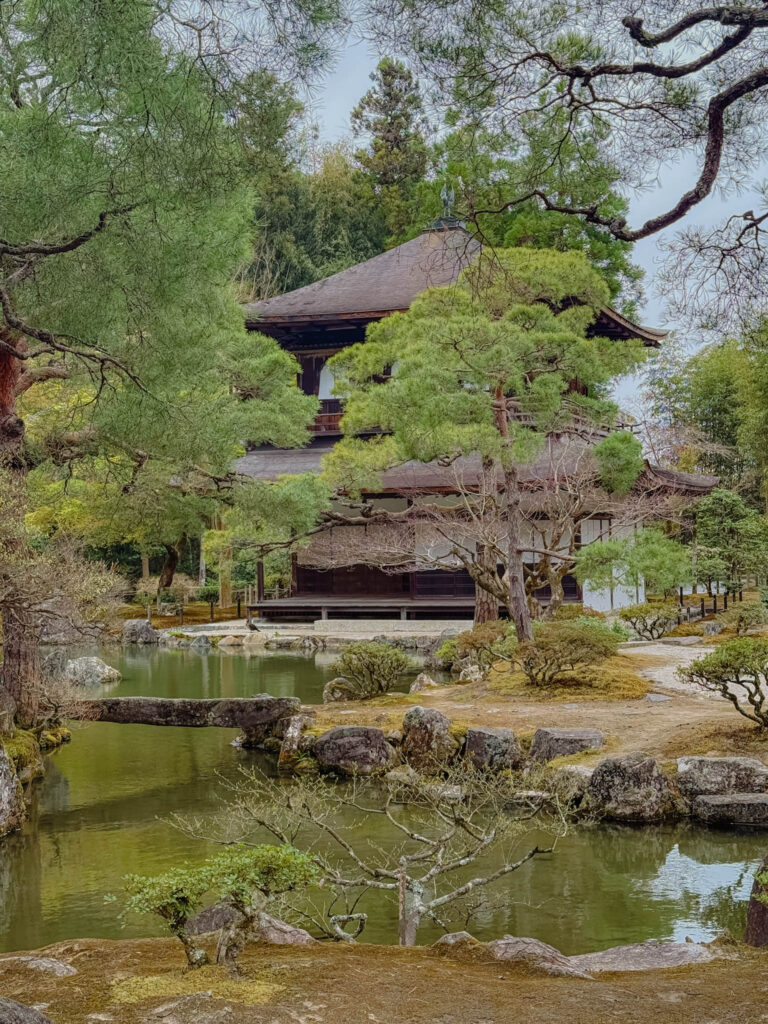
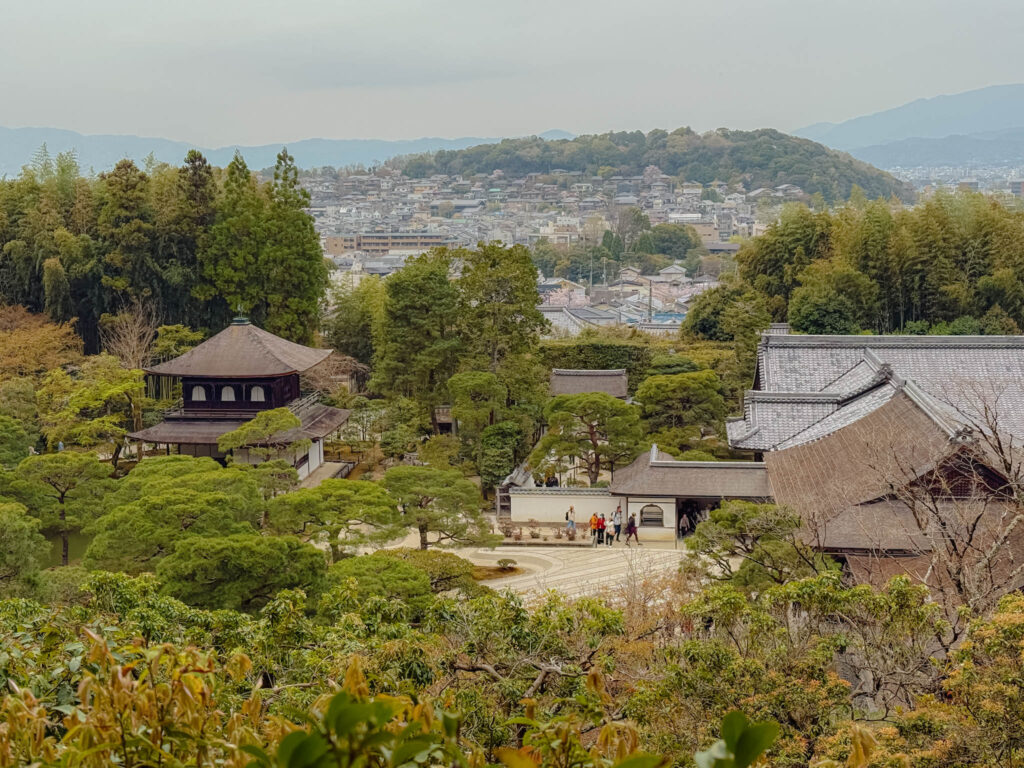
Eikan-dō Temple
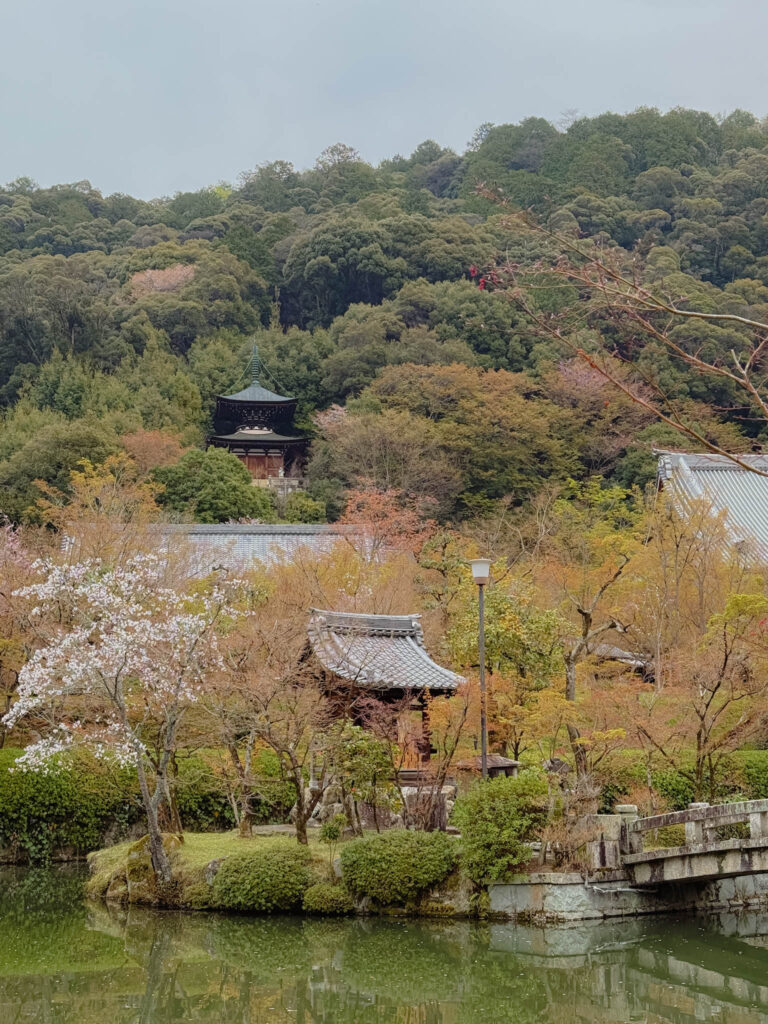
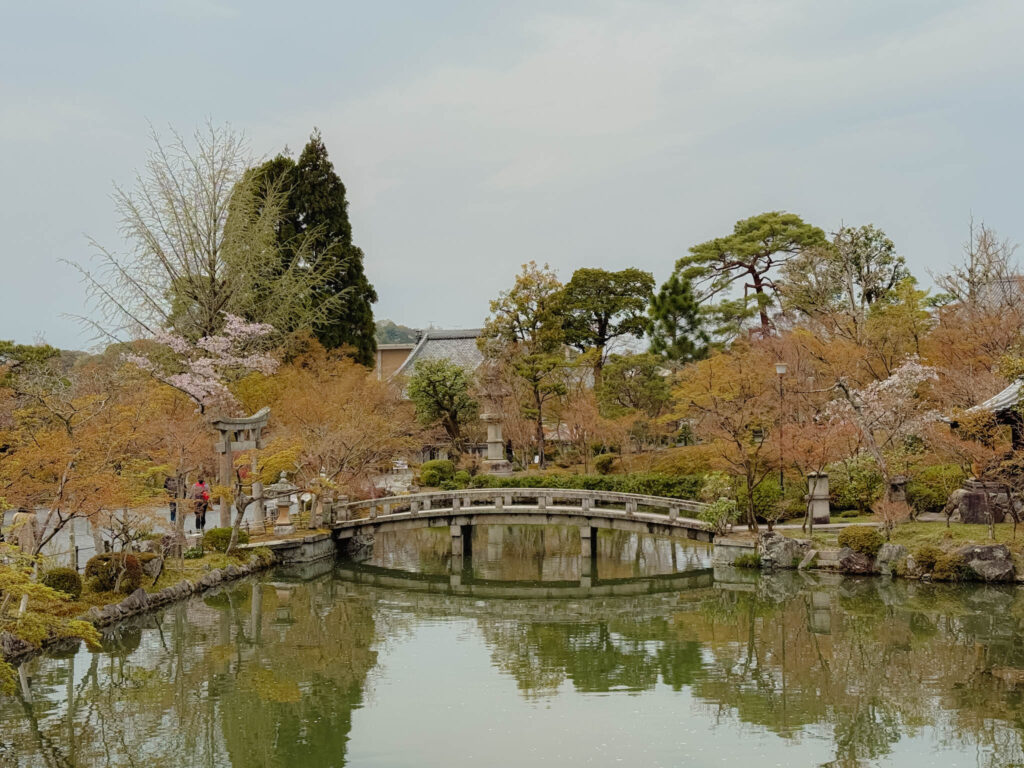
This Buddhist temple is located on the southern end of the Philosopher’s Path. It is especially popular in the fall due to the changing colors of the leaves in the trees all around the temple grounds. Walk along the various wooden paths throughout the complex and up to the pagoda built into the hillside to get beautiful views of the structures, gardens, and surrounding neighborhood.
Nanzen-ji Temple
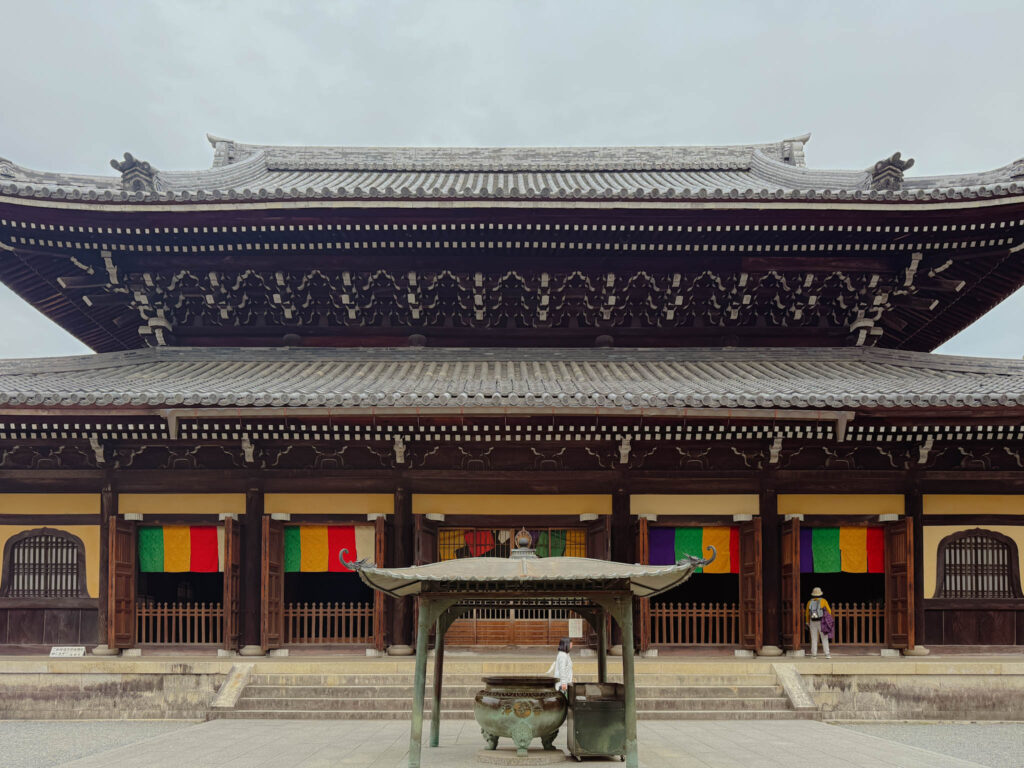
This temple is located south of the Philosopher’s path and is one of the most important Zen Buddhism temples in Japan because it is the head temple of one of the Buddhist sects. You can walk around the temple grounds and gardens for free but you will have to pay to enter in some of the different buildings. Another unique thing that you will find within the temple complex is a brick acquaduct that was constructed in the late 1800s.
A Day Trip from Kyoto
Kyoto is very close to Osaka, making it worthwhile to visit this modern city for a few days before or after visiting Kyoto. However, the following places are great destinations as day trips from Kyoto.
Nara
Distance from Kyoto:
1 Hour
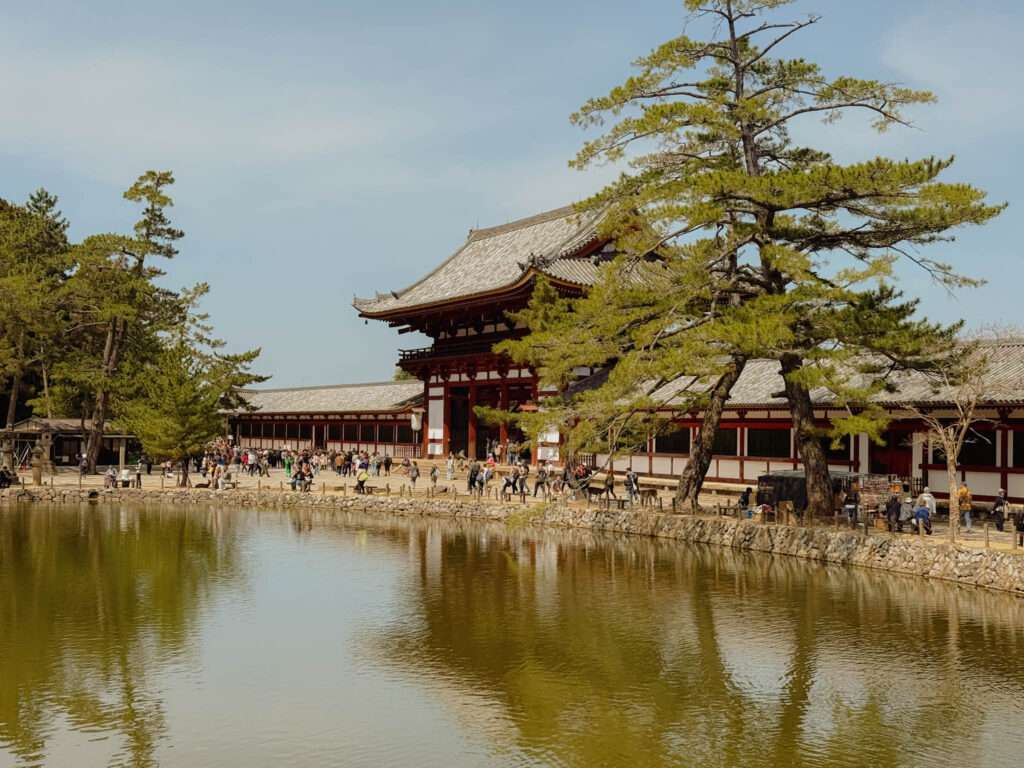
Nara is a small town an hour outside of Kyoto and Osaka. Historically, it was the first permanent capital city for the empire of Japan and a religious center for the country. Today, a Nara day trip will allow you to visit various temples, explore the beautiful parks and landscapes, and meet the famous bowing deer. Consider staying in Nara when traveling between Kyoto, Osaka, or Kobe.
Kobe
Distance from Kyoto:
1.5 Hours
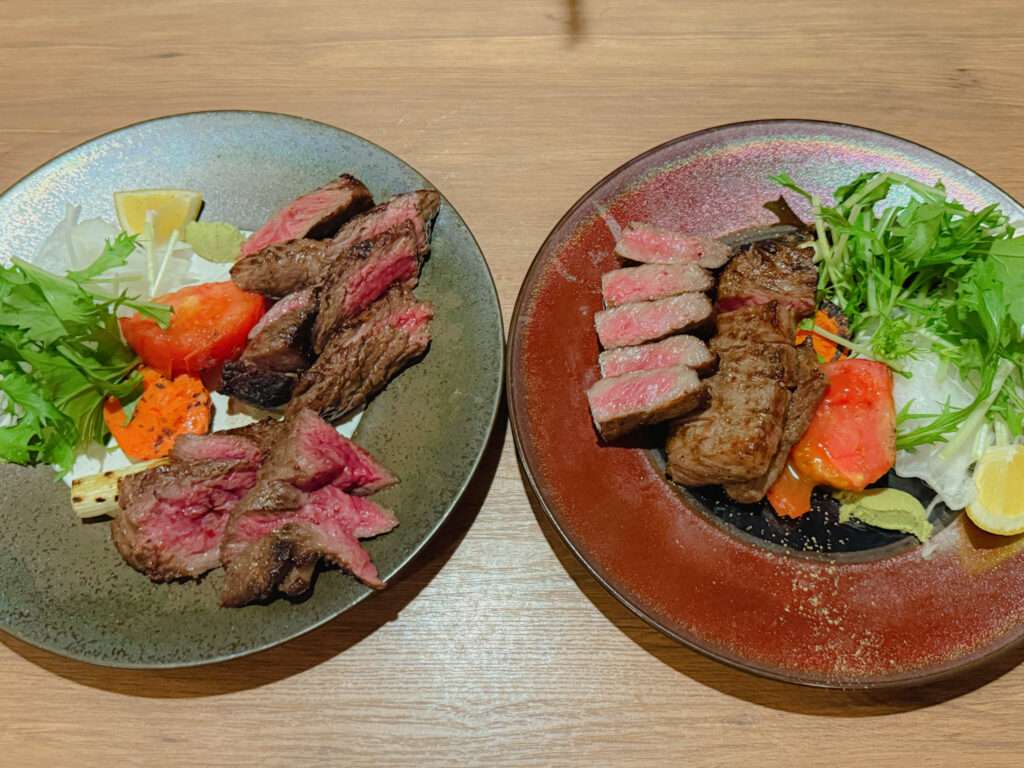
Kobe was the first city to open up to trade in the 1850s and there is evidence of international influence is some of the historical districts around the town. The town also has many sake distilleries and celebrates its tie to the designation of Kobe beef with many restaurants specializing in serving different cuts of beef. Consider staying in Kobe when traveling between Kyoto or Osaka and Hiroshima.
Before or After this Kyoto Itinerary... Where Should You Go?
Distance from Kyoto:
3 Hours
Distance from Kyoto:
1 Hour
Distance from Kyoto:
1.5 Hours
Distance from Kyoto:
.5 Hours
Distance from Kyoto:
1.75 Hours