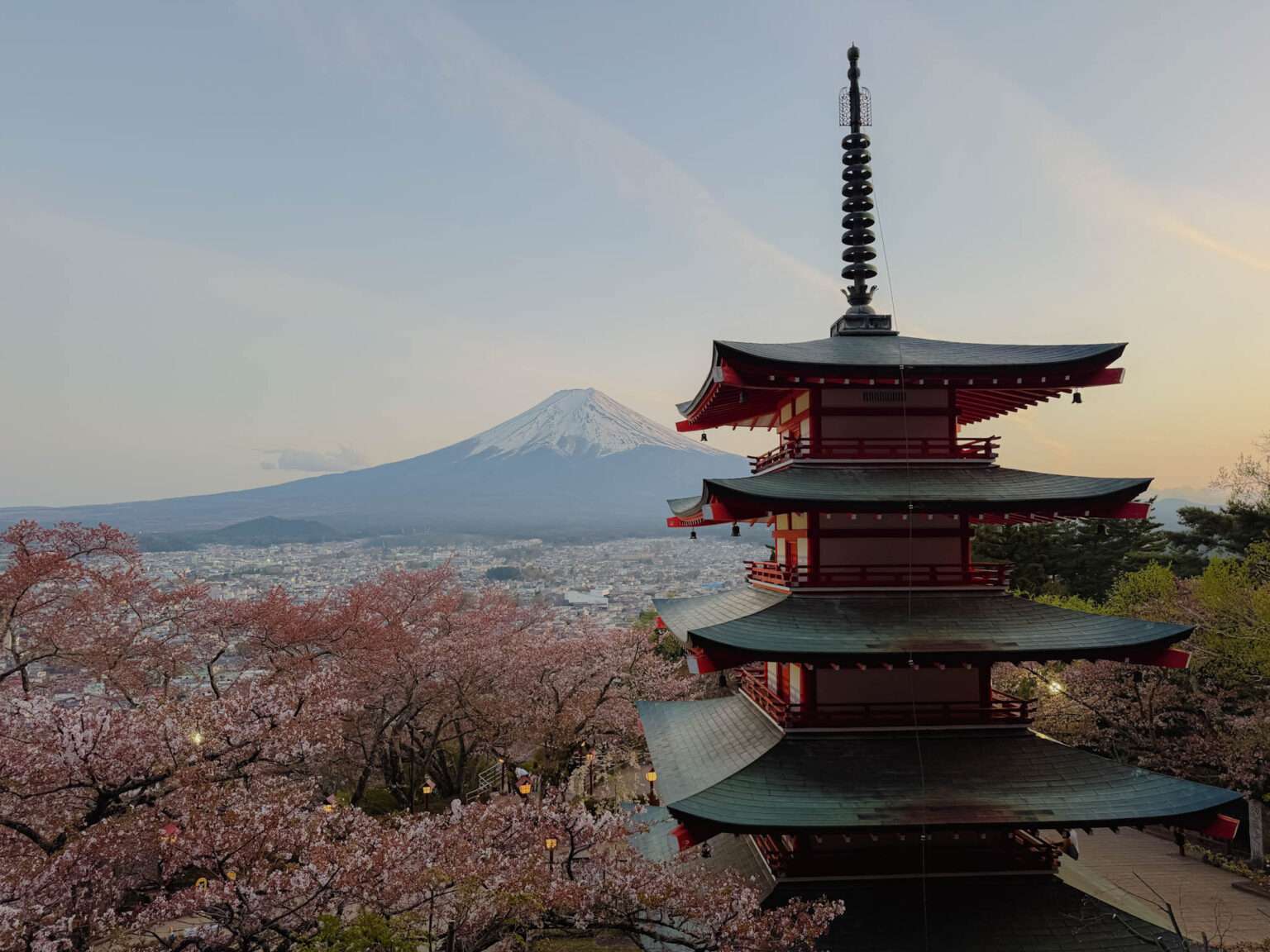
Mount Fuji is Japan’s most iconic volcano. Located near Tokyo, this volcano is the tallest peak in all of Japan and is considered to be a sacred mountain. It continues to be popular to climb to the peak of the volcano as a physical feat or a spiritual pilgrimage. However, the best way to experience this icon is arguably through a day trip to Mount Fuji to get amazing views of the mountain from the town of Fujikawaguchiko. Read below on how you can visit the site over a day trip from Tokyo or as a longer (and highly recommended) overnight experience.
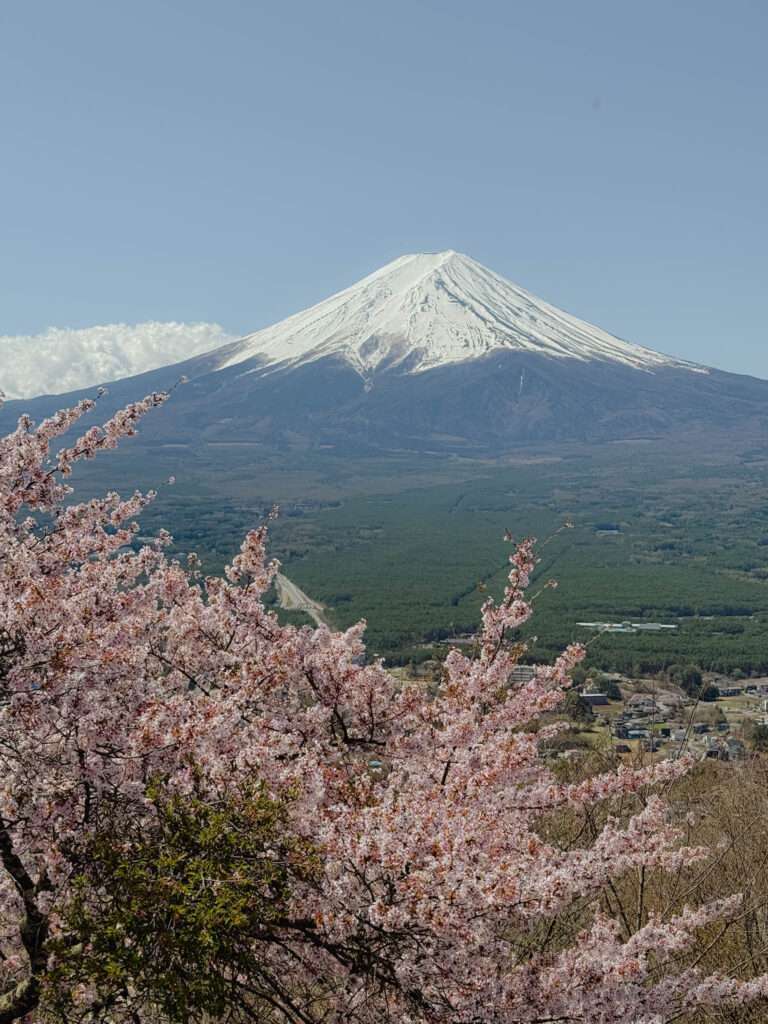
How to Get to Fujikawaguchiko for a Day Trip to Mount Fuji from Tokyo
To get to and from Fujikawaguchiko, you can take a direct bus from Tokyo. This can be purchased in advance or on the day of from the ticket kiosks at the bus station. When doing a day trip to the Mount Fuji area, it is best to take the first bus there and last bus back to Tokyo so you can maximize your time here.
There are a few different towns in the Fujikawaguchiko area and staying right on the lake is not always possible. There is a train system within the region that will allow you to get around easily. Trains here are not as prolific as in larger cities, such as Tokyo or Kyoto, so make sure you keep track of your time and use a map application on your phone to help you get around.
Where to Leave Your Suitcase
If you are doing more than a day trip to Mount Fuji, you may have bags as you get into Fujikawaguchiko. At the train station in Fujikawaguchiko (which is also where the bus drops you off), there are many lockers that you can rent to leave your belongings. They range in size, making it easy to accommodate all your belongings.
How to Structure Your Day Around Fujikawaguchiko
Renting E-Bikes
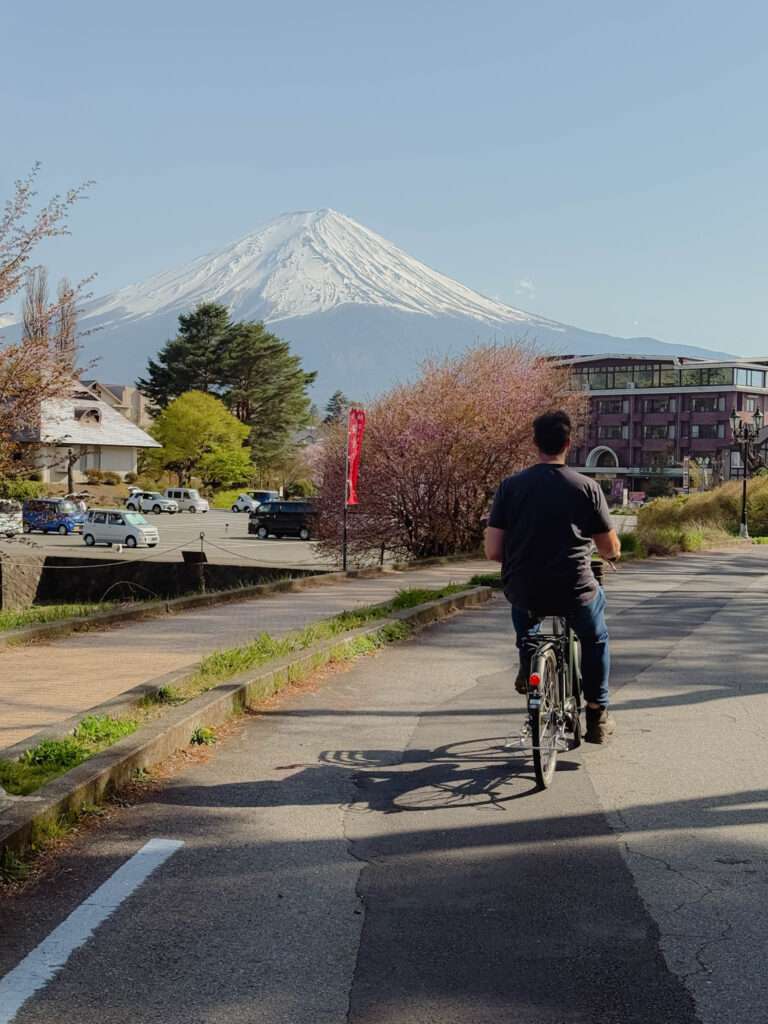
The first thing to do when you arrive in Fujikawaguchiko is to rent an e-bike. This will be the best method to discover the region for the day. There are a few different bike rental shops near the bus/train station so hop in line and rent your bike. You may need to present your passport at the shop and most shops only take cash.
While the path that you will ride throughout the day will be relatively flat, having an e-bike rather than a regular bike will just make the experience more enjoyable. (And you don’t need to struggle while on vacation!) The route of the day will take you all around Lake Kawaguchi with different stops that allow you to take in the amazing view of the volcano. The route is especially beautiful during sakura season (cherry blossom season) and the fall with the changing of leaves.
Below is a map of the various highlight points around the Kawaguchiko Lake and the Fujikawaguchiko region. You can use this as a guide for your route around the lake and your day trip to Mount Fuji.
The Mt. Fuji Panoramic Ropeway
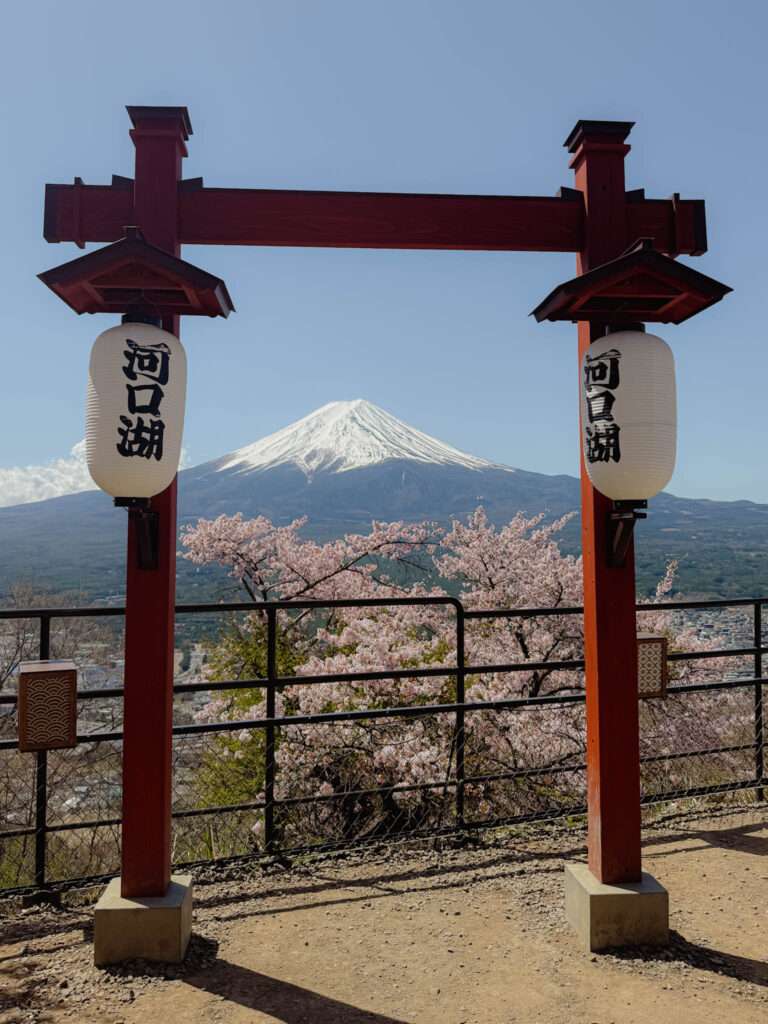
The Mount Fuji Panoramic Ropeway is located within the Kawaguchiko Tenjoyama Park and should be your first stop for the day. The ropeway is one of the major stops in the region so getting there early is vital to make sure you do not have to stand in too long of a line to reach the top and will not have too many crowds when at the top of the viewpoint.
Other Stops Around Lake Kawaguchiko
Some of the other stops around Lake Kawaguchiko with beautiful views of the trees, lake, and Mount Fuji include the Ubuyagasaki Shrine, Kogamasao Memorial Park, and Nagasaki Park, all of which are great places to walk around, sit for a picnic, and take in the beautiful views.
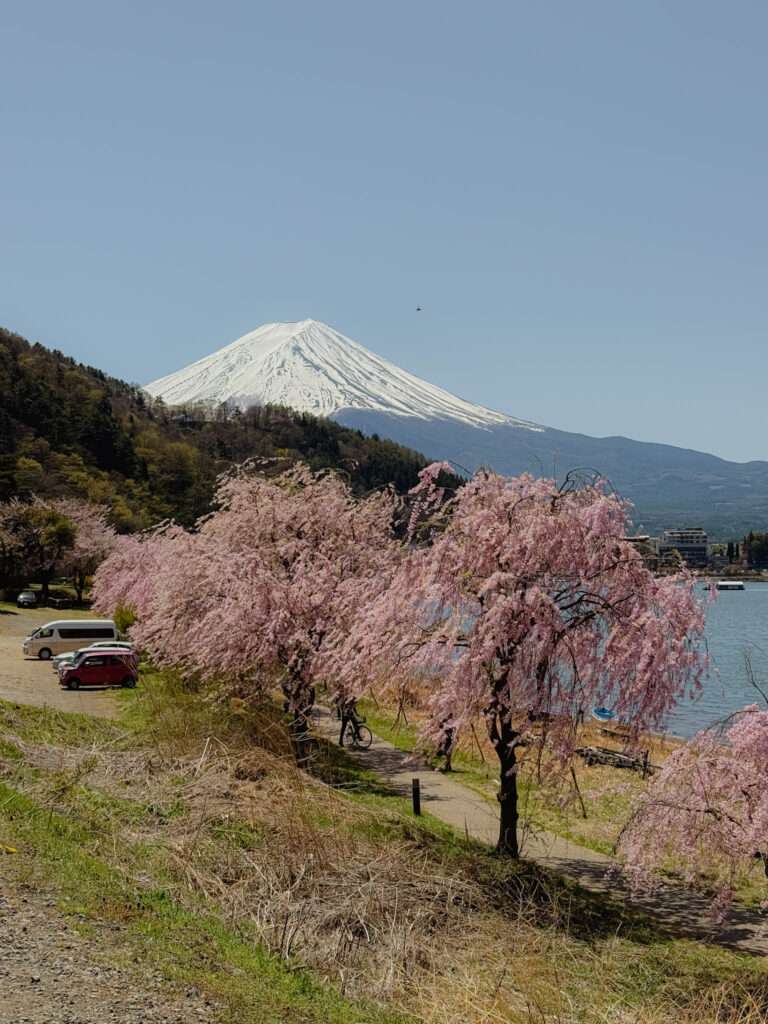
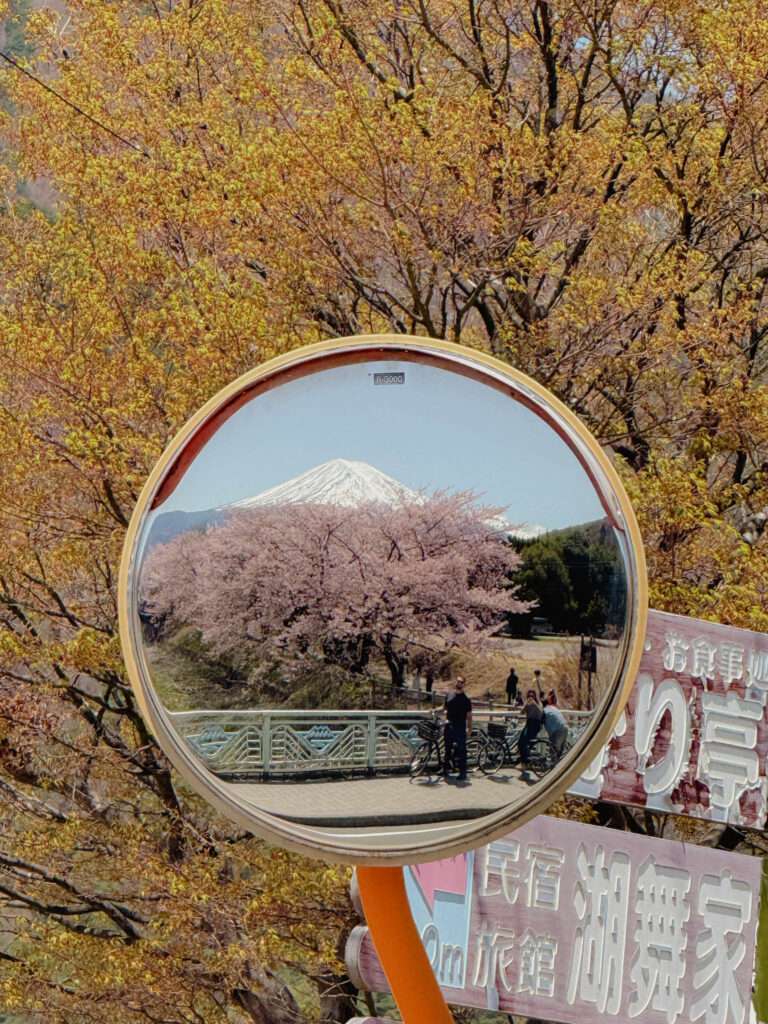
Oishi Park
Oishi Park is one of the main parks around Lake Kawaguchiko. It is a location that has organized gardens full of flowers that change seasonally. This park is also a family-friendly spot with walking paths and playgrounds for kids. The views from here are beautiful with the planted flowers and Mount Fuji.
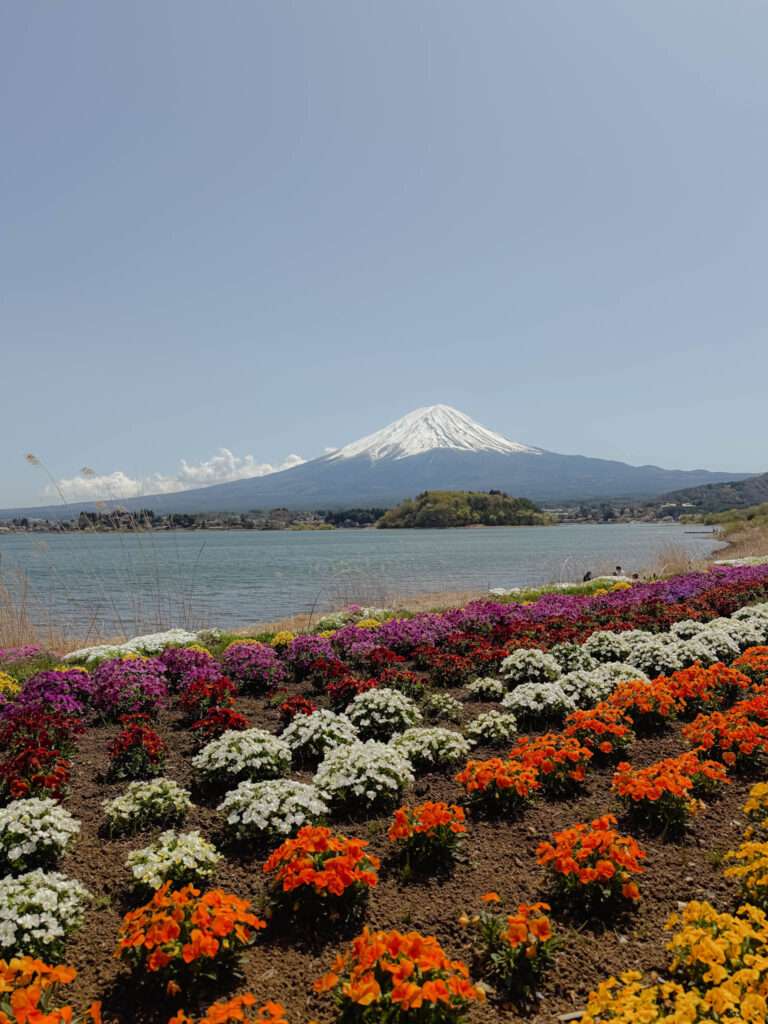
After this stop, continue biking around the lake, taking in all the views. Make your way back to the e-bike shop to return your bike.
the Chureito Pagoda and Arakurayama Sengen Park Observatory
To end your day, you will make your way to the Chureito Pagoda and the Arakurayama Sengen Park Observatory to have beautiful and iconic views of Mount Fuji with a pagoda in the foreground. This observatory point is especially nice around golden hour and sunset.
To get to the pagoda and observatory, you will take the train from Kawaguchiko Station (where your bus dropped you off in the morning) to Shimoyoshida Station. Here, you can walk through the neighborhood and up the hill of the temple to reach the observatory.
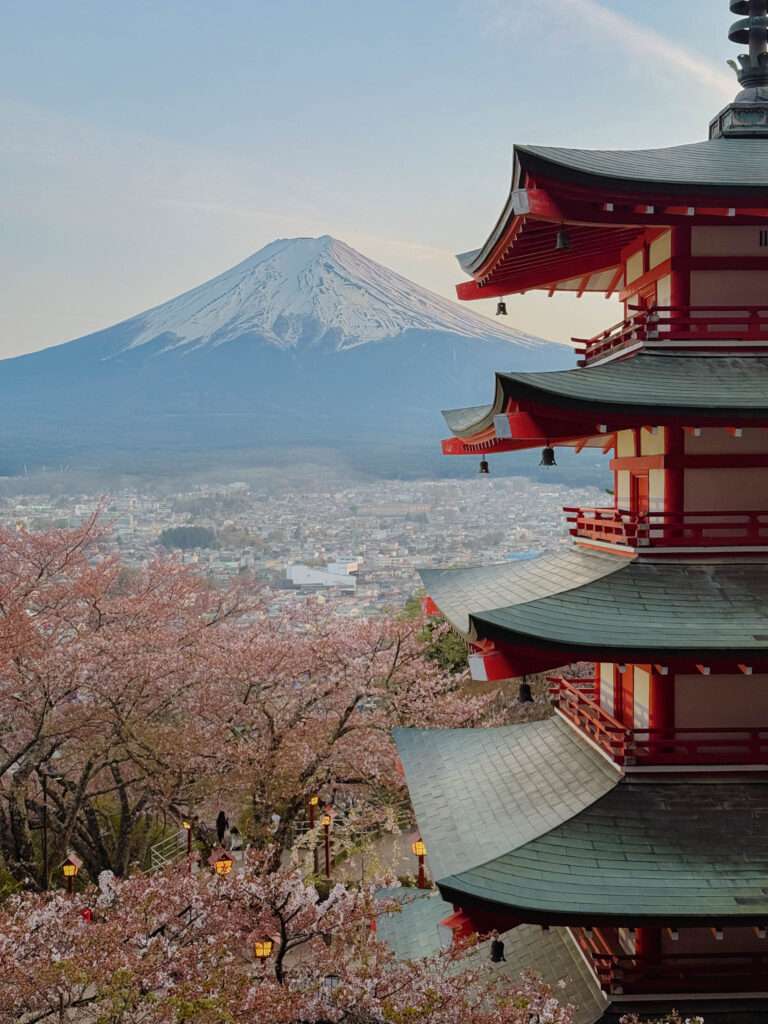
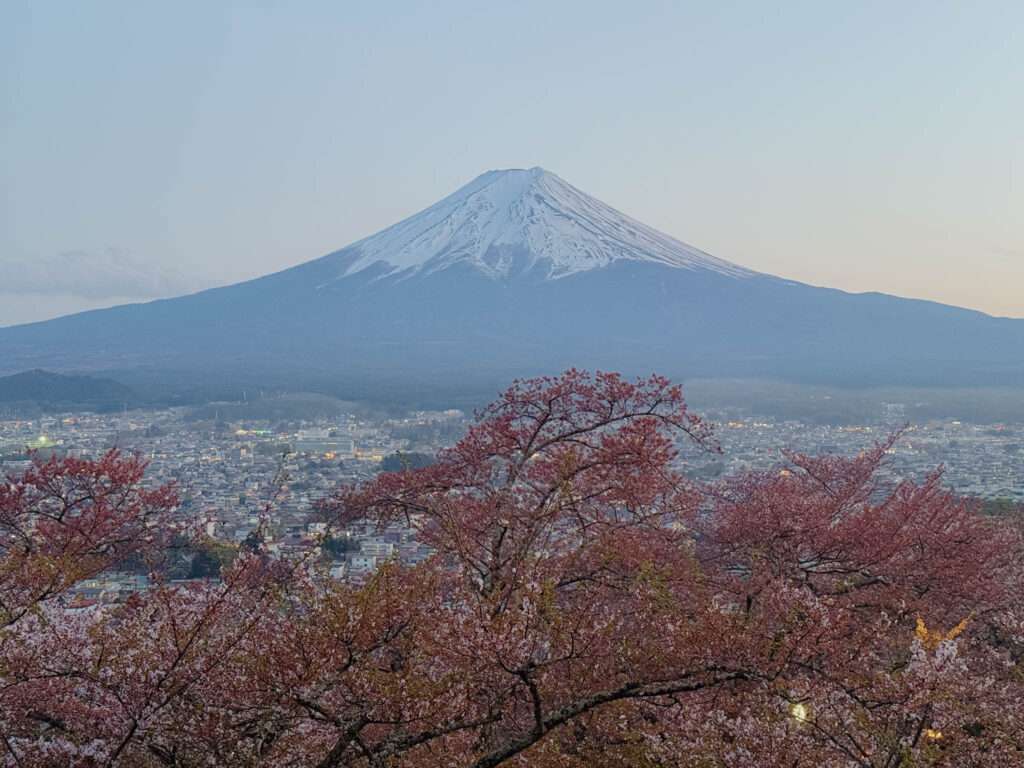
Make sure you keep track of time to return to Kawaguchiko station and catch your bus back to Tokyo. The trains between the two stations are not very frequent and you do not want to miss your transportation back to the city!
What to Do on Your Other Days in the Fujikawaguchiko Area
The Famous Lawson
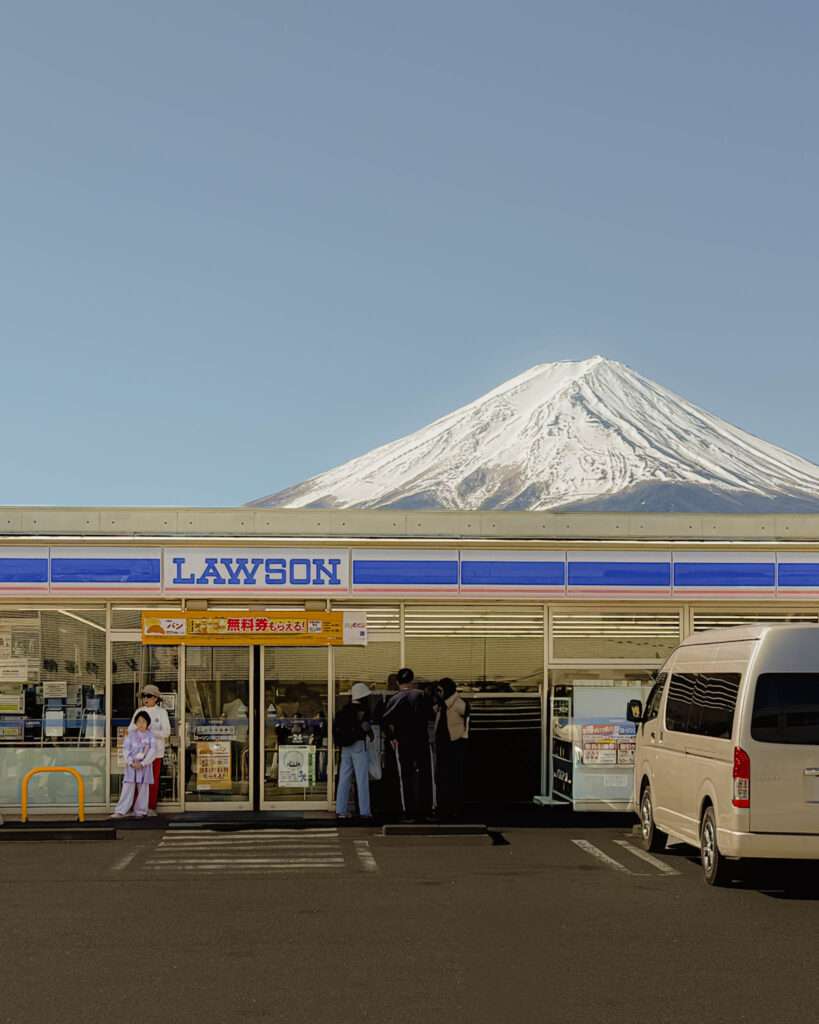
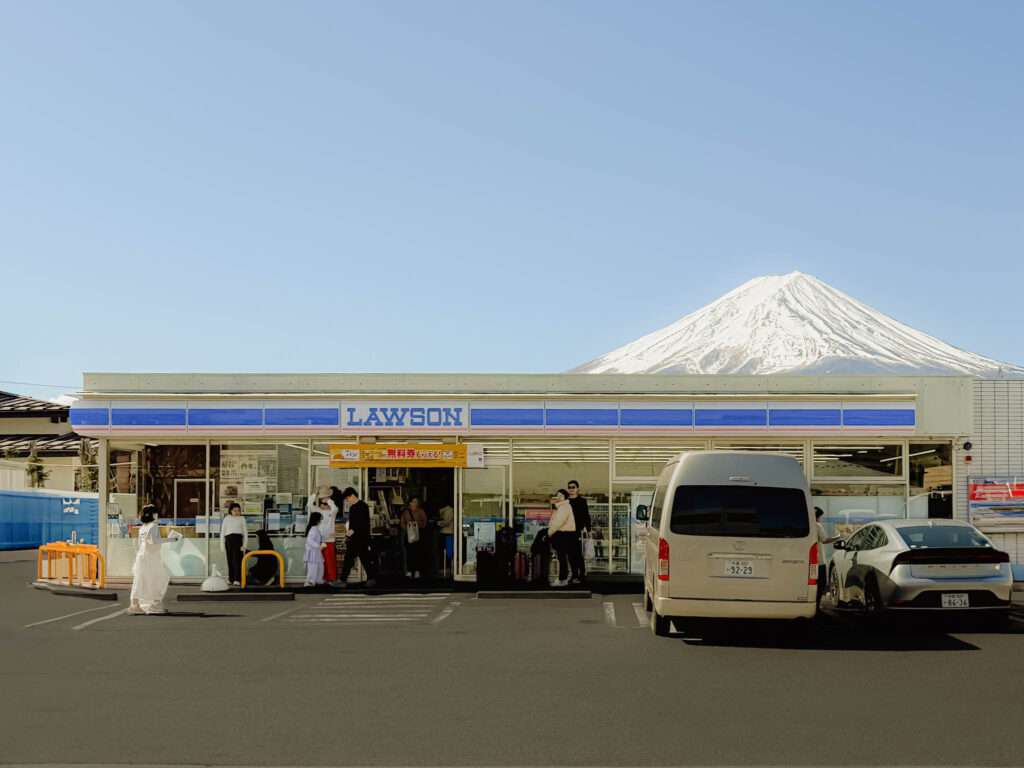
The famous Lawson store that is photographed with Mount Fuji in the background is located right next to the Kawaguchiko bus and train station. The only reason that we do not include it in the day trip above is because there are often lines of people taking photos in front of the store, many of whom spend many minutes trying to capture the best shot of themselves. We recommend stopping by to snap a photo for the memories but there are so many other views all around the lake where you do not have to wait for the shot.
Things to Do in the Five Lakes Region
Lake Kawaguchiko is only one of the lakes around Mount Fuji. There are actually five of them and you could spend more time exploring the region and discovering other local spots. Lake Kawaguchiko is the most developed of the lakes for tourism and the reason that it is most recommended for a day trip to Mount Fuji. Some things to look into in the region include the Fuji Shibazakura Festival. This celebration typically happens in May and is the time when the shibazakura plant (a bright pink moss) blooms around Lake Motosuko and you can get amazing views of Mount Fuji with fields of this striking flower. (Depending on the amount of tourism expected in the region, this festival may be canceled due to over-tourism. Check in advance before planning to attend.)
You can also consider discovering Saiko Iyashi-no-Sato Nenba, an open air museum on Lake Saiko of a former farming village. Today, there are twenty thatched-roof structures where people can learn about the local Japanese culture and purchase different souvenirs made by local handicrafts.
Before or After this Day Trip to Mount Fuji... Where Should You Go?
Distance from Fujikawaguchiko:
1.5 Hours
Alternative trip from Tokyo: A day trip to Nikko
Distance from Tokyo:
1.5 Hours
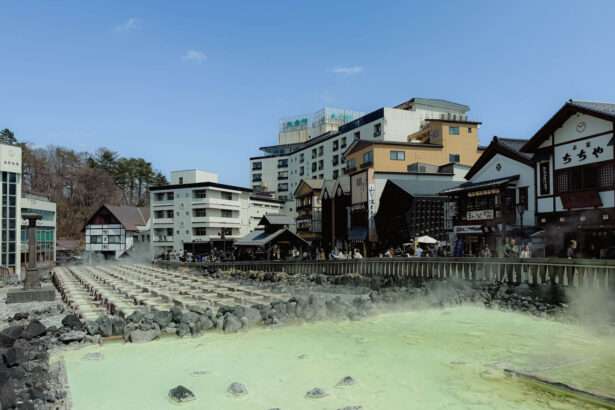
Alternative trip from Tokyo: A weekend trip to the onsen town of Kusatsu
Distance from Tokyo:
2.5 Hours