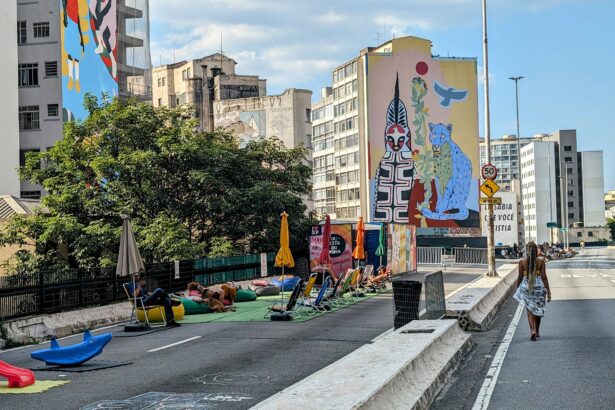



The Rio de Janeiro culture is electric and can be felt the moment you enter the city. It’s a combination of color, music, heat, joy, grittiness, and movement, most famously displayed during the Carnival season. However, you can truly feel the energy any time you come to visit. The city goes beyond fun and exuberance and is also a city of historical importance to Brazil. The following is a description of the things to do in Rio de Janeiro to help plan your trip regardless of when you visit the city.
At the end of this post, you will find a recommended 3 day itinerary for Rio de Janeiro that highlights the beaches, nightlife, and culture that you will find in the city.
A Walking Tour of Rio de Janeiro
When visiting a major city that is so full of character and history, we always recommend starting your stay with a walking tour of the city. Local residents (in Rio de Janeiro, they are called Cariocas) lead the tours and have information about the history and culture that has made the place what it is today. Did you know that Rio de Janeiro was once home to the emperor of the Portuguese empire? And later it was the home of the Brazil Empire, the only empire that was led from South America after colonization.
Rio de Janeiro is rich in history because of its significance as a port city, empire capital, and country capital. Today, even though it is no longer the political capital of Brazil, it is the primary tourism and culture center of Brazil.
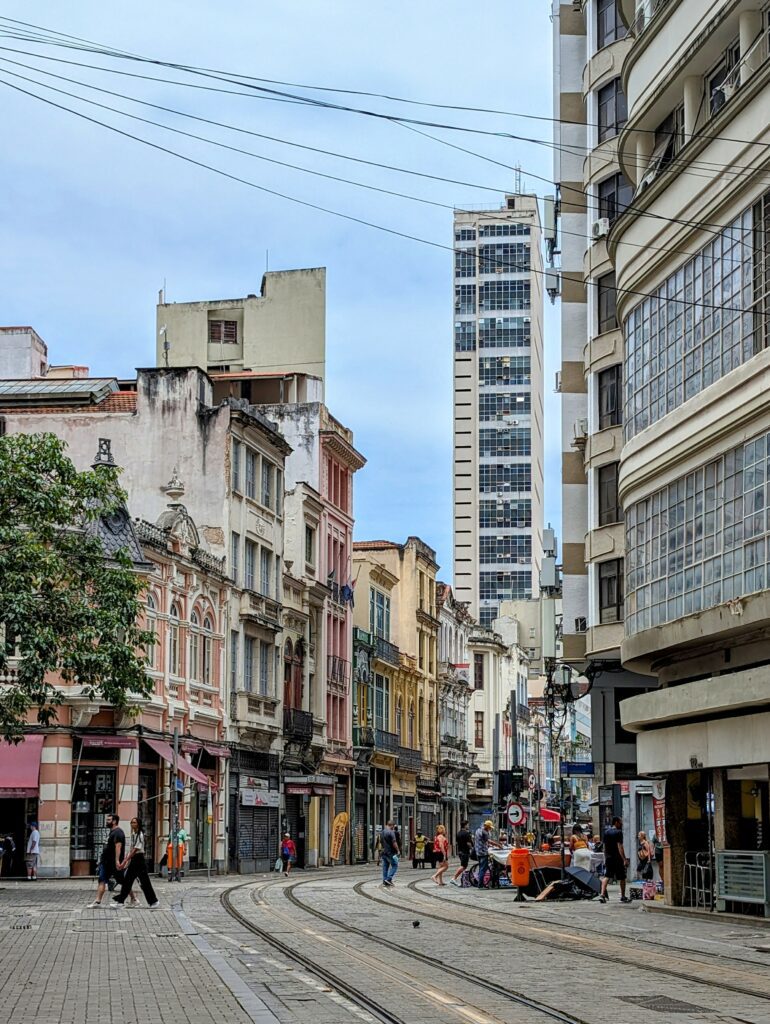
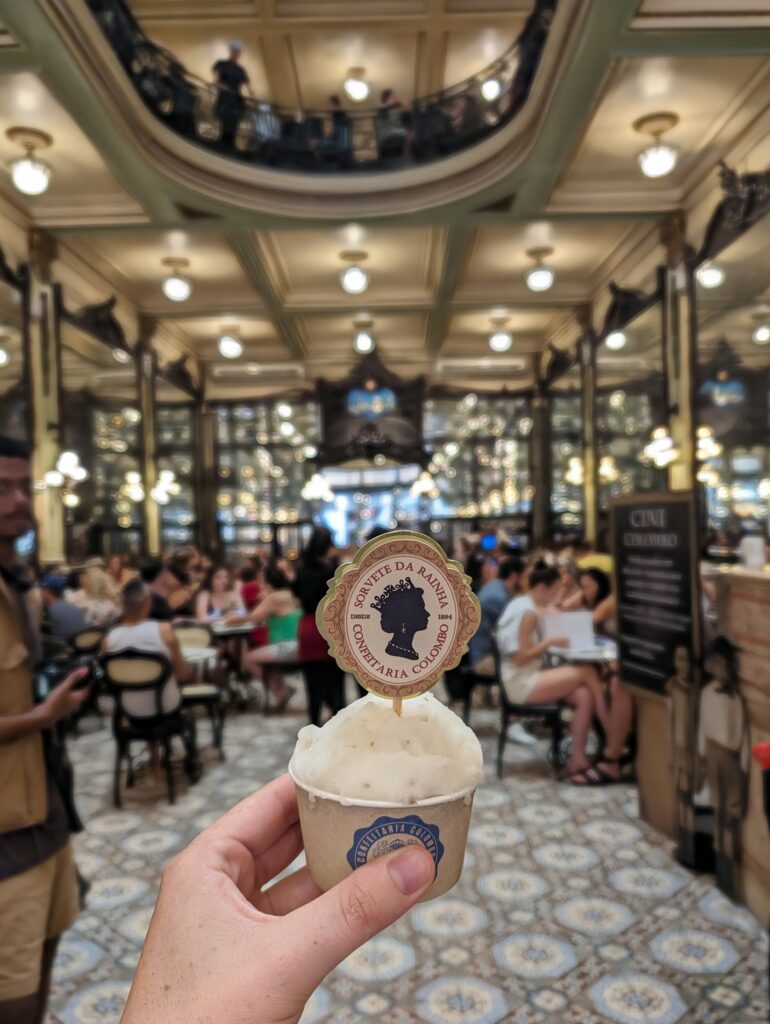
This walking tour through the city center displays the different eras of Rio de Janeiro and provides interesting historical context to this amazing city. In addition, your guide may introduce you to the popular and typical Brazilian food, letting you try some dishes in the famous Confeitaria Colombo. The tour ends at the Escadaria Selarón, a modern piece of public art.
The company has other tours within the city, including some pub tours and tours that focus on the African heritage of Brazil.
The Escadaria Selaron
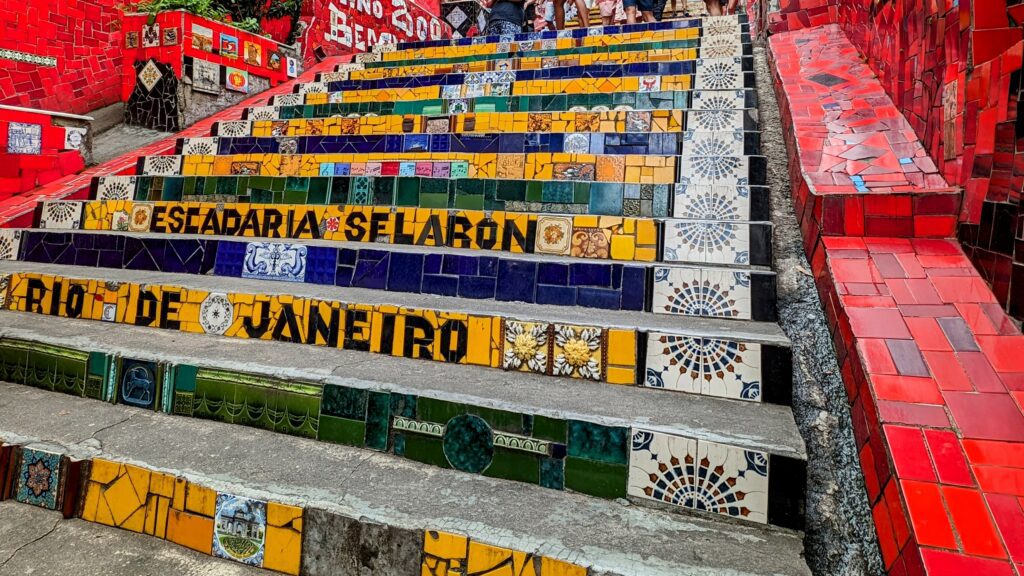
Chilean-born artist Jorge Selarón updated the stairs in front of his home with tiles. As the stairs grew in popularity, more and more people started sending him tiles from all around the world to add to the stairs. Today, it has become a popular place for people to take photos. You can make your way up the staircase to try and find spots with fewer people. There are also local entrepreneurs who are eager to move crowds and take your photo along the staircase for a small tip. It is not recommended to go to the very top and beyond the stairs.
The Santa Teresa Neighborhood
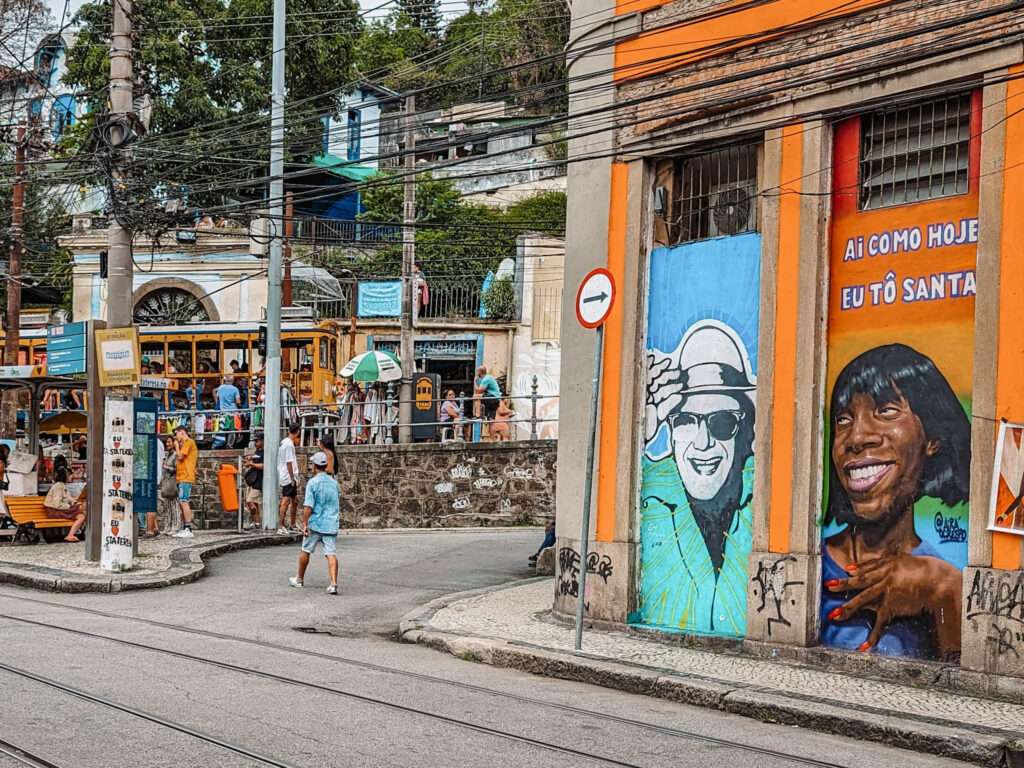
The Santa Teresa neighborhood is located on the top of a hill with narrow winding streets. It is famous for its street art and yellow tram that rides through the neighborhood. This is a great place to eat lunch and try the classic feijoada (beef stew). We were recommended to take a taxi to and from this neighborhood to explore it safely.
Samba Music
A big part of Rio de Janeiro culture is samba music. Rio de Janeiro is the capital of samba music, a musical genre that originates from Afro-Brazilian communities. There will be plenty of opportunities to listen and dance along to this type of music around the city during your visit.
Pedra do Sal in Gamboa
One of the top things to do in Rio de Janeiro is to experience a street samba party on Monday or Friday at Pedra do Sal in Gamboa. This neighborhood was created by a group of escaped slaves, and it is only fitting that this is the location for a samba party, given that the dance and music originates from the African culture that these slaves brought to Brazil. The samba starts at 8 PM and anyone can join. And to add to the ambiance, you can purchase some drinks and local food to enjoy while dancing the night away.
Music Around the Streets of Copacabana
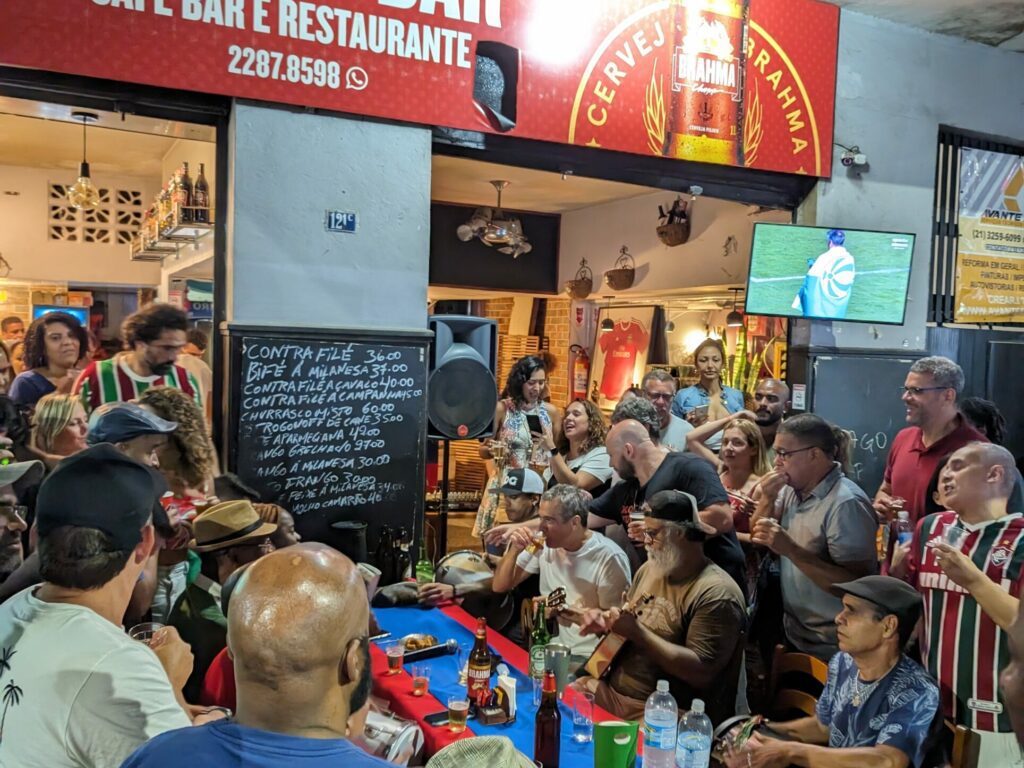
Casual settings throughout Rio de Janeiro also display samba music. Musicians are seated and play instruments and sing around a roda de samba (samba circle), often at a bar. The audience stands around these musicians, singing along, dancing, clapping, swaying, etc. Because these bars are often narrow, the party typically spills into the streets attracting people all around to join the energy.
Bip Bip, a bar in Copacabana is an amazing institution and a great introduction to Samba music. Here, there are a few fridges in the back of the bar where people can serve themselves drinks while someone keeps track of each person’s tab by hand in the front of the bar. You’ll find that many people are just there to listen to the music. You can observe local regulars, greeting each other, dancing together, and singing along to the songs. The music starts between 8-9 pm and continues on well into the night.
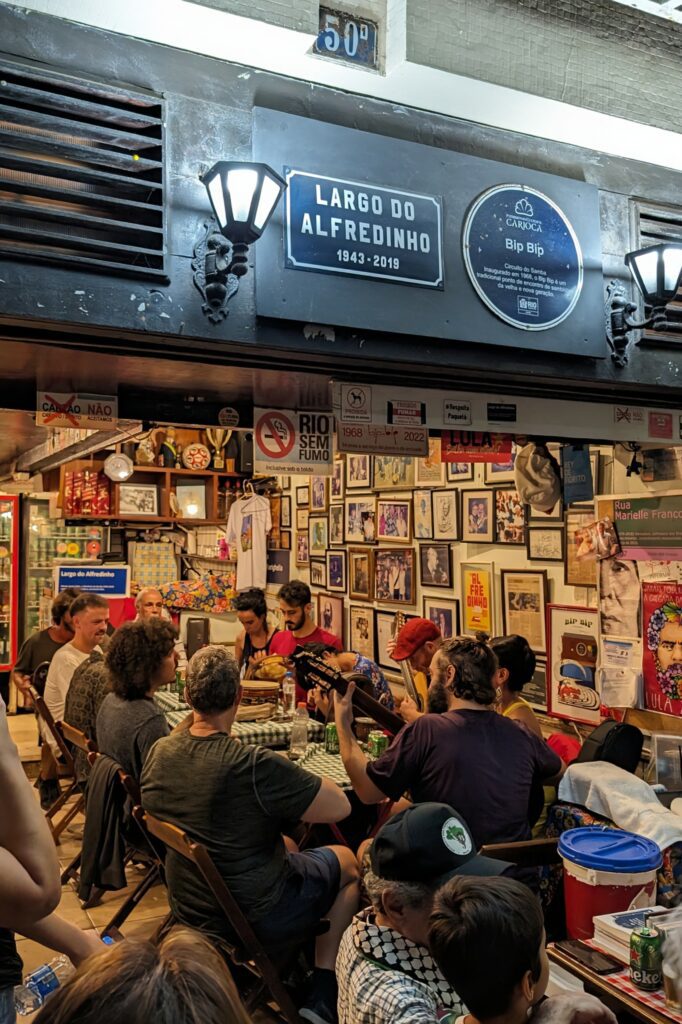
However, experiencing samba is not something that you have to outwardly seek when in Rio de Janeiro. While walking around the Copacabana neighborhood, you may hear live music coming down various streets. Feel free to check out where the music is coming from and join in the festivities. You will soon find yourself dancing in the street at the various samba bars. These types of experiences make it clear how magnetic and inviting these samba parties are.
Sunday's Hippie Market in Ipanema
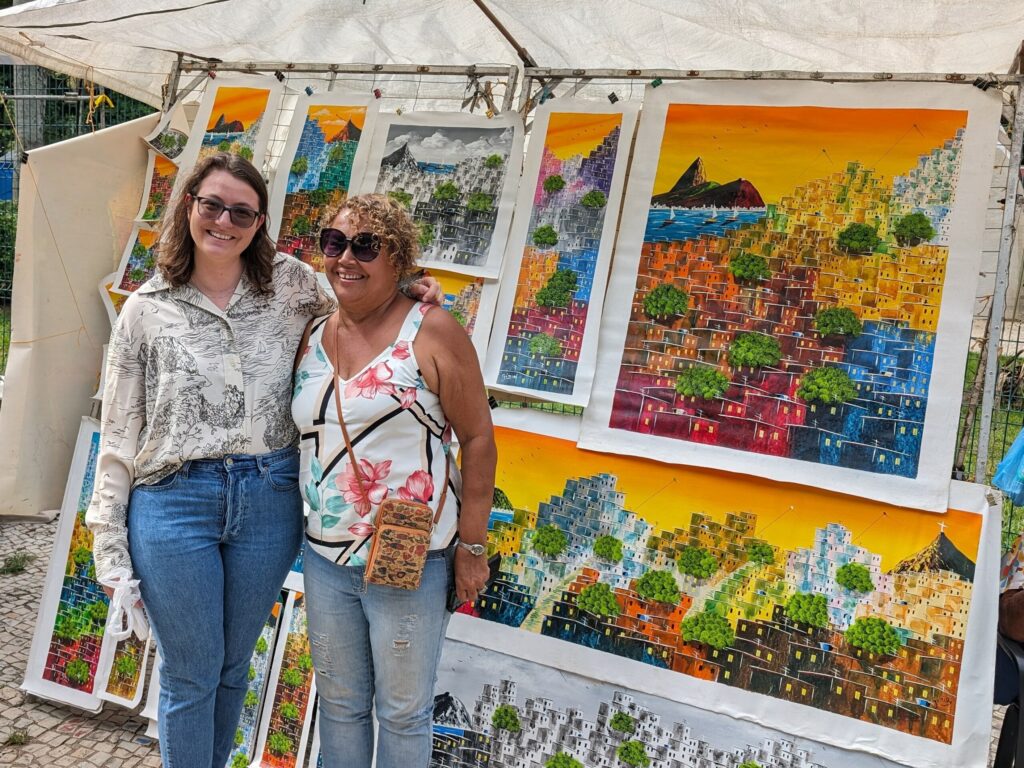
Every Sunday at Praça General Osório in Ipanema, there is an artisan market. This market lasts all day and is full of artisans, artists, furniture manufacturers, small souvenirs, and food vendors. Wander through the market looking at the art and appreciate the artistry that is apparent in this market. Many artists celebrate the various scenes of Rio de Janeiro so it is a great place to find a souvenir or take advantage of this open-air art museum.
Christ the Redeemer
Christ the Redeemer is an enormous sculpture that stands on a mountain over the city. And while you can see it from various viewpoints around the city, going to the top of the mountain is one of the top things to do in Rio de Janeiro for some of the most iconic views in the world. On a nice day you will be able to see the city, Sugarloaf Mountain, the ocean, and more stretched out below you. Completed in 1931, the statue is an engineering feat that everyone can now enjoy whether they summit the mountain to see it up close or just look at it from the ground below. Chris the Redeemer can be visited by train or by van and is best to be visited when it first opens or for sunset.

Sugarloaf Mountain
Sugarloaf Mountain is another famous viewpoint and one of the best things to do in Rio de Janeiro for iconic views of the city and an unforgettable journey up the cable cars. It has beautiful views of the famous golden beaches and the city snaking between the coast and the dramatic mountains that define Rio de Janeiro. The peak of the mountain can be visited with a few cable cars (purchase tickets here) or by rock climbing with a guide. The best time to visit this mountain to avoid crowds is when it opens in the morning or for sunset, avoiding the large cruise ship groups.
Near the base of Sugarloaf Mountain is Praia Vermelha, a darker sand beach where you can rent chairs and umbrellas and enjoy the beautiful view of Sugarloaf Mountain in front of you. It is a great place to stop after a morning visit to Sugarloaf to relax and contemplate this incredible place.

The Urca Neighborhood
Near Sugarloaf Mountain is the beautiful neighborhood of Urca. This quiet neighborhood is one of the oldest in Rio de Janeiro. It has some small beaches and seafood eateries that are perfect to relax in throughout the day. It will make for a great place to walk to after spending some time on the nearby Praia Vermelha
Copacabana and Ipanema
Praia Copacabana and Praia Ipanema are two of Brazil’s most famous beaches and spending the day on them is one of the top things to do in Rio de Janeiro. There are many other beaches around the city, but these are the most popular to experience the vibrant beach culture of Rio. Both of these beaches are nearby neighborhoods of the same name (Copacabana and Ipanema) that contain numerous accommodations and restaurants. The combination of the large, beautiful beaches and great offerings make this area a popular place for tourists to stay during their visit to the city.
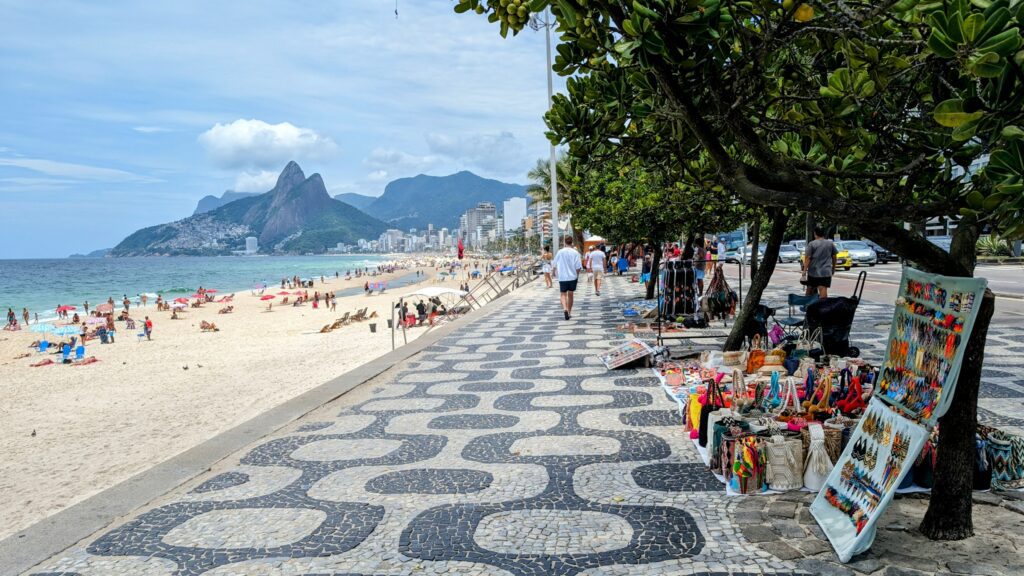
The beach areas of Ipanema and Copacabana are the best places to stay in Rio de Janeiro. Check out your various hotel options for Rio de Janeiro here.
The best way to spend time at the beach
It is completely free to sit on the beach and enjoy the waves and the views. However, due to the amount of sun in Rio de Janeiro, we recommend renting at least a parasol. These vendors line the beach, each with their own tent numbers. Many of the vendors also wait on the boardwalk at the top of the beach to try and sell you on using their area as you walk by. Just pick a spot that you like and rent the chairs and parasols from the nearest vendor. The beach does get pretty crowded and there are no bad areas for spending the day here.
Once you pick a location and a vendor, they will rent you chairs and parasols and can make you a variety drinks (the most famous being the caipirinha). They typically have a few sizes of parasols that range in prices. In 2024, it was around $2 per chair and $2.50 for a medium parasol for the day which will be well worth it to have the shade that will save you from sunburns and heat-stroke.

Along the beach, people walk by selling clothes, food, and cigarettes. Use your discretion when purchasing the food. (The local chair vendors did not recommend the food to us so if you are spending the day here it will be helpful to bring a lunch.) Beach clubs along the boardwalk sell food and drinks as well and are a much safer bet.
The Blueprint Travelers Beach Staples






Sunset at Ipanema
Every evening, at Praia do Arpoador (just east of the Ipanema beach), hundreds of locals and tourists gather to watch the sunset. As the sun passes below the horizon line, everyone claps. These collective traditions in Rio de Janeiro feel powerful; everyone stops to experience the same moment in time together, no matter the language or culture barriers.

Staying safe at the beach
While the beach and boardwalk areas are safe, there are a few guidelines that you should follow to make sure you have the best time possible:

- Do not leave your valuables unattended. If you intend to go in the water (be sure to verify that is clean before doing so) and are alone, bring a dry bag so you can take your things into the water with you.
- Do not walk on the beach after dark. This is when people typically get robbed on the beach
- Watch your bags when walking on the boardwalks, especially when crowded and busy as this is when pickpockets happen
- Take it all in! You are on one of the most beautiful beaches surrounded by an amazing landscape in the middle of a city!
A 3 Day Itinerary with the Things to Do in Rio de Janeiro
This guide is a starting point to exploring the city. Below you will find some of the most significant things to do in Rio de Janeiro to give you an introduction to the special local culture.
Morning
Afternoon
Evening
Day 1
Take a walking tour of the city center of Rio de Janeiro
Get lunch and spend the afternoon in the Santa Teresa neighborhood
Visit Pedro do Sal in Gamboa for a fun samba street party
Day 2
Start your morning by visiting Sugarloaf Mountain
Walk around the Urca neighborhood, enjoying the homes, seafood restaurants, and the beaches
Walk around Copacabana and enjoy the samba music and dancing
Day 3
Start your morning by visiting Christ the Redeemer. Then walk around Parque Lage and the Botanical Gardens.
Walk around the boardwalks of Copacabana and Ipanema. Find a place on the beach to rent chairs and parasols and relax
Enjoy the sunset at Praia do Arpoador
Here Are Some Other Articles that Might Interest You In Brazil