Panama sits at the crossroads of two continents, and the wildlife reflects it. Species from North and South America overlap here in a way that happens almost nowhere else on earth, packed into a country smaller than the state of South Carolina.
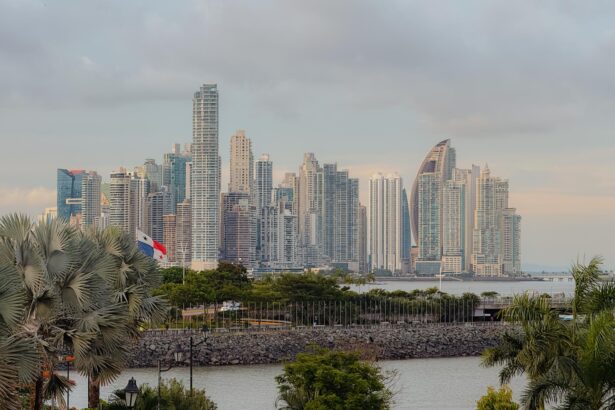
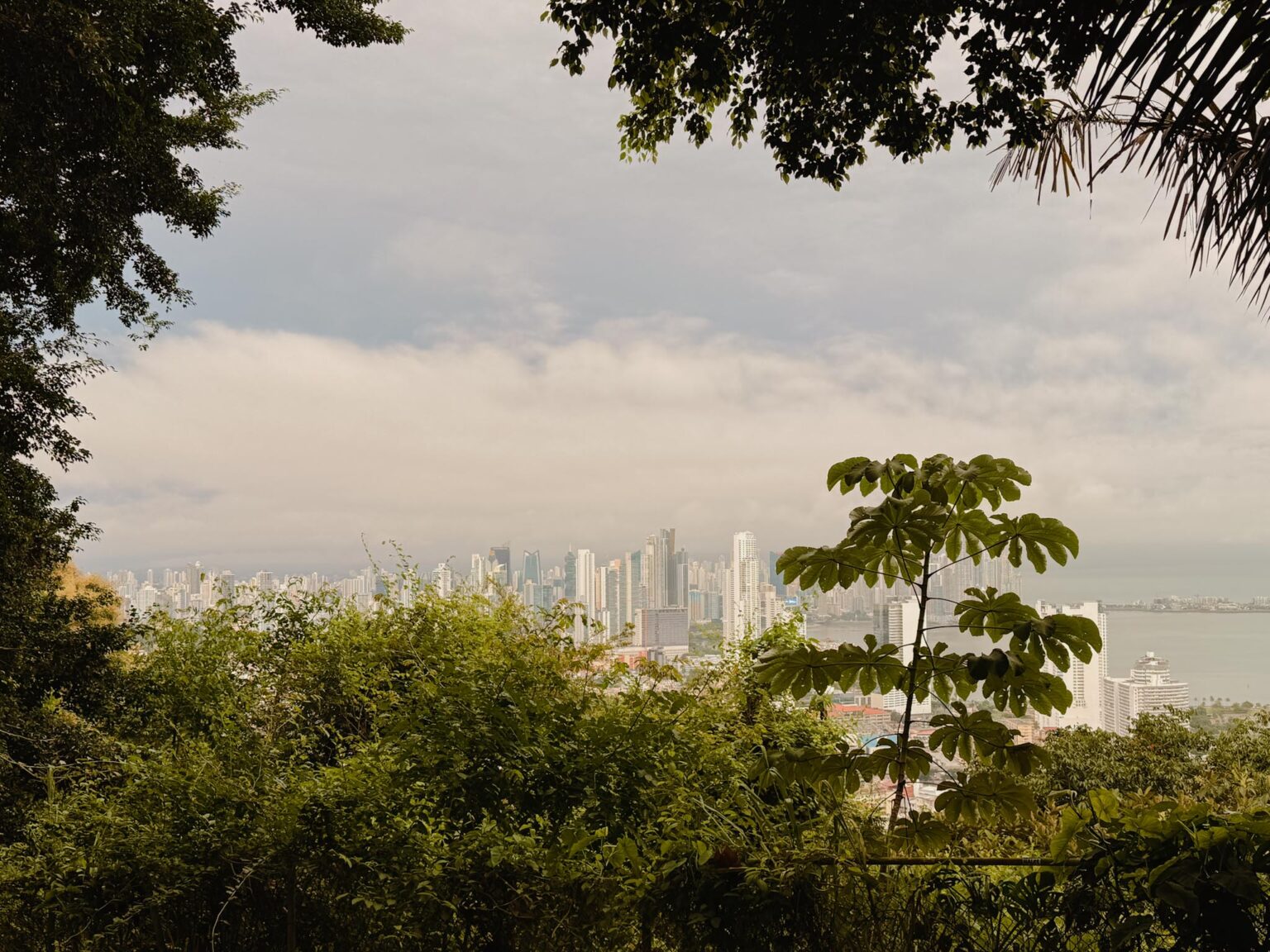
We got our first taste of that on Ancon Hill, a forested peak that rises right out of Panama City. On a morning walk up the trail, we spotted a sloth hanging in the canopy and a toucan perched against the city skyline behind it. Two animals that would be headline wildlife encounters anywhere else, seen before breakfast, with the skyscrapers of Miraflores visible through the trees.
Panama rewards curiosity. But it also requires patience, local knowledge, and in most cases, a guide who knows exactly where to look.
What Makes Panama Special for Wildlife
Panama has a land area of roughly 29,000 square miles (75,000 square kilometres), but it contains around 10,000 plant species, 1,000 bird species, 250 mammal species, and over 200 reptile species. The reason is the isthmus itself. When North and South America connected around three million years ago, species from both continents began mixing. Panama captured them all.
The country also has extraordinary habitat diversity within a short distance. You can go from Pacific coast to Caribbean coast in under two hours. Tropical rainforest, cloud forest, mangrove, coral reef, and open ocean are all accessible on a single trip. That variety is why the wildlife list here is so long, and why different regions reward different kinds of travelers.
One honest note before we get into specifics: most of the best wildlife in Panama is not roadside wildlife. Sloths, monkeys, and caimans are there if you know where to look, but you will walk straight past them without someone pointing them out. We found this repeatedly across different regions. A good local guide does not just take you to the right place. They spot things you would never see on your own.
Animals in Panama by Region
Panama City and the Canal Zone
Panama City and some of its surrounding areas are one of the most accessible places in Panama for wildlife, and one of the most underestimated. Most visitors rush through Panama City and head straight to the beaches or highlands. That is a mistake.
Ancon Hill sits at the edge of Panama City and offers a short but rewarding trail through protected forest. This is where we saw a sloth (with the help of a local park ranger) and a toucan on the same morning walk. You can watch wildlife in a genuinely wild forest with a major city visible behind you and you can get amazing views of the first set of locks to the Panama Canal. Go early, ideally before 8am.
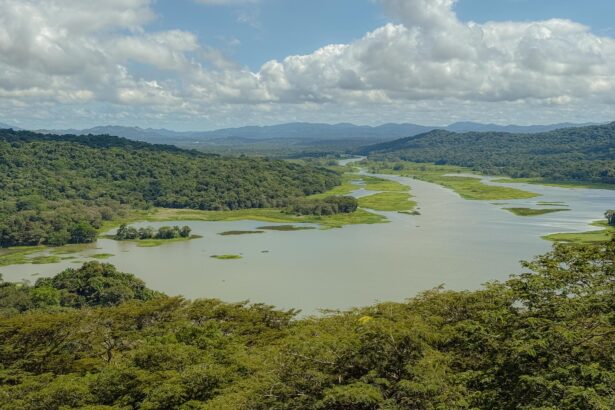
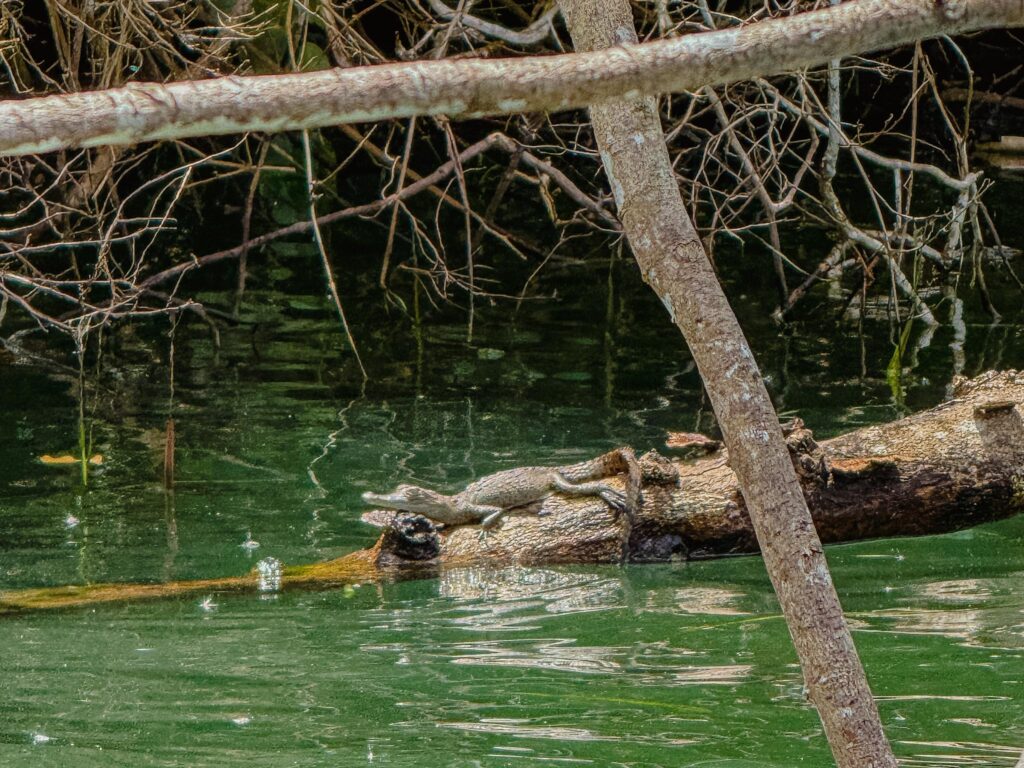
Gamboa and Soberania National Park are about an hour from Panama City along the Canal. This is a great spot in Panama for birding and discovering some of the unique species located within the country. The famous Pipeline Road runs through the park and has recorded more than 500 bird species. We visited Gamboa and took a tour along the Chagras river where we saw a number of monkeys along with a baby caiman taking in the sunshine. The caiman was very challenging to spot, and we would have missed it entirely without a guide pointing to exactly where to look. Boat tours along the Chagres River and around Gatun Lake also offer good chances to spot monkeys, sloths, and birds from the water.
The Panama Canal itself is worth watching from the observation decks at Miraflores Locks or the newer Agua Clara locks on the Atlantic side. We spotted a large American crocodile from the bank near the Canal, waiting for the locks to open up to snatch the fish that flow into and out of the canal.
The Pearl Islands and the Pacific Coast
The Pearl Islands sit about 75 kilometres off Panama City in the Pacific, and they are the best place in Panama to see humpback whales. We joined a guided boat tour from Panama City and watched humpbacks from the open water. The season runs from roughly July through October, when humpbacks migrate through the Eastern Pacific on their way south. Seeing them in open water, surfacing close to a small boat, is one of the most memorable wildlife experiences Panama offers.
The Pacific coast also offers good chances to see sea turtles. Four species nest on Panamanian beaches, with olive ridley and leatherback turtles using both Pacific and Caribbean shores. Whale shark sightings are reported off Coiba and in deeper Pacific waters, peaking between July to October. This aligns with the season of humpback whales, making these months the perfect time to discover the various ocean giants. Whale sharks are genuinely difficult to predict and not necessarily something to book a trip around.
Coiba National Park
Coiba is a UNESCO World Heritage Site and one of the most pristine marine environments in the Americas. The island was a penal colony until 2004, and its isolation kept the ecosystem intact. Very few places in the region have been left this undisturbed.
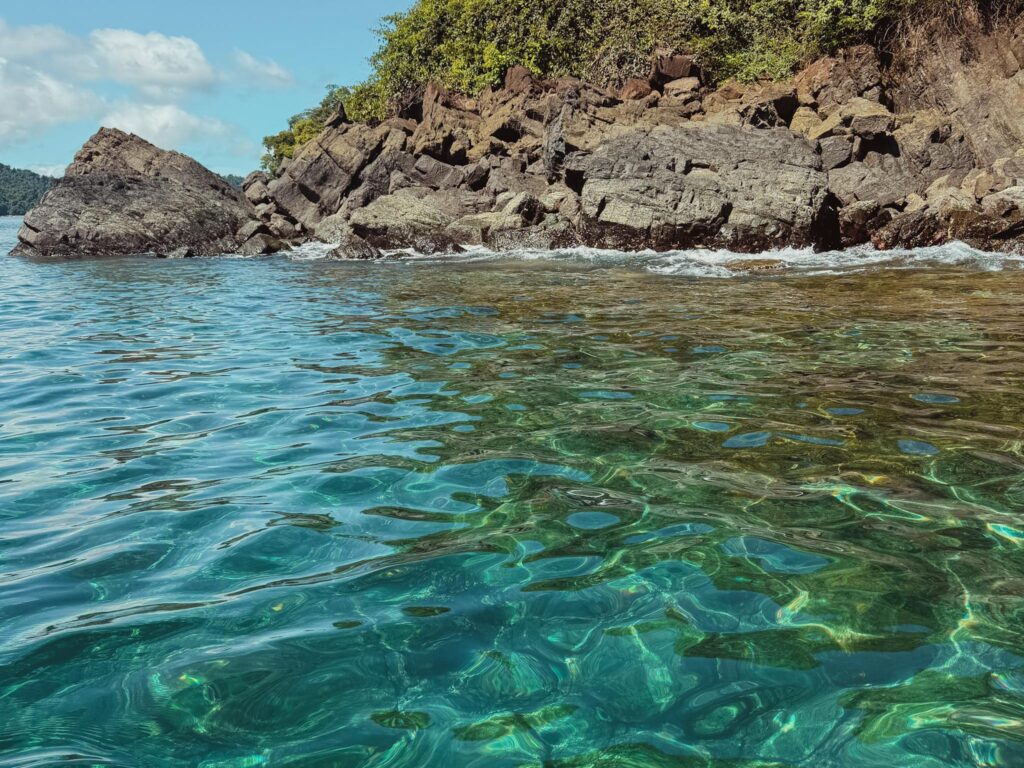
We visited Coiba on a day trip from Santa Catalina and snorkelled the reef. The underwater visibility was exceptional, and we swam alongside reef sharks in open water. They were relaxed, unhurried, and not interested in us at all. We also saw sea turtles on the same snorkel, moving along the reef edge.
Access to Coiba requires a permit and a boat from Santa Catalina. The permit, national park fees, and required registered guide are all taken care of by licensed tour operators who regularly provide tours within Coiba National Park. This is not a DIY trip. Book with a licensed operator who knows the park.
Boquete and the Cloud Forest
Boquete sits at around 3,280 feet (1,000 meters) in the western highlands, and the cloud forest above the town holds a different set of species entirely. The most sought-after animal in the Chiriqui highlands is the resplendent quetzal, a bird with iridescent green plumage and a tail that can reach 24 inches (60 centimeters) in length. It is genuinely one of the most spectacular birds in the world.
We unfortunately did not see one. The quetzal is elusive, seasonal, and requires both patience and a specialist guide to find reliably. The best window is the breeding season from roughly February through April. If seeing a quetzal is your goal, hire a local birding guide, go early, and go in that window. Do not rely on luck.
The cloud forest around Boquete also has resplendent diversity beyond the quetzal, including toucans, emerald toucanets, hummingbirds, and various tanagers. Even without spotting the headline bird, a walk in the forest above and around Boquete is worth it.
Bocas del Toro
Bocas del Toro is the Caribbean archipelago in the northwest, and it offers some of the most accessible wildlife in Panama for general travelers.
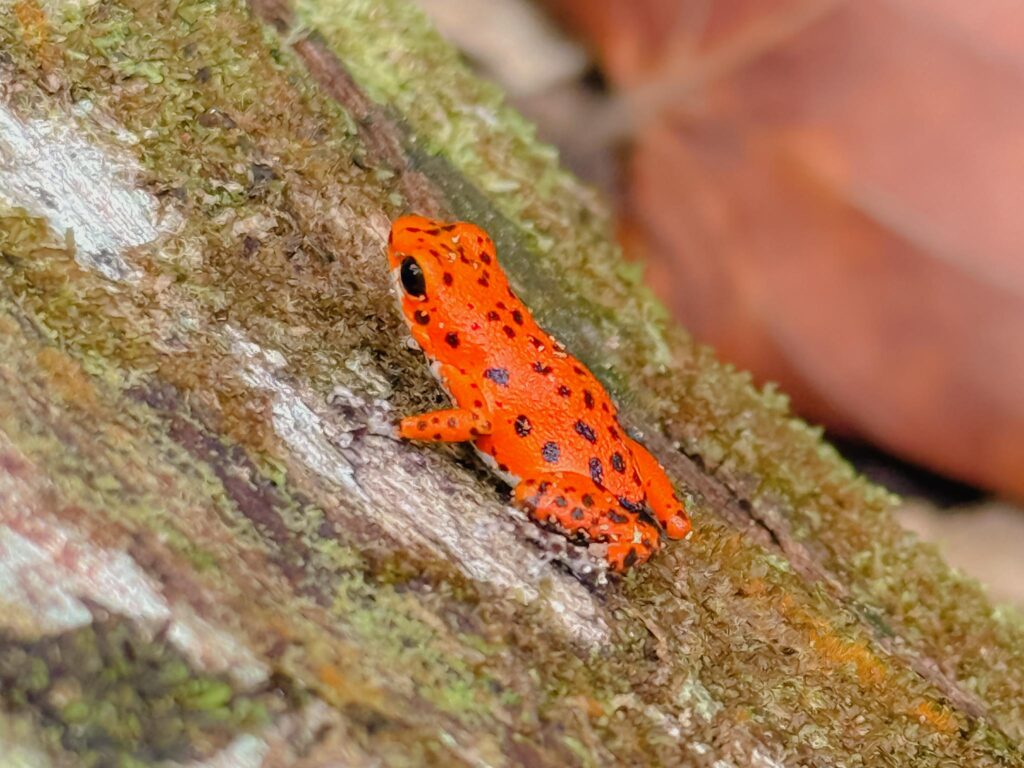
Red frogs are found on Isla Bastimentos, specifically in the area around Red Frog Beach. These are strawberry poison dart frogs, small and vivid red, and they are genuinely easy to spot once you know what you are looking for. They are not dangerous to touch as long as you do not handle them, and they sit in plain sight along the forest floor near the beach.
Sloths appear throughout the islands, in the trees along the waterways and around the more forested parts of the archipelago. Boat tours through the mangrove channels give good sloth-spotting opportunities, and local guides know exactly which trees to check. On these boat tours, you will often get the chance to see dolphins and snorkel in locations with reef fish and maybe sea turtles.
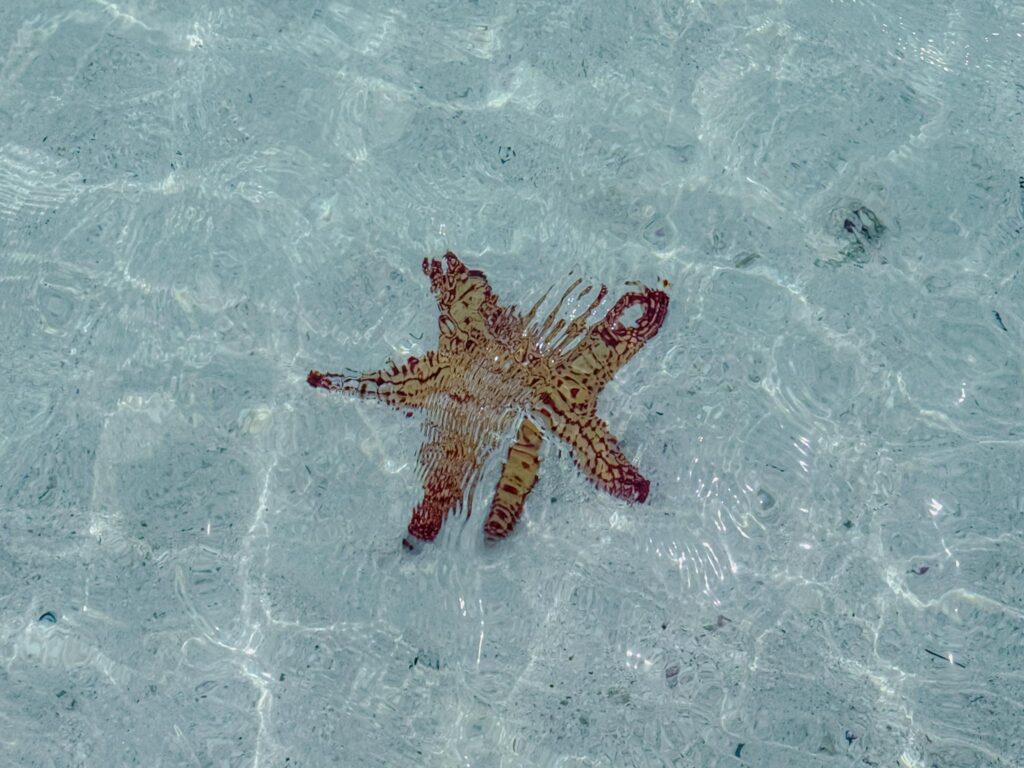
The wildlife in Bocas is more approachable than in the rainforest regions, partly because the islands are small and the habitat is compressed. On some of the beaches that can be accessed directly from Bocas Town, you can swim over starfish. It is a good introduction to Panamanian wildlife for travelers who are not doing specialist tours elsewhere.
San Blas Islands
San Blas is primarily a marine environment, and the wildlife reflects that. The islands sit in clear Caribbean water with intact reefs and shallow lagoons. We snorkeled in San Blas and found large starfish in the sandy shallows, the kind of dense concentration you rarely see anywhere else.
We also encountered a nurse shark in the water, swimming through the reefs near one of the islands. Nurse sharks are harmless, bottom-feeding animals that are completely unbothered by snorkelers. They are common in San Blas but still a genuine surprise the first time you find one.
Sea turtles visit the reefs and the beaches around San Blas, and the islands themselves are breeding ground for seabirds. Finally, as you sail around the islands, you can see large stingrays, manta rays, and spotted eagle rays swimming alongside the boats or passing under as you are anchored in the evening. Seeing them glide around or jump out of the water is truly majestic.
Wildlife Calendar: When to Go for What
Dry season (December to April) is generally the easier time to travel, with better road and trail conditions. Birding is good year-round, but cloud forest species are more active in the dry season.
Wet season (May to November) brings heavier rain but also lusher forest and more active wildlife. Coiba’s marine life is accessible year-round, though Pacific swells can affect boat access in rougher months.
Seasonal Wildlife Calendar
Animal
Jan
Feb
Mar
Apr
May
Jun
Jul
Aug
Sep
Oct
Nov
Dec
Resplendent quetzal
Boquete
Humpback whales
Pearl Islands
Whale sharks
Coiba / Pacific
Sea turtles (nesting)
Pacific
Sea turtles (nesting)
Caribbean
Peak Season
Good Chance
Low / not recommended
Do You Need a Guide?
For much of Panama’s best wildlife, yes.
We say this from experience, not as a formality. At Gamboa, we explored the forest that a confident independent traveler might attempt alone and not see anything remarkable. With a guide, we caimans, capybaras, sloths, and more. At Ancon Hill, having someone who knew the trees made the difference between spotting the sloth in thirty seconds and walking past it entirely.
Coiba requires a licensed operator regardless of preference. The quetzal without a birding guide in Boquete is largely a matter of luck. Even in Bocas, a guide who knows the mangrove channels will find sloths faster than an hour of independent searching.
Panama has excellent wildlife infrastructure, and the local guides who work these areas know their ecosystems in detail. Hiring one is not an admission that you need hand-holding. It is the decision that gets you from seeing a few birds to seeing something you will talk about for years.