The short answer is yes. Panama is one of the safest countries in Central America, and most US travelers move through it without incident. But that answer deserves more context, because Panama is not one place. It is seven or eight very different places, and the conversation about safety shifts considerably depending on which one you are in.
We have personally traveled through Panama City, Casco Viejo, Bocas del Toro, Boquete, Valle de Antón, Portobelo, and Santa Catalina. This guide is built from those experiences, not from a checklist. We will tell you exactly where we felt completely at ease, where we stayed alert, and the one city that every traveler should avoid entirely.
Emergency Numbers in Panama
All Emergencies
911
Police, ambulance, and fire. Works throughout Panama.
National Police
104
Direct line for non-life-threatening situations and crime reports.
Fire Department
103
Bomberos — fire and rescue services nationwide.
Tourist Police
511-9260
Panama City only. English speakers available. For tourist-specific incidents, scams, and assistance.
In rural areas and on the islands, response times can be significantly longer than in Panama City. Travel insurance with medical evacuation coverage is strongly recommended for San Blas, Santa Catalina, and remote parts of Bocas del Toro.
What travel advisories around the world say about Panama
The US advisory system is one of the more cautious in the world — it flags destinations at Level 2 that most other countries treat as routine travel. Panama sits at Level 2: Exercise Increased Caution. The areas it says to avoid, Darien and Mosquito Gulf are not areas that tourists have access to easily. To understand what that actually means, it helps to see how other governments read the same destination.
Canada, whose advisory system sits in a similar cautious tier to the US, advises travelers to exercise a high degree of caution overall, with specific warnings for Colón and the Darién. For tourist destinations, their guidance is straightforward: be aware, use common sense. They highlight some neighborhoods within Panama City to avoid, most of which will not be part of your tourism experience.
Germany’s Foreign Office is considered one of the most measured advisory systems in the world — it does not over-flag, and it distinguishes clearly between areas of genuine concern and areas that are simply unfamiliar. Germany flags Colón and the Darién, and treats the rest of Panama as a standard travel destination.
Japan runs one of the most conservative advisory systems of any country. Japan flags things the US and Germany do not. And yet Japan does not advise against travel to Panama’s tourist destinations.
Across all four systems, the conclusion is the same: avoid the Darién and Mosquito Gulf, treat Colón with serious caution, and approach everywhere else the way you would any unfamiliar destination.
Panama City
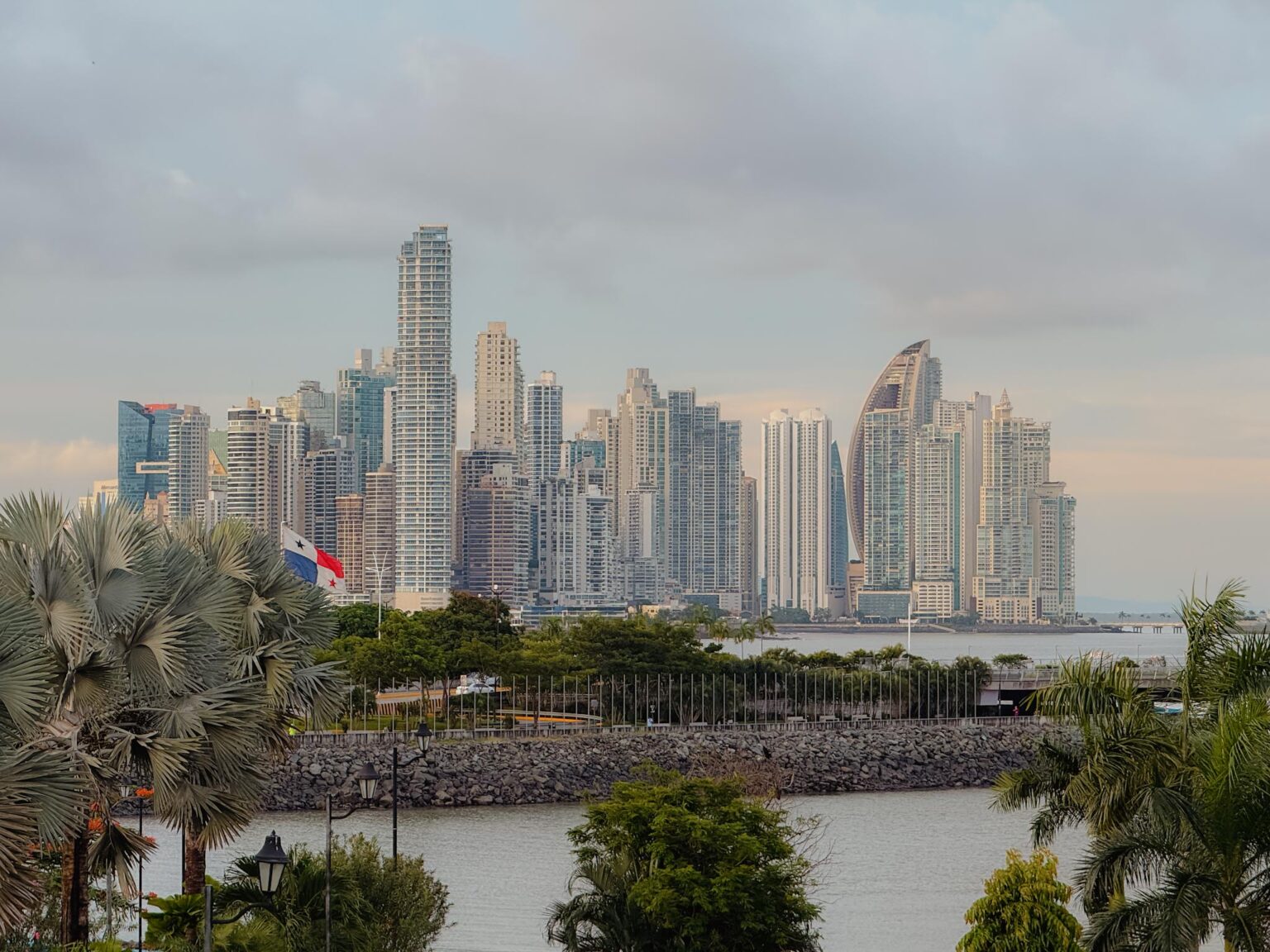
Panama City surprised us. The tourist areas felt significantly safer than we anticipated, and the city has a visible, active police presence in the neighborhoods that travelers frequent.
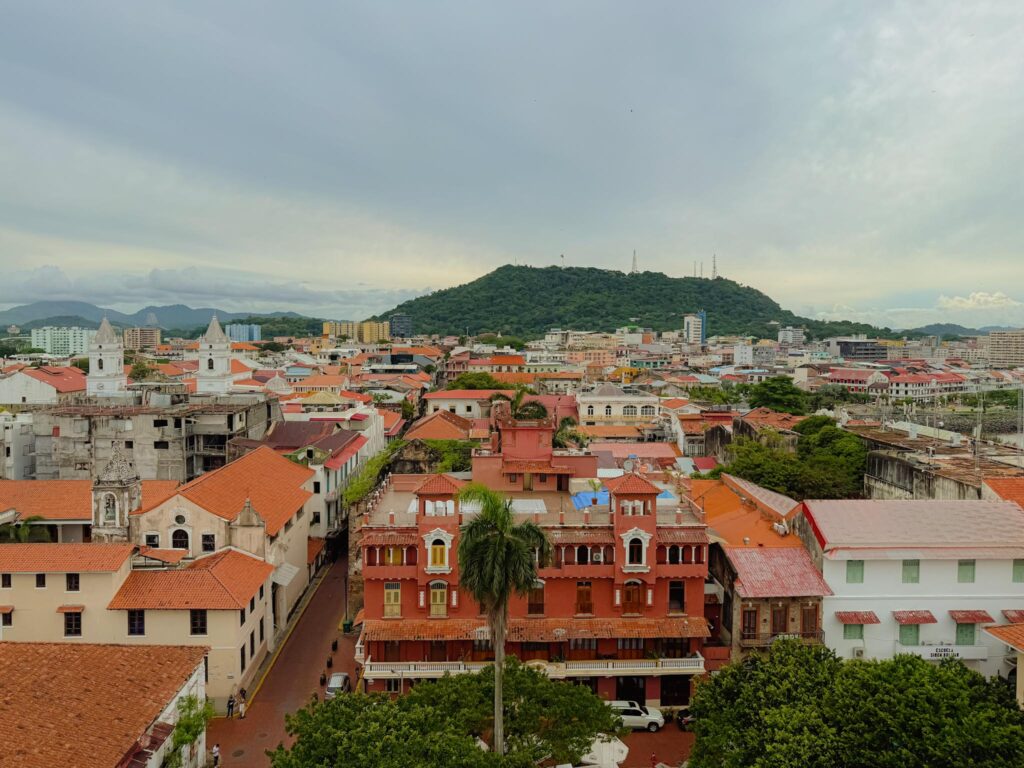
Casco Viejo, the UNESCO World Heritage colonial quarter, is patrolled by tourist police and we wandered it comfortably at all hours. The same goes for Punta Pacifica, Marbella, and the Amador Causeway. Melina walked, ate out, and shopped alone in these areas without a moment of concern.
The key in Panama City is understanding that neighborhood boundaries matter more here than in most cities. A single street can mark the line between a safe tourist area and a neighborhood that is not set up for visitors. El Chorrillo and Curundu sit immediately adjacent to some of the most-visited parts of the city. We avoided both. You do not need to go into either neighborhood — there is nothing there that you cannot find safely elsewhere.
Getting Around: Uber Over Street Taxis
Use Uber in Panama City. With Uber you see the route before you get in, you know the price upfront, and there is no language barrier or meter to misread. Uber is reliable and widely available throughout the city.
In smaller towns like Boquete and Valle de Antón, Uber is not available, but this is not a problem. These towns are each built around a single main road, and taxis run it constantly for a dollar or two. The practical trick: look up a recognizable landmark near your destination before you get in. A supermarket, a gas station, a named hotel or anything the driver will know. Ask your accommodation host what a fair fare is before you leave, and you will never overpay.
The Metro
Panama City has a clean, efficient metro system and locals are genuinely proud of it. It is completely safe to use and a practical way to move around the city.
The San Blas Islands
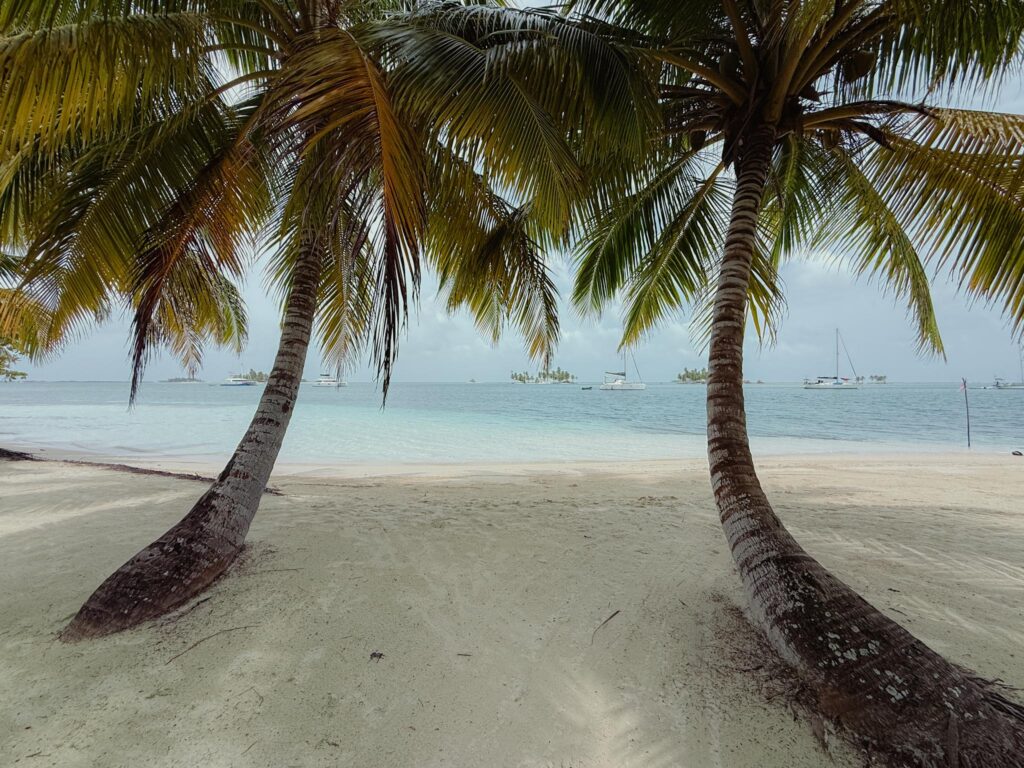
San Blas, officially Guna Yala, is Guna-governed territory and felt completely removed from any safety concern we encountered elsewhere in Panama. The islands are small, the communities are tight-knit, and visitors are there as guests of the Guna people. We felt safe and welcomed throughout.
The main practical considerations are logistical rather than safety-related. Bring enough cash for your entire stay before you leave Panama City. There are no ATMs on the islands and very few locations take credit cards (although the number of restaurants and bars that accept card payments is growing). And because the archipelago is genuinely remote, travel insurance with medical evacuation coverage is strongly recommended.
Boquete, Valle de Antón, and Santa Catalina
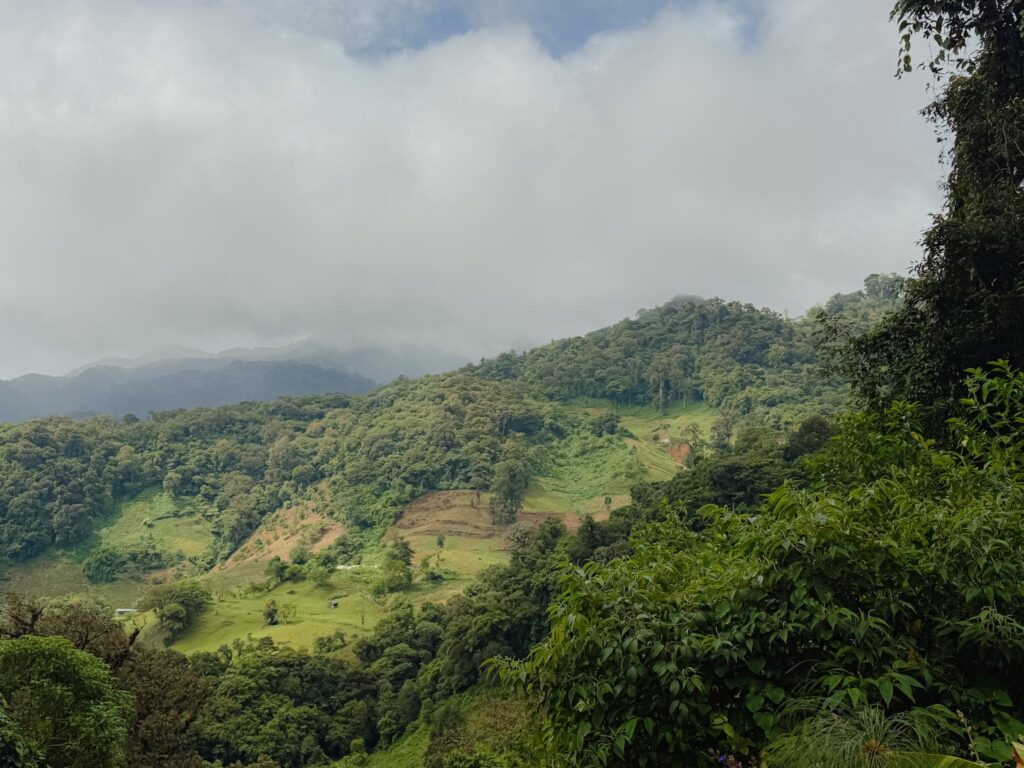
These three destinations felt like the easiest places in Panama to travel as a visitor. They are small, community-oriented towns where the local economy depends entirely on tourism, which creates a natural incentive for every visitor to have a good experience.
Boquete is compact and walkable with well-lit streets and a well-established traveler community. Valle de Antón is a small crater town with one main road, a laid-back pace, and minimal crime. Santa Catalina is a Pacific surf village with a tight-knit, self-regulating, low-key vibe. The surf and dive community here tends to be welcoming, and the town is small enough that most people know each other.
In all three destinations, standard precautions, keeping your belongings close at the beach, not leaving valuables unattended, are sufficient. There is nothing region-specific to flag beyond that.
Bocas del Toro and Portobelo
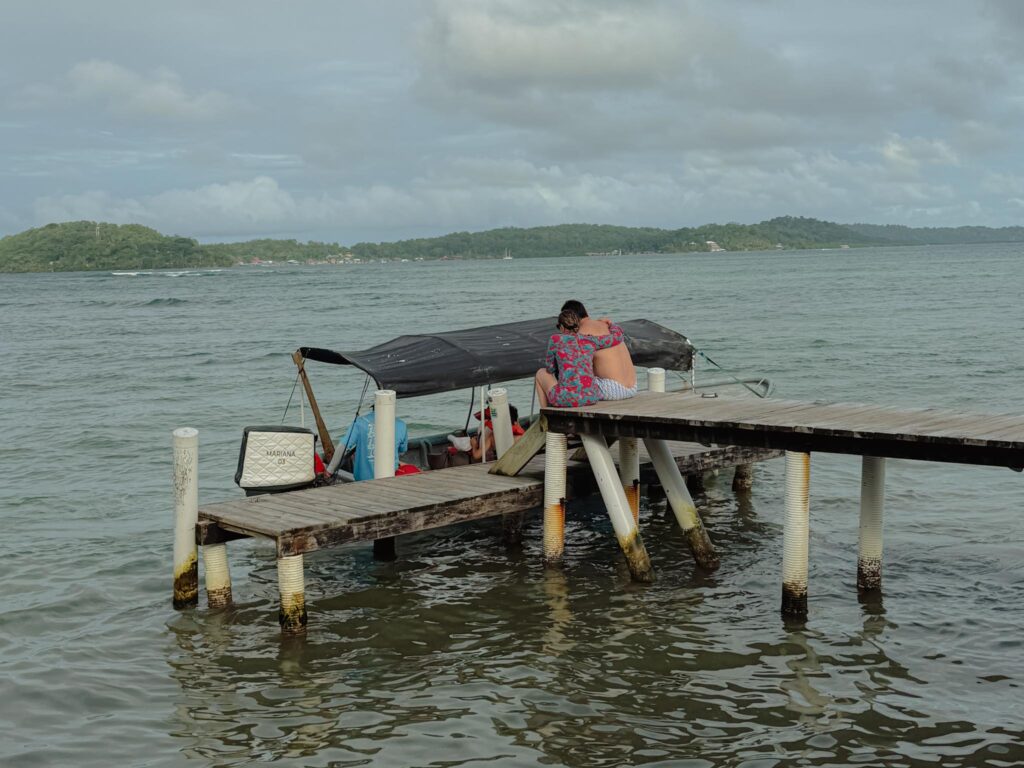
These two destinations require a slightly different mindset, and it has nothing to do with physical safety in the traditional sense. The Caribbean coast operates on a different rhythm from the rest of Panama, and arriving without knowing that can make the experience feel overwhelming rather than dangerous.
The Docks in Bocas del Toro
The moment you arrive at the docks in Bocas del Toro, you will be approached. Someone will move to take your bags. Someone will reach out to help you off the boat. Hands extend the moment you step onto the pier, all with the expectation of a cash tip. The assistance is real and genuine, but so is the expectation. If you want the help, accept it and tip accordingly. If you do not, you need to be confident and clear about declining. Neither situation is threatening, but arriving unprepared for the pace and persistence of these interactions can feel jarring.
Know prices in advance. Before you arrive, find out what water taxis should cost, what tours should cost, and how much it should be to get from the dock to your accommodation. Your guesthouse or hotel can give you this information if you ask before you leave Panama City. Arriving with that knowledge puts you in control of every transaction.
Drug Awareness
In both Bocas del Toro and Portobelo, you will likely be approached after dark by people offering cocaine. The dealers are not aggressive (this is not a confrontational situation) but it could happen, and it is better to know it is coming. A simple “no, gracias” is all that is needed.
What matters more is understanding Panama’s drug laws. Possession of even a small quantity of any illegal drug is a serious criminal offence in Panama. Sentences can run up to fifteen years, and it can take up to two years for a case to come before a judge. The relaxed Caribbean atmosphere of these towns can create a false sense that the rules are casual. They are not.
Colón: the One Place to Avoid
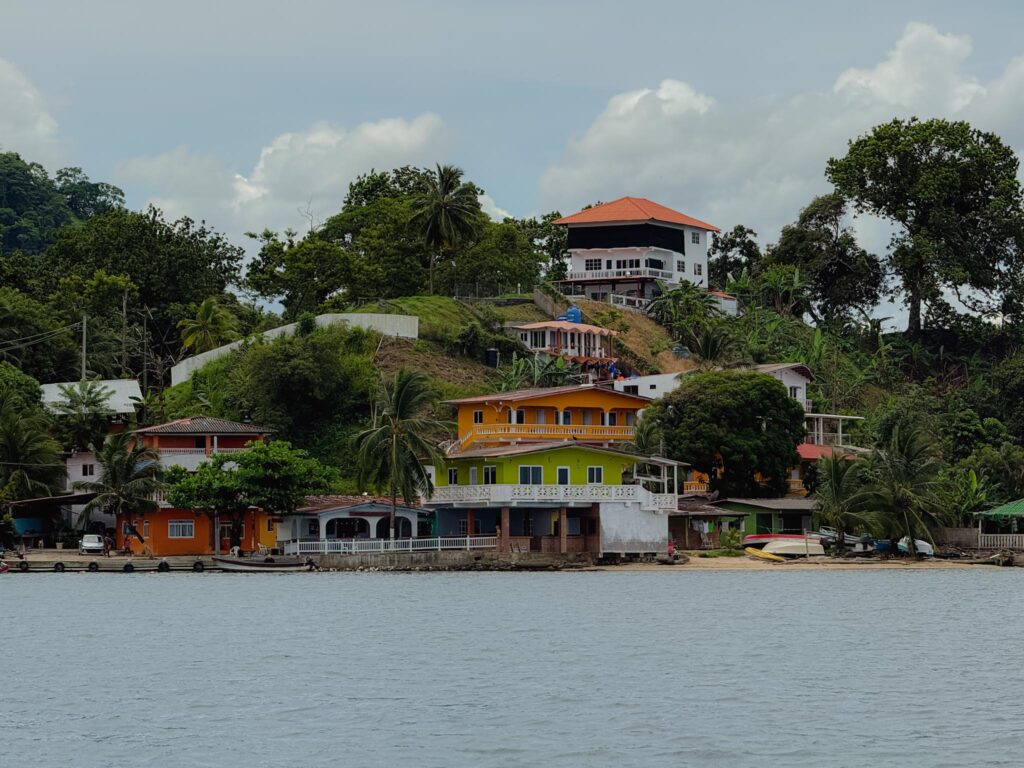
We will be direct about this because most safety guides are not. Colón is not safe for tourists and you should not wander it. The city has extremely high rates of violent crime, and the risk of being mugged is real, particularly after dark.
If your itinerary brings you to this corner of Panama, the Radisson Colon 2000 is the safest accommodation option. It connects directly to the Colon 2000 shopping mall, which keeps you from needing to walk the streets at all.
For most travelers, the reason to visit this part of Panama is Portobelo, which is thirty minutes away and a far better base. You get the Caribbean coast, the UNESCO-listed Spanish forts, and a genuinely interesting town without Colón’s risks. Stay in Portobelo instead.
The Darién Gap
The Darién Gap, Panama’s remote southeastern province bordering Colombia, is genuinely dangerous and not a destination for independent travel. It is used by trafficking networks and is home to active armed groups. The US State Department’s Do Not Travel designation for this region is accurate and we would not push against it.
The Darién is not on any Blueprint Travelers itinerary, and we would encourage you to keep it off yours unless you are traveling with a specialist operator with specific expertise in this region.
Tap Water and Food Safety
Panama’s tap water is safe to drink in Panama City and most larger towns, including Boquete, David, and Valle de Antón. Melina drank tap water throughout our time in Panama City without any issues. The water infrastructure here is genuinely great by regional standards.
In rural areas, on the islands of Bocas del Toro, and in San Blas, switch to bottled water. This is not because the risk is severe, but because water sources are less consistent in these areas. Most guesthouses and lodges in Bocas and San Blas include filtered or bottled water as standard so make sure to ask when you check in.
On food safety: we ate our way through Panama without a single stomach issue. The ceviche at Mercado de Mariscos in Panama City, Panama’s famous fish market, was some of the freshest seafood we have eaten anywhere. We also ate at beachside restaurants throughout Bocas del Toro and Portobelo without any problems. There is a reason Panama City was designated a UNESCO Creative City of Gastronomy in 2017: the food culture here takes freshness and quality seriously. In Panama, following that instinct led us to extraordinary meals rather than cautious ones.
Safety by Region: A Quick Reference
Panama City
safe in tourist areas
Use Uber. Avoid El Chorrillo and Curundu. Metro is safe and recommended.
San Blas Islands
very safe
Bring all cash before leaving Panama City. No ATMs on the islands.
Boquete
very safe
Small, community-oriented. Taxis are fine for one or two dollars.
Valle de Antón
very safe
One main road. Taxis and mini-buses are fine. Easy to navigate independently.
Santa Catalina
very safe
Small surf village. Tight-knit community. Standard beach precautions only.
Bocas del Toro
exercise awareness
Know prices before you arrive. Be prepared for the docks. Aware of drug presence after dark.
Portobelo
exercise awareness
Fine for daytime visits. Aware of drug presence. Stick to tourist areas.
Colón
avoid
Do not wander. Radisson Colon 2000 if you must stay. Better: base yourself in Portobelo.
Darién
Do not travel
US State Dept Level 4. Not on any Blueprint Travelers itinerary.
The thing we would tell anyone going for the first time
Panama will ask you to let your guard down, and for the most part you should. The people of this country are genuinely warm and want to share what they have. The best experiences we had came from following the lead of locals: asking where to eat, what route to take, what was safe. Panama’s communities look out for their visitors.
The practical version of this: listen to your gut, but also listen to locals when it comes to where you go and how you move around. They know their country in ways no travel guide can replicate. When a local tells you to take a different street, take it. When they point you toward the metro, take it. That combination of personal judgment and local knowledge will serve you far better than any checklist.